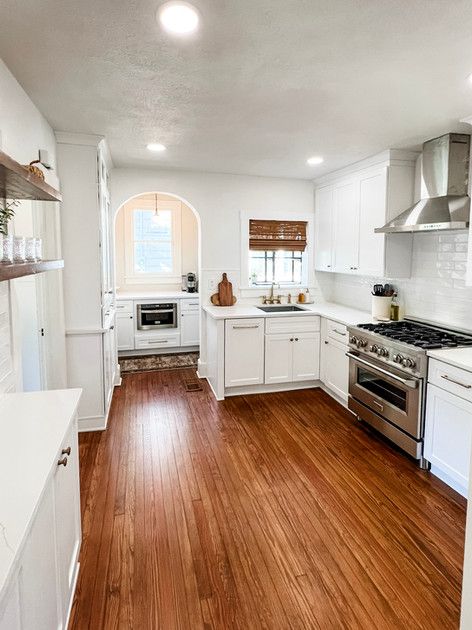
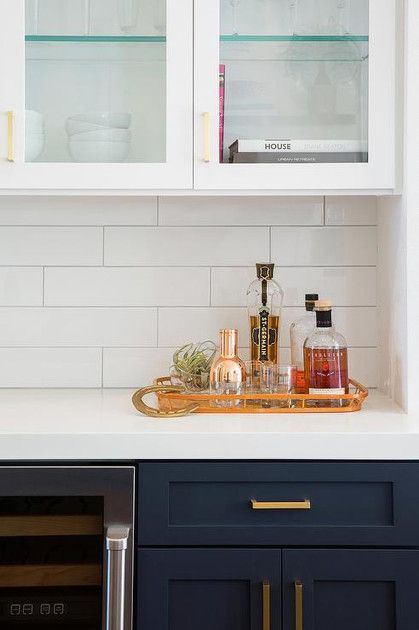
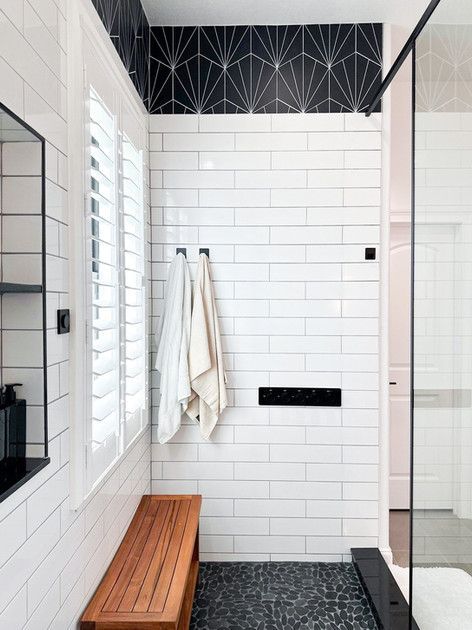
Choosing the Right Flooring & Tile for Your Remodeling Project
Flooring and tile influence much more than the appearance of a room. The materials you choose can affect durability, maintenance, comfort, moisture resistance, and how the space functions from day to day. From flooring materials and tile styles to grout, layouts, transitions, and finishing details, understanding the options can make the selection process much easier.
This guide walks homeowners through the materials, terminology, and design details they may encounter while planning a flooring or tile project.
Understanding Flooring Types
Flooring materials can look similar while performing very differently. Water exposure, daily traffic, maintenance, comfort, installation requirements, and the existing surface beneath the floor can all influence which options are appropriate for a space.
Luxury Vinyl Plank (LVP)
Best For: Busy households, kitchens, living areas and moisture-prone spaces
Maintenance: Very Low
Relative Cost: $$–$$$
Highlights:
- Available in realistic wood and stone looks
- Comfortable and quieter underfoot than tile
- Easy everyday maintenance
- Durable for active households
- Many products are designed for moisture-prone areas
What Homeowners Should Know:
Luxury vinyl plank is a popular choice because it combines durability, easy maintenance and a wide variety of styles. Many LVP products are marketed as waterproof, but performance and installation requirements vary by manufacturer. The condition and flatness of the surface underneath the flooring are also important to the finished result.
- Available in realistic wood and stone looks
Porcelain Tile
Best For: Bathrooms, kitchens, showers, high-traffic areas and Florida homes
Maintenance: Low
Relative Cost: $$–$$$$
Highlights:
- Dense and highly durable
- Very low water absorption
- Available in wood, stone, concrete and decorative looks
- Suitable for many floors, walls and wet areas
- Handles heavy household traffic well
What Homeowners Should Know:
Porcelain is a type of ceramic tile made to be especially dense and water resistant. It is commonly used in bathrooms, showers and other moisture-prone areas. The tile itself is only one part of the installation—the substrate, setting materials, grout and any required waterproofing also contribute to the finished system.
- Dense and highly durable
Ceramic Tile
Best For: Backsplashes, walls, bathrooms and many residential floors
Maintenance: Low
Relative Cost: $–$$$
Highlights:
- Wide variety of colors, shapes and patterns
- Often more affordable than porcelain
- Easy-to-clean surface
- Excellent for decorative applications
- Available in both traditional and contemporary styles
What Homeowners Should Know:
Ceramic tile offers tremendous design flexibility and is commonly used on walls, backsplashes and floors. It is generally less dense and more absorbent than porcelain, so not every ceramic tile is appropriate for every location. Always consider the manufacturer's recommended application when selecting tile.
- Wide variety of colors, shapes and patterns
Engineered Hardwood
Best For: Living areas, bedrooms and homeowners who want the look of real wood.
Maintenance: Moderate
Relative Cost: $$$–$$$$
Highlights:
- Real wood surface
- Warm, natural appearance
- Available in many species, colors and plank widths
- More dimensionally stable than traditional solid hardwood
- Some products can work well over concrete slabs
What Homeowners Should Know:
Engineered hardwood is made with a real hardwood surface over a layered core. Its construction generally provides greater dimensional stability than solid hardwood, which can make certain products better suited to Florida conditions and concrete-slab homes. Moisture limits and installation requirements vary significantly by product.
- Real wood surface
Solid Hardwood
Best For: Living areas, bedrooms and homeowners who value traditional natural wood.
Maintenance: Moderate
Relative Cost: $$$–$$$$$
Highlights:
- Made from solid natural wood
- Timeless appearance
- Develops natural character over time
- Many products can be refinished
- Available in numerous wood species and finishes
What Homeowners Should Know:
Solid hardwood responds naturally to changes in moisture and humidity by expanding and contracting. That makes site conditions, acclimation and installation method especially important. In Florida homes—particularly those built on concrete slabs—the specific product and installation requirements should be carefully considered before selection.
- Made from solid natural wood
Laminate
Best For: Living areas, bedrooms and budget-conscious households.
Maintenance: Low
Relative Cost: $–$$
Highlights:
- Available in convincing wood and stone looks
- Durable wear surface
- Easy everyday cleaning
- Generally budget-friendly
- Wide variety of styles and colors
What Homeowners Should Know:
Laminate flooring uses a photographic design layer rather than a real wood surface. Modern products can look remarkably realistic, but moisture resistance varies considerably. Some newer products offer enhanced water resistance, while others require more protection from spills and standing water.
- Available in convincing wood and stone looks
Natural Stone
Best For: Entryways, bathrooms, feature areas and distinctive high-end designs
Maintenance: Moderate to High
Relative Cost: $$$–$$$$$
Highlights:
- Genuine natural material
- Each piece has unique color and variation
- Available in marble, travertine, limestone, slate and other stones
- Can create a distinctive, high-end appearance
- Available in a variety of textures and finishes
What Homeowners Should Know:
Natural stone varies significantly from one material to another. Some stones are more porous, more susceptible to staining or more sensitive to certain cleaners than porcelain or ceramic tile. Depending on the stone and application, sealing and specialized maintenance may be recommended.
- Genuine natural material
Not sure which flooring material is right for your project?
The right flooring depends on your space, lifestyle, design goals, maintenance preferences, and budget. During the planning process, our team helps homeowners compare materials, review samples, and choose flooring and tile that complement the overall design of their home.
LVP vs. Porcelain Tile vs. Engineered Hardwood: What’s the Difference?
Luxury vinyl plank, porcelain tile, and engineered hardwood can all create beautiful flooring throughout a home, but they differ in how they feel, perform, and respond to everyday living. For Florida homeowners, moisture, concrete slab conditions, maintenance, and comfort underfoot can also play an important role. Understanding these differences can help narrow down which flooring may be the best fit for your space.
Luxury Vinyl Plank (LVP)
Luxury vinyl plank offers the appearance of wood with a softer feel underfoot and relatively simple everyday care. It is available in a wide range of colors, plank sizes, and wood-look finishes, making it easy to carry a consistent flooring style through several rooms. Many LVP products are also designed to handle moisture, making them a popular option for active Florida households.
- Softer and warmer underfoot than tile
- Easy everyday maintenance
- Wide variety of wood-look styles
- Many moisture-resistant or waterproof product options
Porcelain Tile
Porcelain tile is dense, durable, and highly resistant to water absorption, making it especially useful in bathrooms, kitchens, entryways, and other moisture-prone areas. It can recreate the appearance of natural stone, wood, concrete, and other materials while offering the durability of tile. Because it is a hard surface, it tends to feel cooler and firmer underfoot than LVP or wood.
- Excellent durability
- Very low water absorption
- Well suited to moisture-prone spaces
- Extensive choices in size, pattern, and appearance
- Performs well in high-traffic areas
ENGINEERED HARDWOOD
Engineered hardwood provides the warmth and natural variation of genuine wood while using a layered construction that offers greater dimensional stability than traditional solid hardwood. Certain engineered wood products can be suitable for concrete-slab homes, making them an option for Florida homeowners who want real wood flooring without automatically ruling it out because of the climate.
- Genuine hardwood surface
- Warm, natural appearance
- More dimensionally stable than solid hardwood
- Available in many wood species, colors, and plank widths
- Certain products can be installed over concrete slabs
Designing With Flooring & Tile: Patterns, Layouts & Visual Details
The way flooring or tile is laid can have just as much impact on a room as the material itself. Pattern direction, orientation, scale, and grout lines can make a space feel larger, longer, more traditional, or more visually detailed.
Choosing the Right Layout
__________________
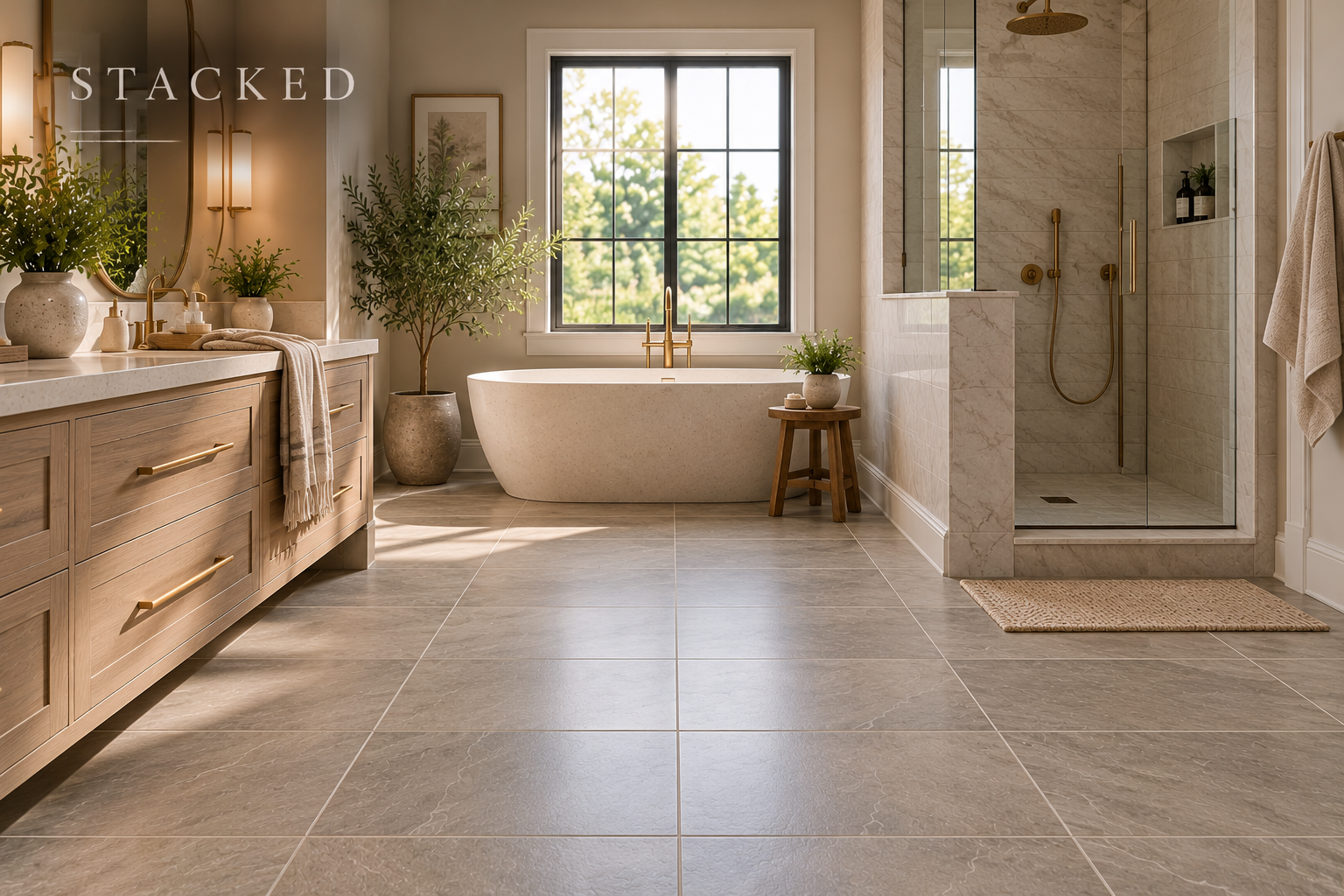
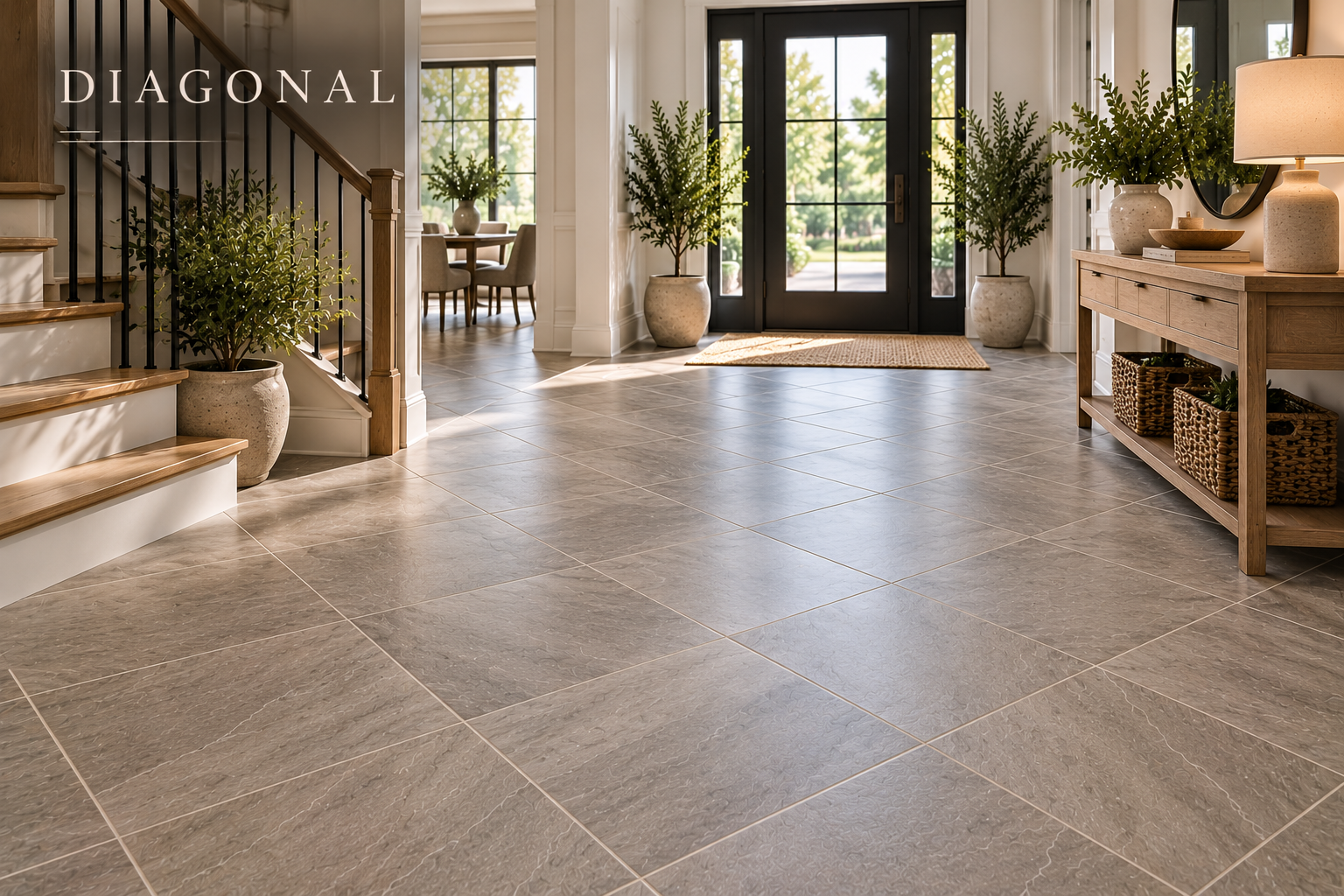
Flooring and tile layouts range from simple and understated to highly decorative. Straight and offset patterns create a classic foundation, while layouts such as herringbone and chevron can turn the flooring or tile into a design feature.
Not every layout works with every flooring or tile product. Tile dimensions, plank construction, room shape, grout joints, manufacturer recommendations, and the amount of cutting required can all influence which patterns are appropriate. More detailed layouts may also require additional material and installation time.
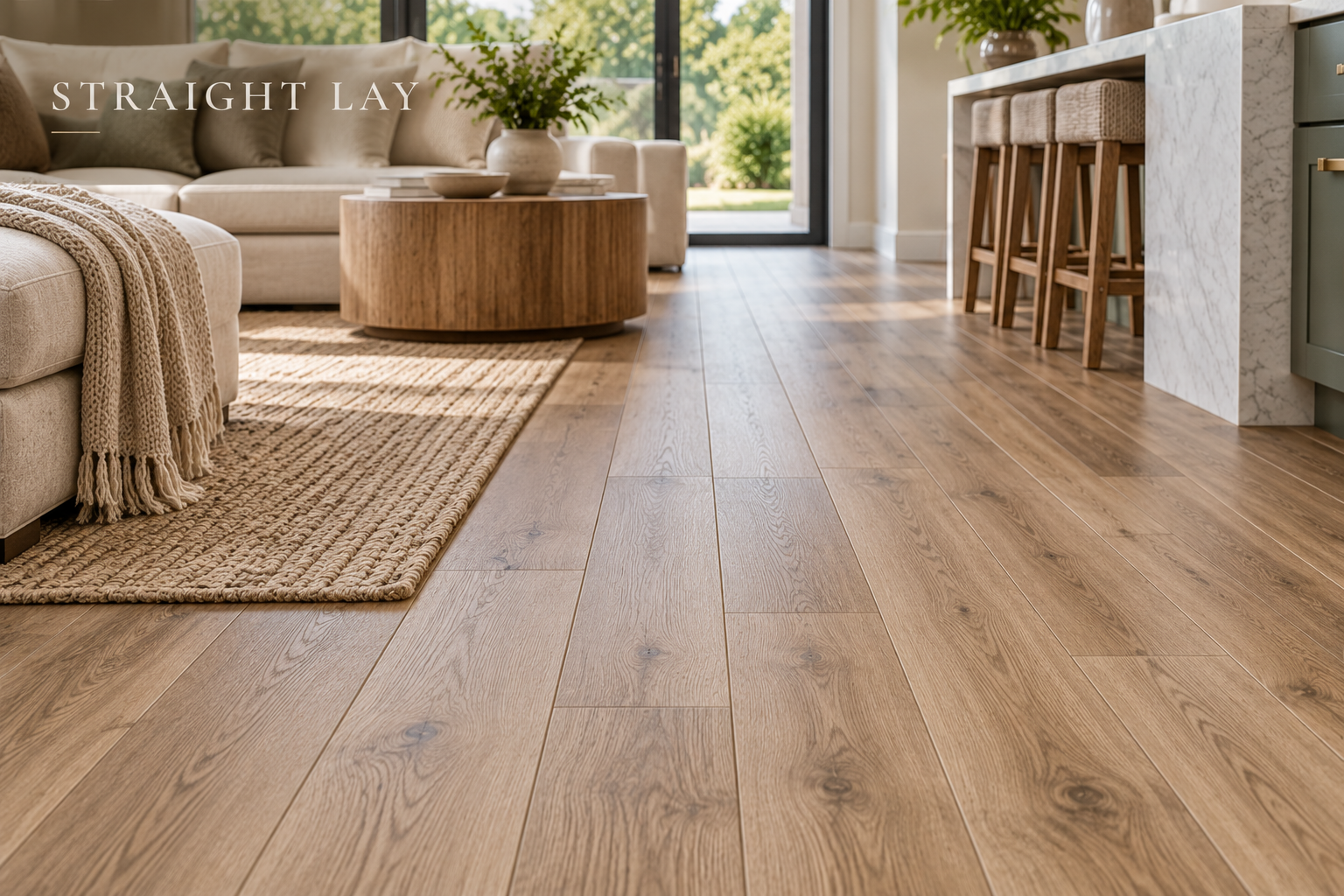
Straight Lay / Running Lay
Clean & Versatile
Planks or rectangular tiles run in the same direction for a simple, continuous look.
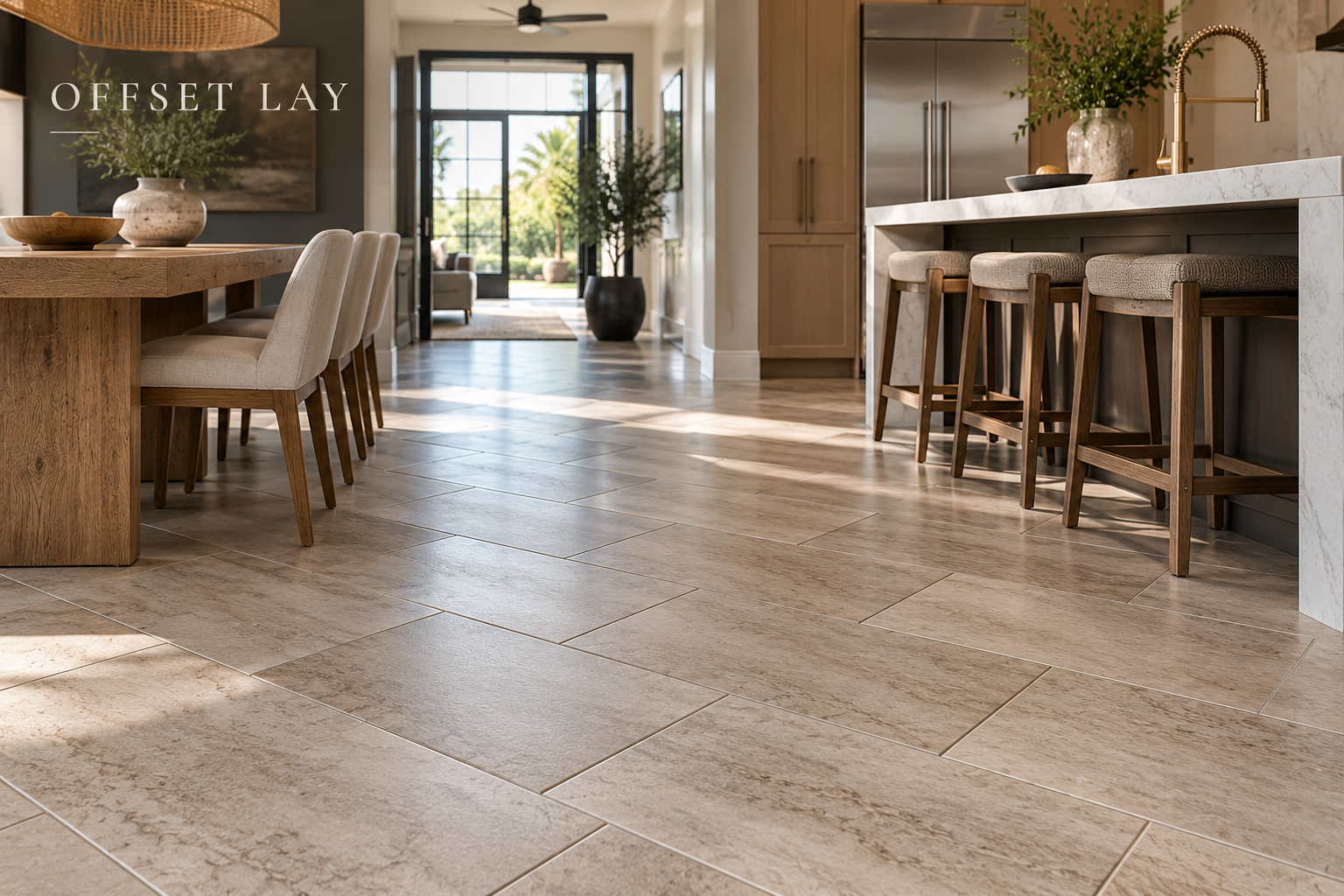
Offset / Running Bond
Classic & Familiar
Each row is offset from the one before it, creating a traditional staggered appearance.
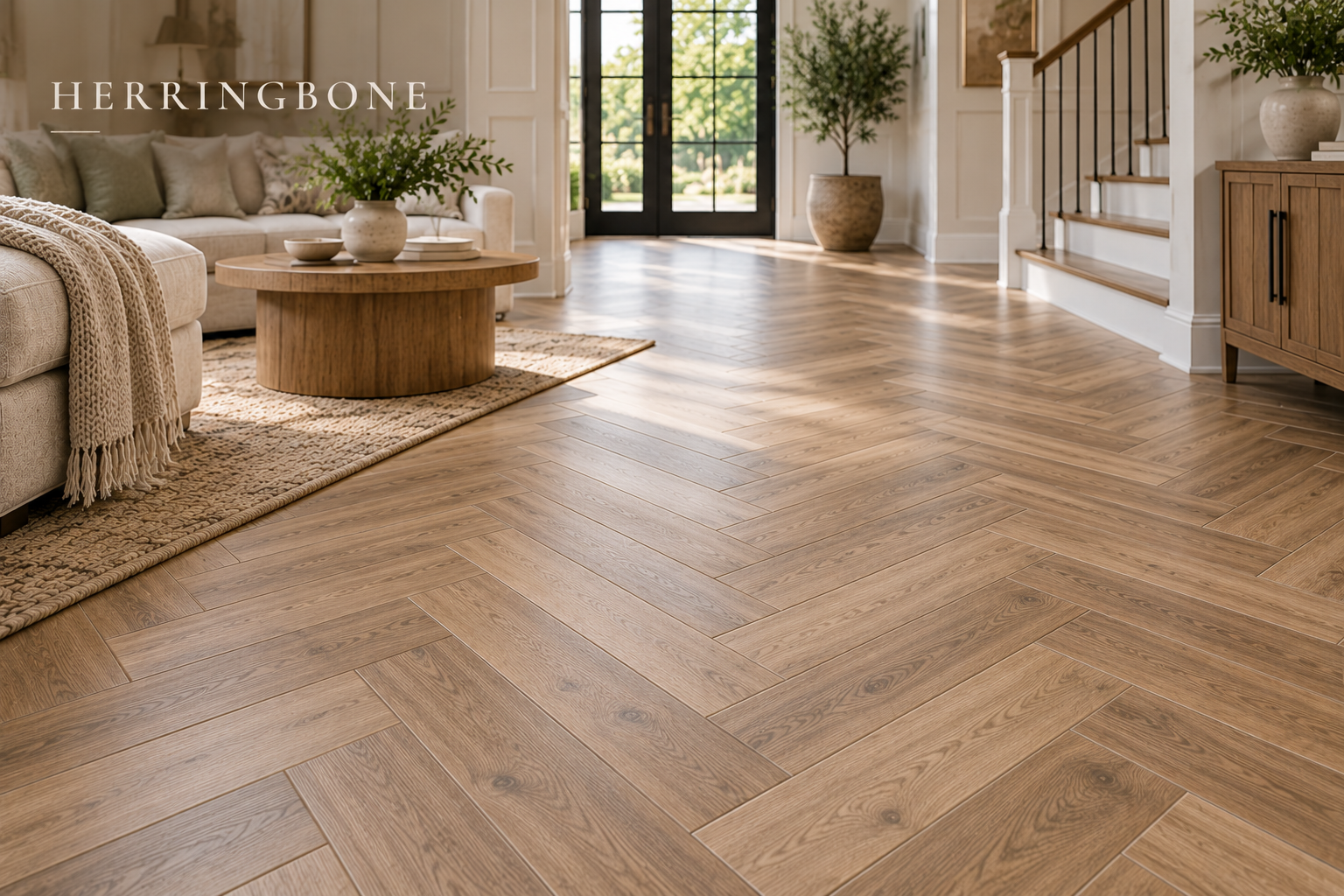
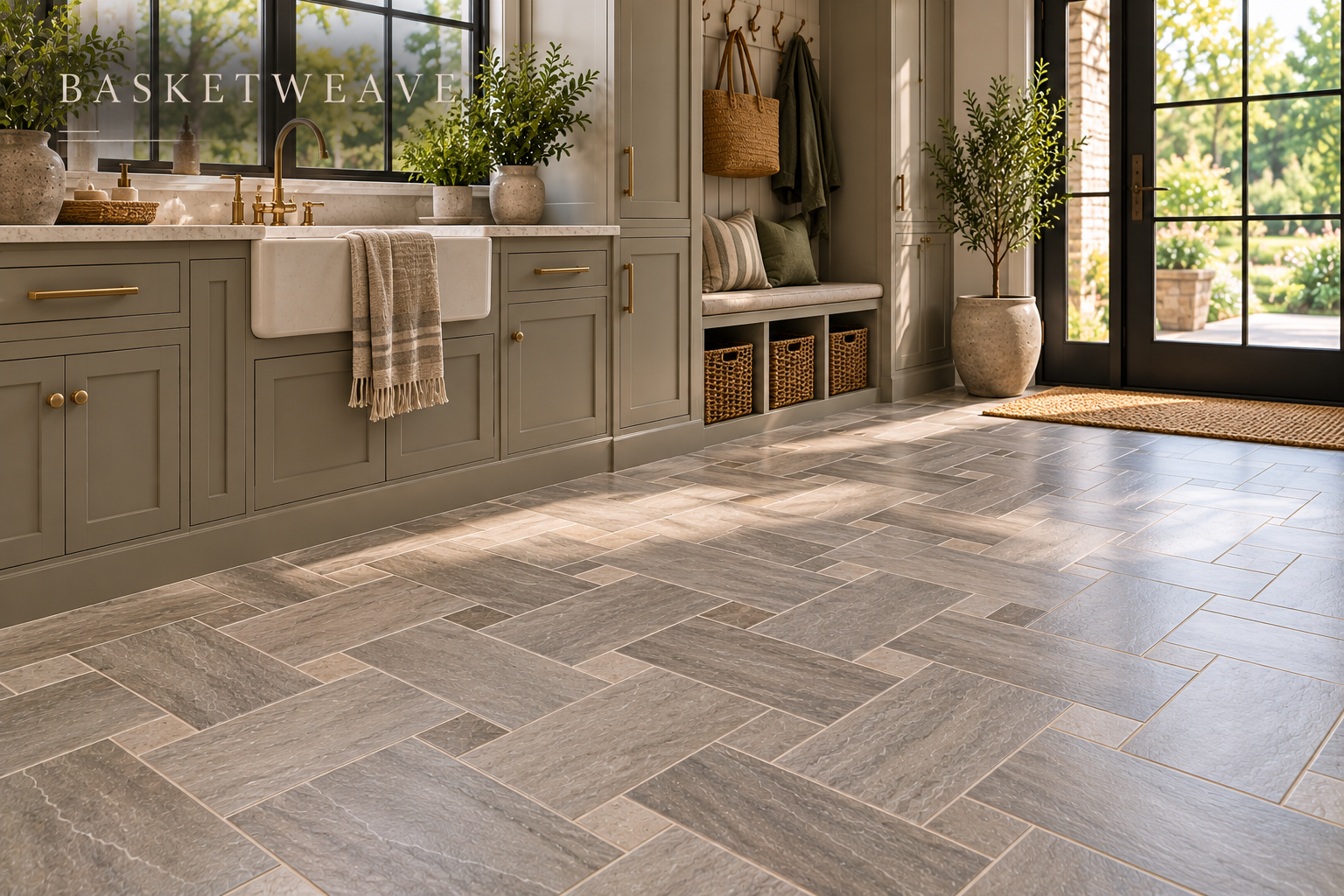
Herringbone
Timeless & Detailed
Rectangular pieces meet at right angles to create the distinctive zigzag pattern.
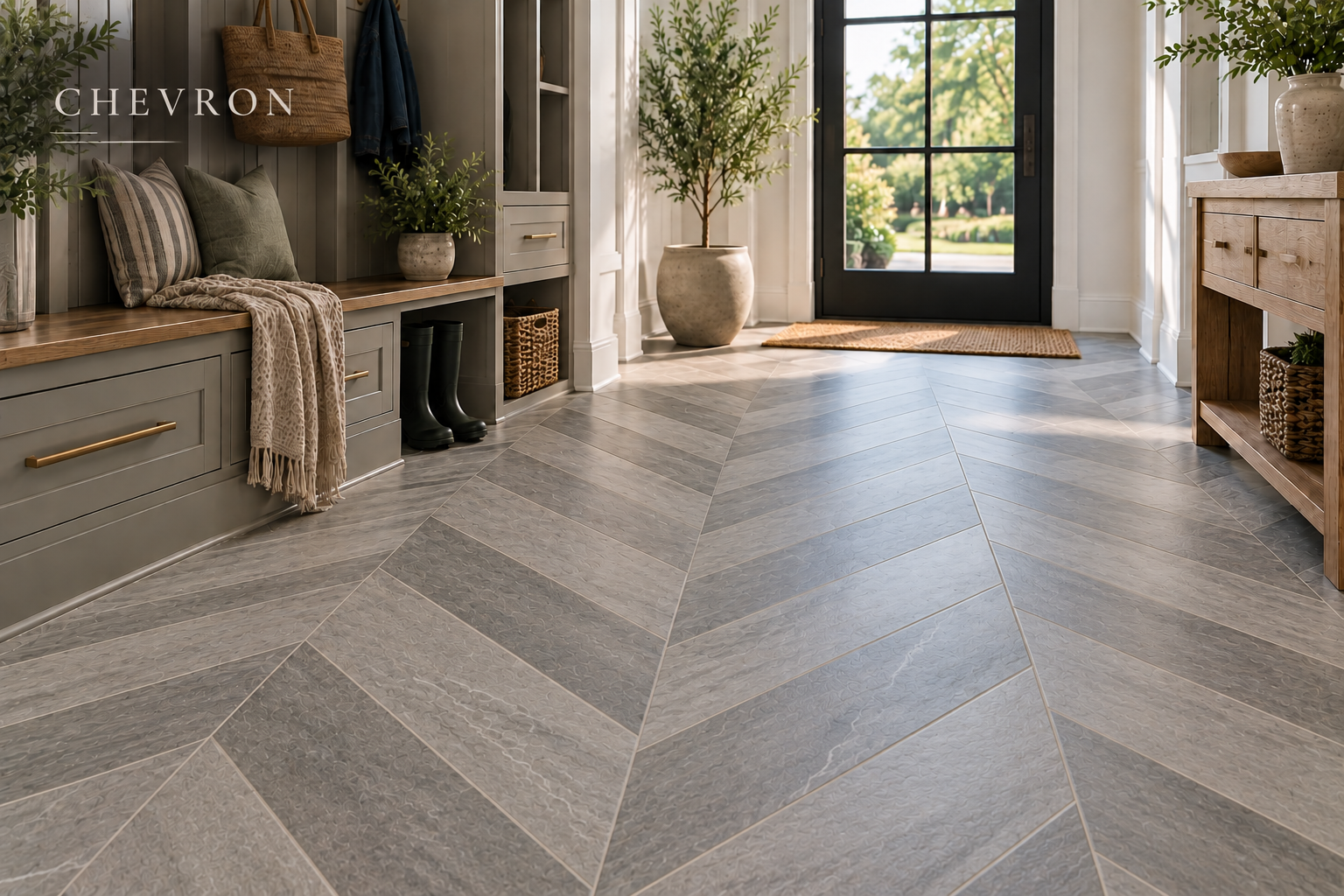
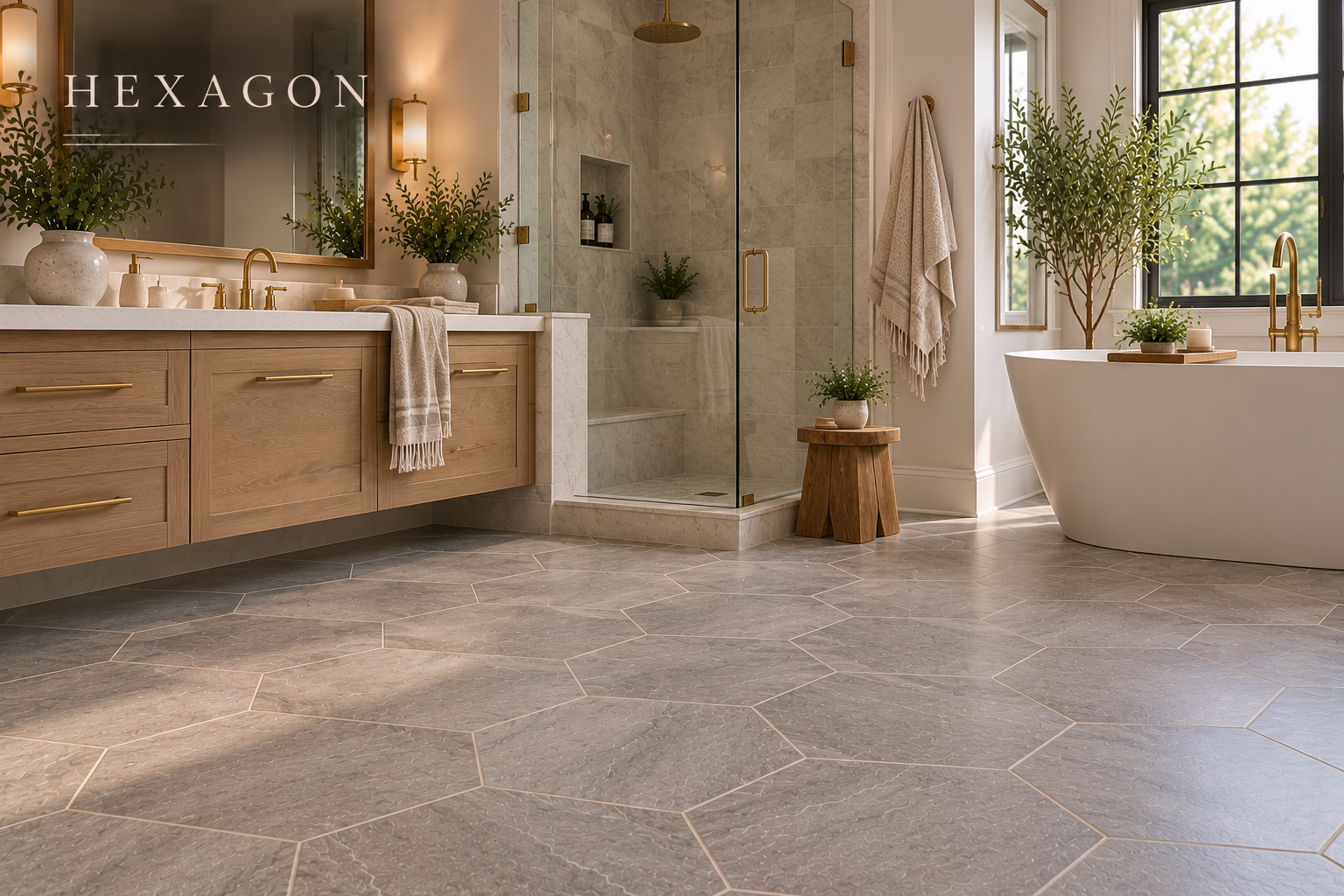
Hexagon / Geometric
Distinctive & Playful
Geometric tile shapes create pattern through the shape of the tile itself.
CHOOSING THE RIGHT FLOORING
Selecting flooring involves more than choosing a color or style. The right material depends on the room, moisture exposure, daily traffic, comfort, maintenance preferences, existing floor conditions, and the overall design of your home.
How to Choose the Right Flooring
When comparing flooring materials, consider:
✓ Where the flooring will be installed
✓ Water and moisture exposure
✓ Daily traffic, children, and pets
✓ Comfort and feel underfoot
✓ Cleaning and maintenance
✓ Existing slab or subfloor conditions
✓ How the flooring will transition into nearby rooms
Flooring often covers a large portion of the home, so consider how the material will look across multiple rooms—not just on a small sample. Color, plank or tile size, direction, and natural light can all affect the finished appearance.
Common Flooring Mistakes to Avoid
- Choosing from a small sample without viewing it in the home
- Selecting based on appearance alone
- Overlooking moisture or existing floor conditions
- Forgetting about transitions between different materials
- Choosing a layout without considering the room’s size and shape
- Assuming every product labeled “waterproof” performs the same way
- Waiting until installation to think about baseboards and finishing details
Designer Tip
Look at the whole home, not just one room. Flooring creates a visual connection between spaces. Using compatible colors, undertones, materials, and transitions can help adjoining rooms feel intentional—even when different flooring materials are used.
Design Details That Matter
HOW GROUT COLOR CHANGES THE LOOK OF TILE
Grout may seem like a small detail, but its color can dramatically influence the appearance of a finished tile installation. The same tile can create three very different looks depending on whether the grout blends in, subtly defines the edges, or creates a strong contrast.
Designer Tip
Grout samples can look different once installed, especially alongside textured tile, natural stone, or under different lighting conditions. Whenever possible, compare grout colors with your actual tile selection before making a final decision.
Three Ways to Approach Grout Color
Matching Grout — A Seamless Appearance
Choosing grout close to the tile's color creates a softer, more continuous appearance. This is especially popular when homeowners want the tile's surface, texture, or natural variation to stand out.
Coordinating Grout — Subtle Definition
A slightly lighter or darker grout adds definition without overwhelming the tile. It offers a balanced look that complements a wide variety of materials and design styles.
Contrasting Grout — A Statement Look
Dark grout against light tile, or vice versa, emphasizes individual tiles and makes the installation pattern more noticeable. This approach works particularly well when the tile's shape or layout is an intentional design feature.
Design Details That Matter
HOW TILE LAYOUT & GROUT JOINTS SHAPE A SPACE
The way tile is arranged and the spacing between each piece can dramatically influence the finished appearance of a room.
Narrow grout joints create a more continuous look, while wider joints make individual tiles more noticeable. Layout patterns, such as stacked, offset, herringbone, and diagonal, can also introduce movement, structure, or visual interest.
Even when using the same tile, these details can create very different results.
Designer Tip
Consider how your tile layout will interact with the room's dimensions, cabinetry, fixtures, and architectural features. A thoughtfully planned layout can help create visual balance and minimize awkward cuts around prominent areas.
What Determines Grout Joint Size?
Tile Size & Edge Variation
The size, shape, and consistency of the tile's edges influence how closely individual pieces can be spaced. Rectified tiles may accommodate narrower joints, while tiles with greater dimensional variation often require additional spacing.
Material & Manufacturing Characteristics
Handmade, textured, and natural stone tiles may have irregular edges or variations in size. These characteristics can influence the grout joint width needed for a consistent installation.
Layout & Installation Requirements
The chosen pattern, tile dimensions, substrate conditions, and manufacturer's recommendations all affect the finished layout. Grout joint width must also accommodate tile size variation and applicable installation standards.
Good to Know
Smaller grout joints aren't always better. Although narrow joints can create a sleek appearance, the appropriate spacing depends on the actual tile and installation requirements—not simply personal preference.
Popular Flooring & Tile Design Trends
___________________________
Flooring and tile design continues to evolve as homeowners look for materials that balance beauty, durability, and everyday practicality. From warm wood-inspired flooring to statement-making tile and seamless transitions between spaces, today's designs offer opportunities to create a more personalized home.
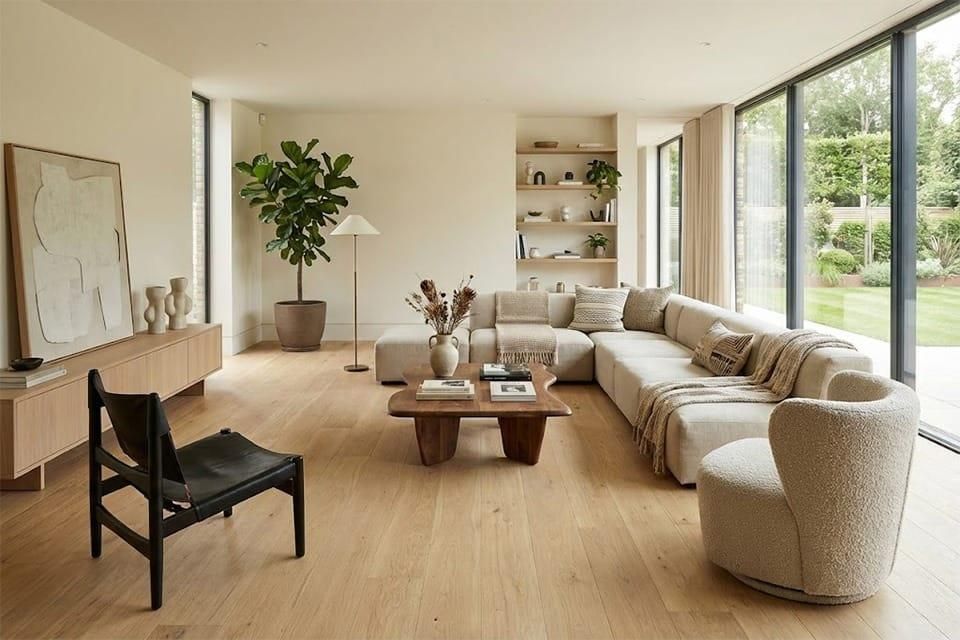
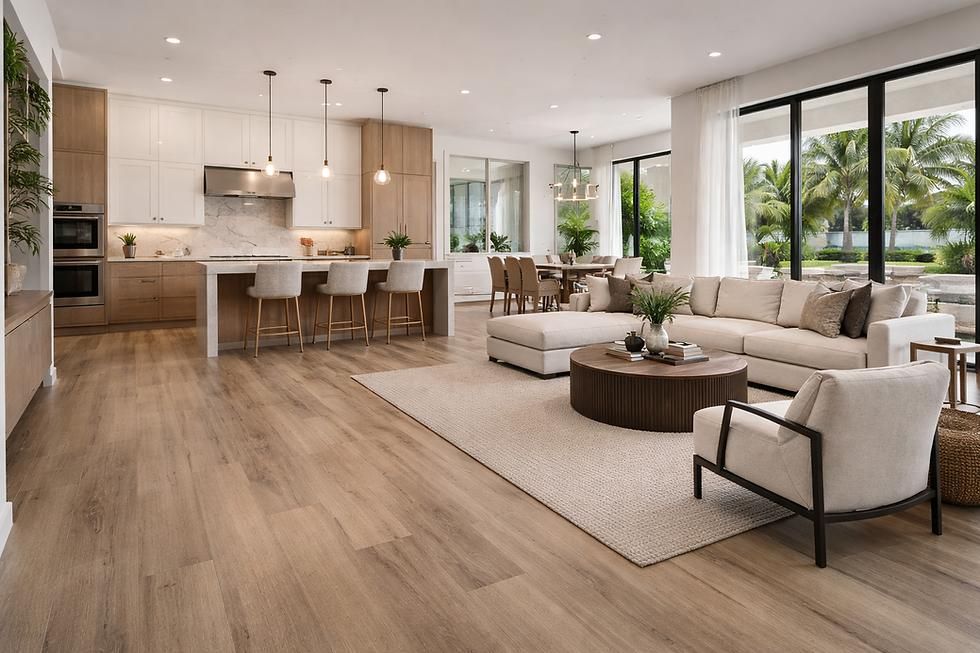
Warm Woods Tones & Natural Wood Looks
Soft, Organic & Timeless
Natural oak tones, warm browns, and realistic wood-look flooring bring warmth and character to interiors while complementing a variety of design styles.
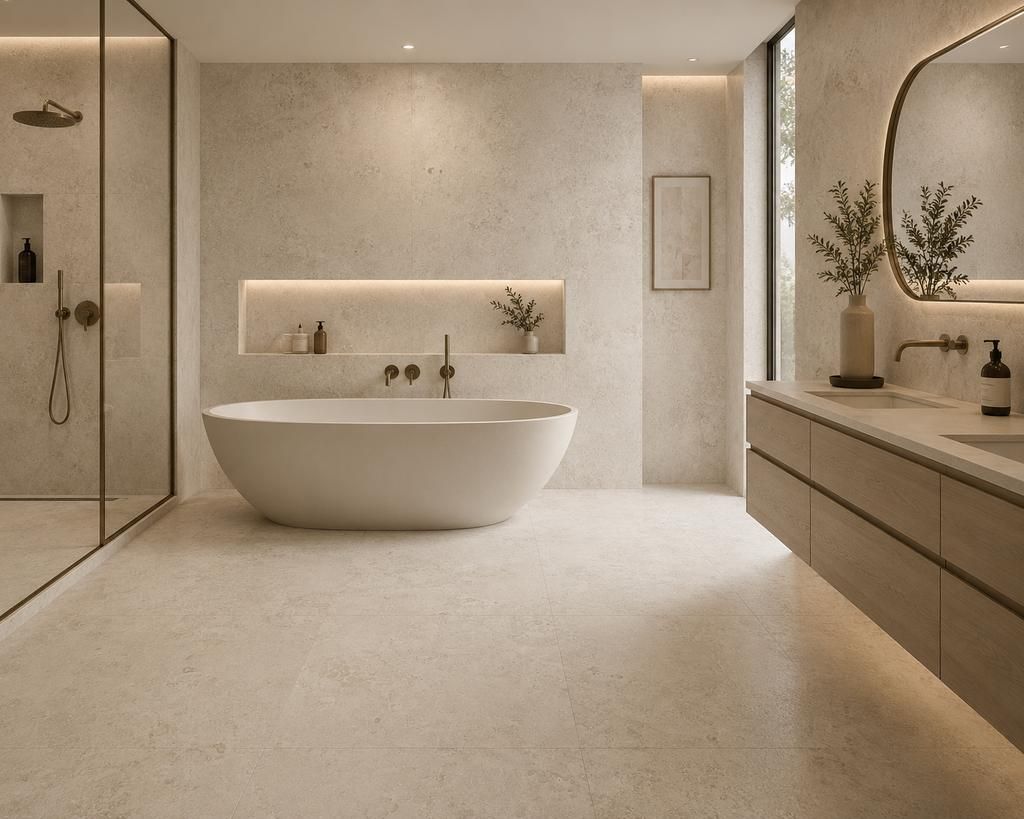
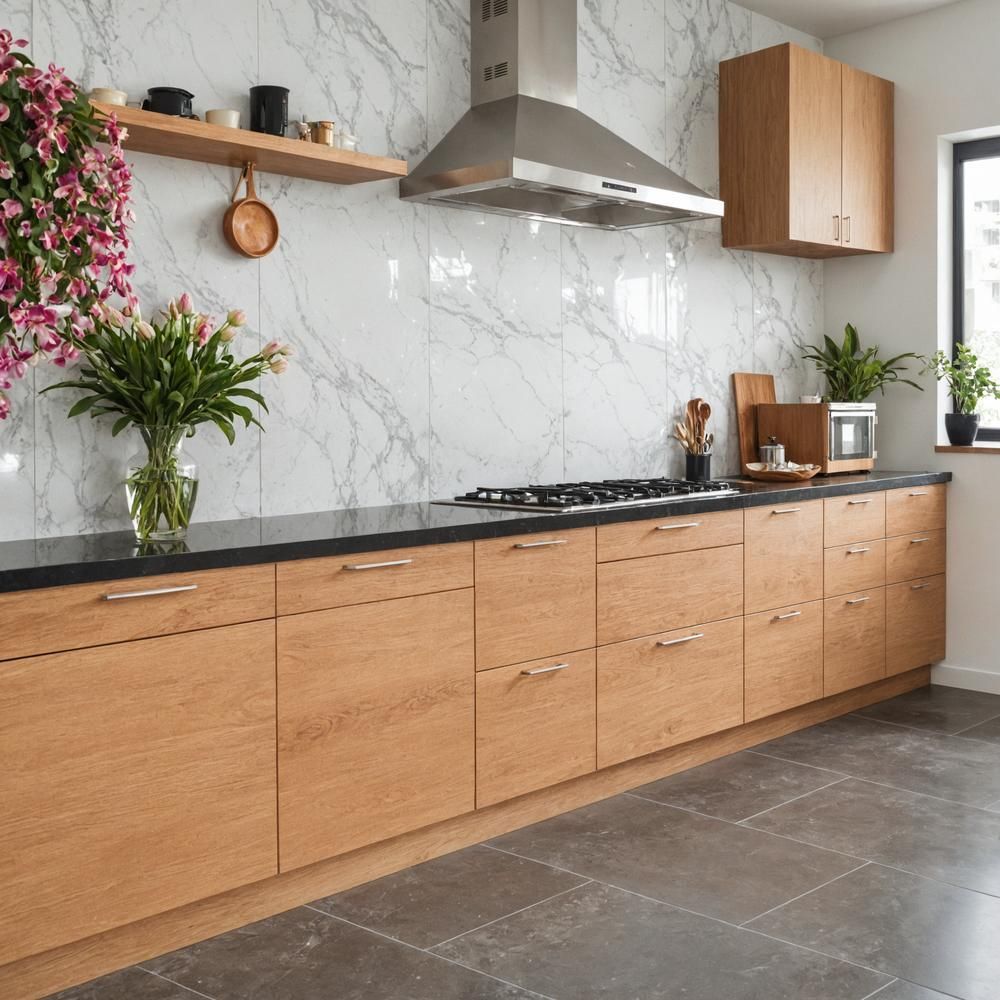
Large-Format Porcelain Tile
Clean Lines & Expansive Surfaces
Larger tile sizes create a more continuous appearance with fewer grout joints, making them a popular choice for contemporary floors and bathroom walls.
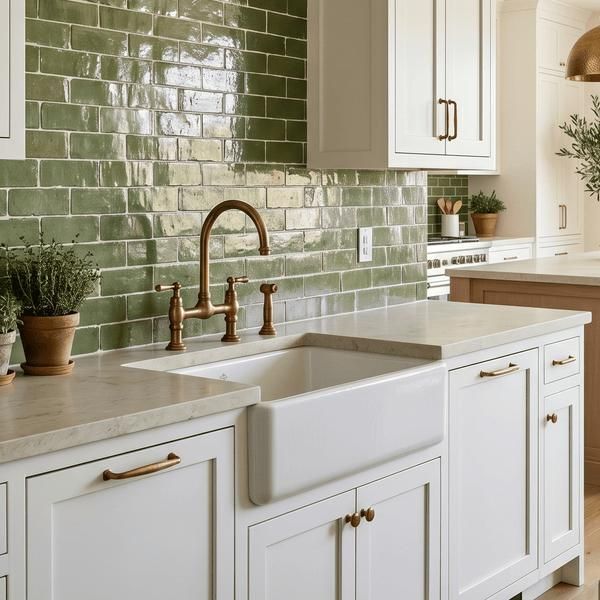
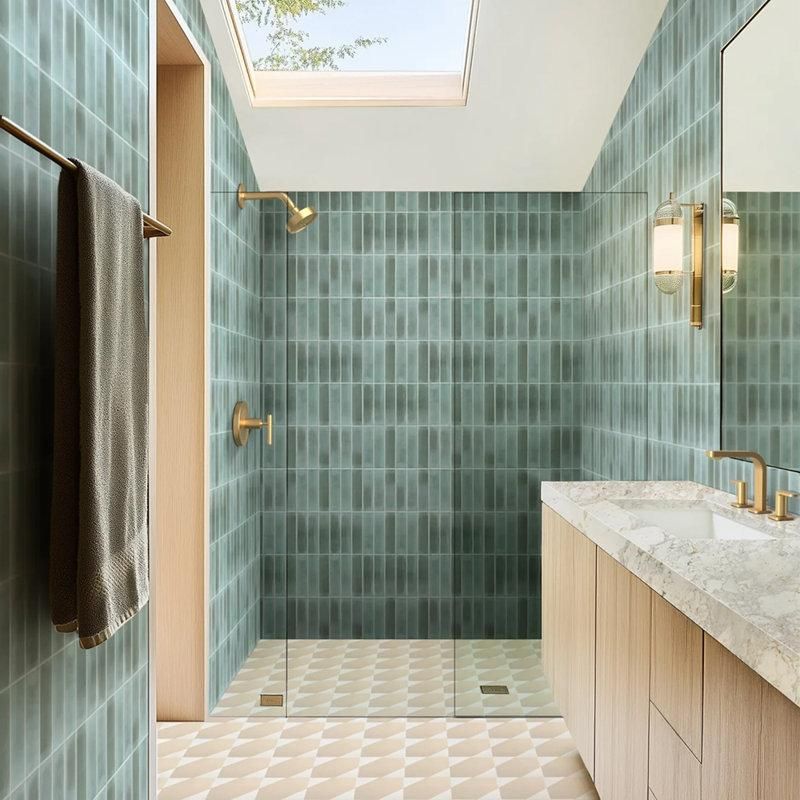
Handcrafted & Zellige-Inspired Tile
Texture, Variation & Character
Tiles with subtle color variation, irregular surfaces, and handcrafted character introduce warmth and individuality to backsplashes and feature walls.
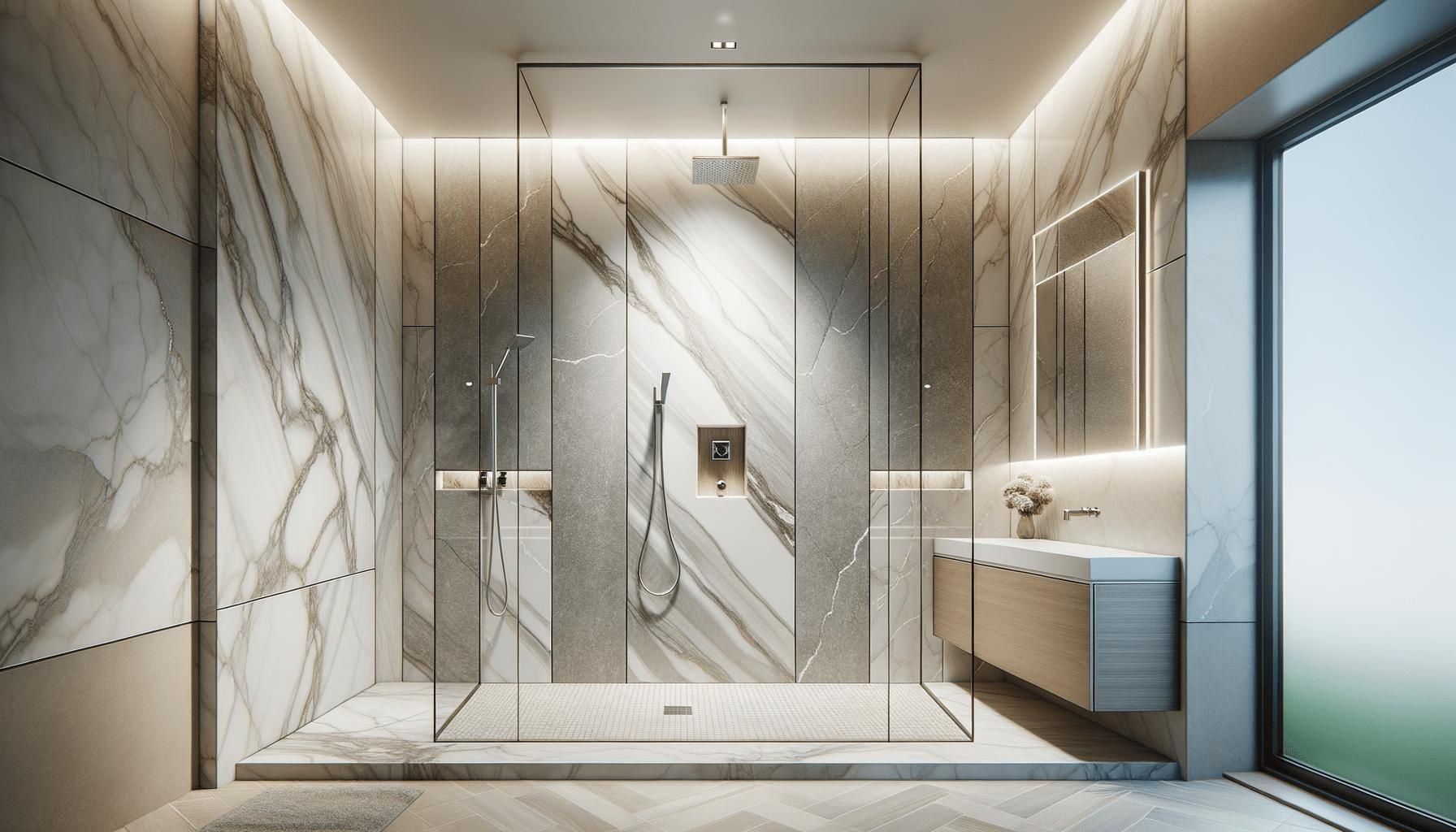
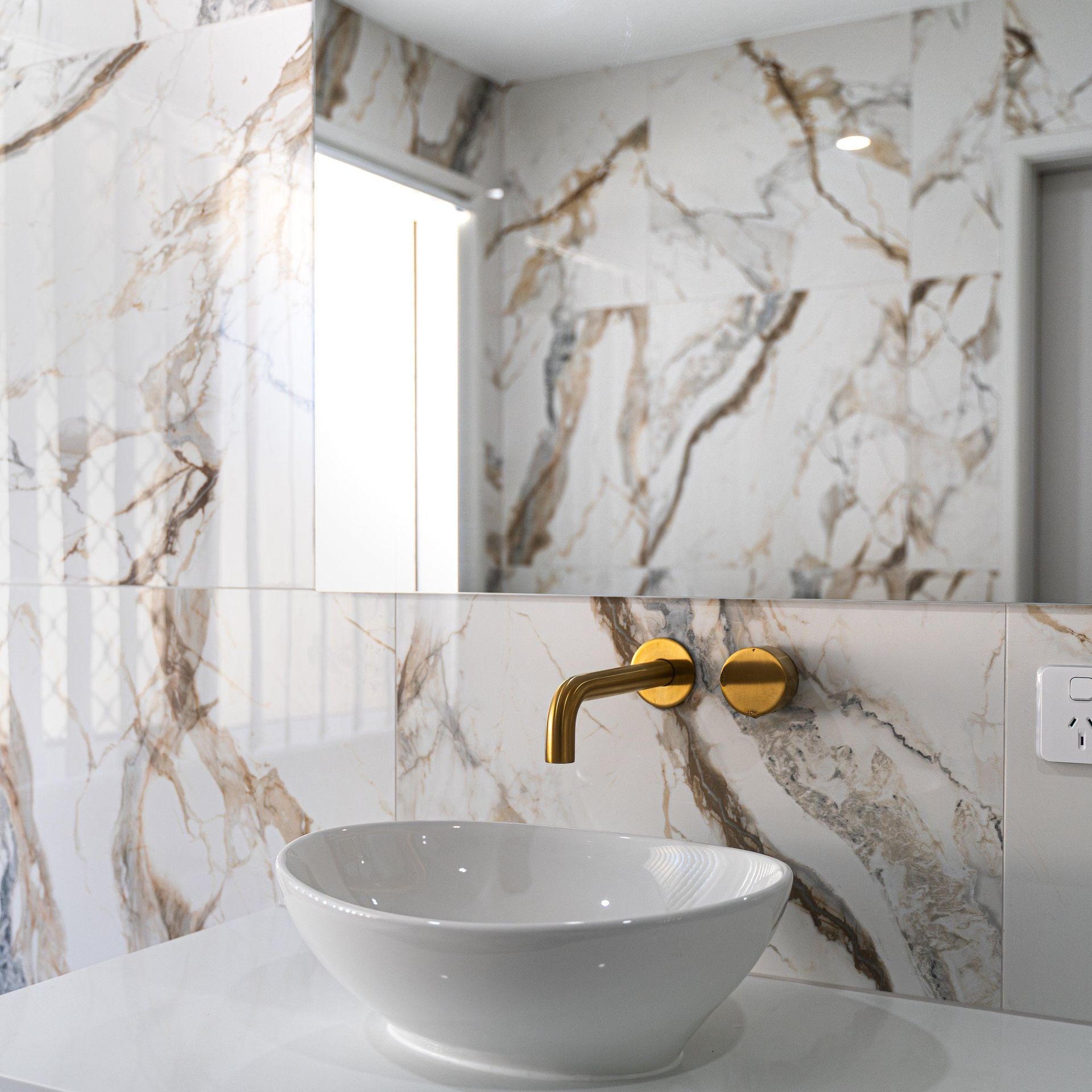
Dramatic Stone-Looking Tile
Bold Veining & Natural Movement
Marble-look and stone-inspired porcelain tile bring visual movement to bathrooms, showers, and feature walls without requiring genuine natural stone.
POPULAR TILE FINISHES & TEXTURES
The finish of a tile influences more than its appearance. Surface texture, reflectivity, cleaning requirements, and suitability for wet or high-traffic areas can all affect which tile is right for your space.
POLISHED / GLOSSY FINISH
- Soft, low-sheen appearance
- Creates a natural, understated look
- Available in stone, concrete, and wood looks
- Often selected for contemporary designs
- Cleaning and slip resistance vary by product
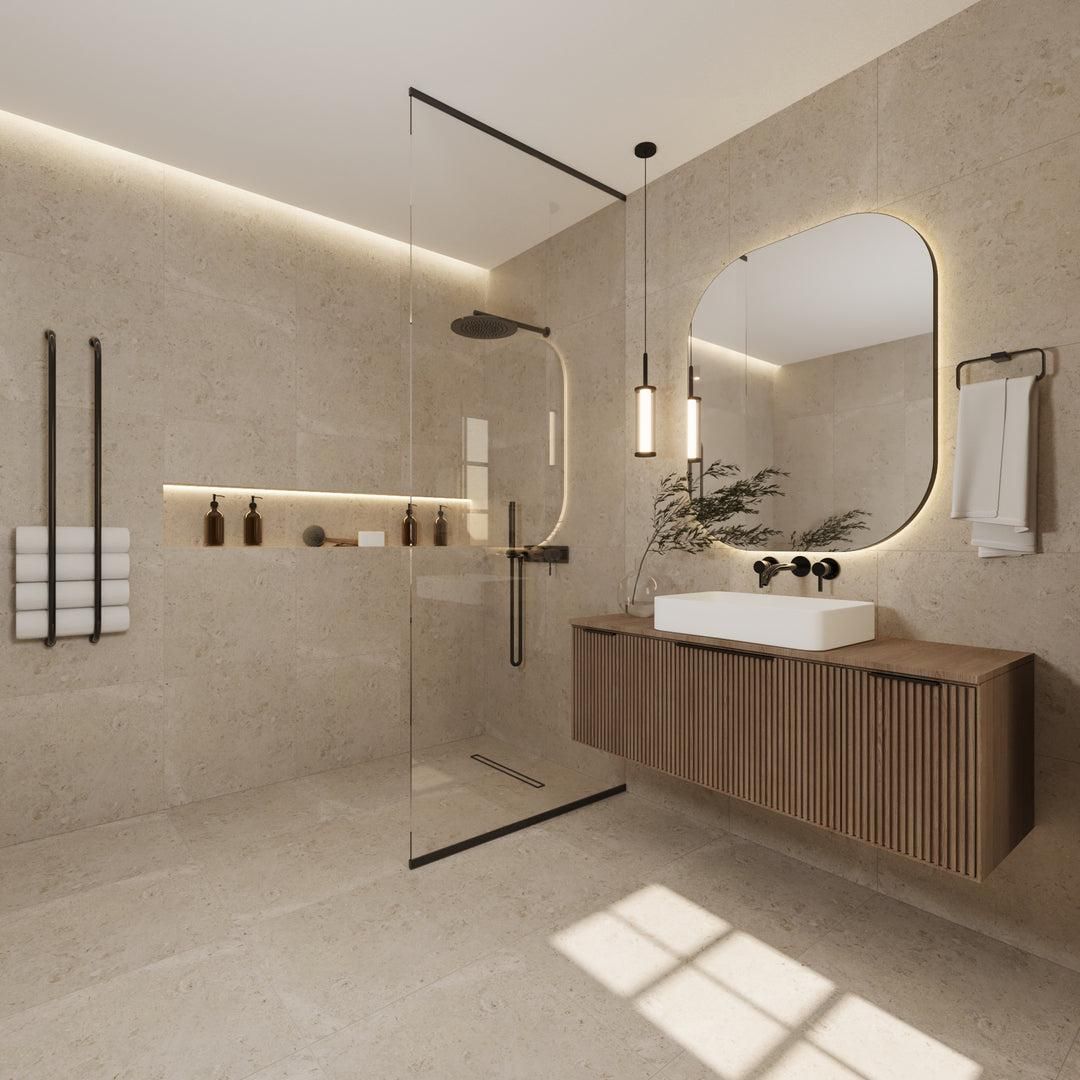
MATTE / HONED FINISH
- Matte appearance
- Softer, contemporary look
- Less reflective
- Popular in modern designs
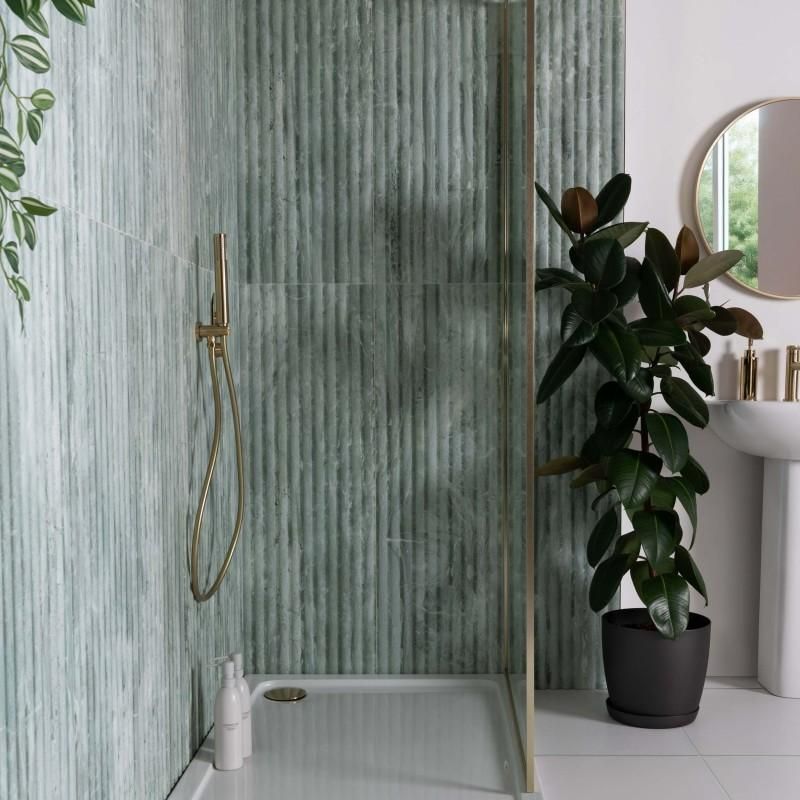
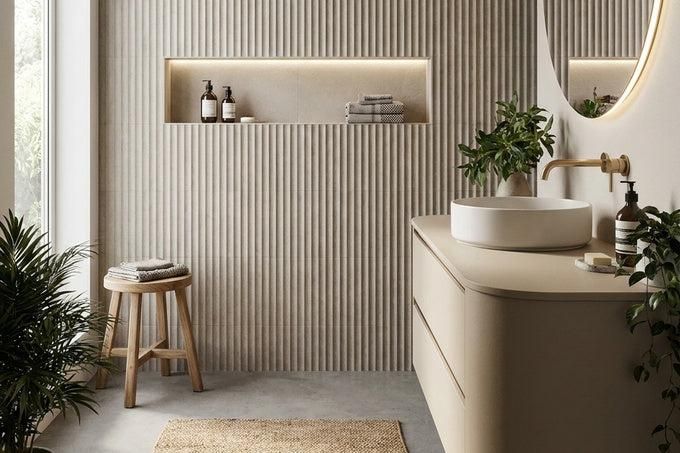
TEXTURED / STRUCTURED FINISH
- Adds tactile and visual dimension
- Includes fluted, ribbed, and stone-like textures
- Creates depth through light and shadow
- Popular for feature walls and shower surrounds
- Deep textures may require more detailed cleaning
FLOORING/TILE MAINTENANCE & CARE GUIDE
Different flooring and tile materials require different cleaning methods, maintenance routines, and precautions. Understanding these differences can help homeowners protect their investment, preserve the appearance of their floors, and choose materials that fit their lifestyle.
Select a material below to explore everyday care recommendations, common mistakes to avoid, and important considerations for long-term maintenance.
TRUST OUR TALENTED TEAM
Explore Flooring & Tile Options With Our Team

Selecting countertops involves more than choosing a color. Material performance, maintenance requirements, edge details, and overall design all play a role in finding the right fit for your home.
Homeowners can visit one of our Central Florida consultation offices to compare samples, review design options, and discuss countertop selections as part of their remodeling project. Our team works closely with homeowners to help narrow down options and create a cohesive design that complements the rest of the space.
Flooring & Tile for Florida Homes
Florida's humidity, frequent rain, sandy soil, and concrete-slab construction can all influence flooring and tile selection. Understanding how different materials respond to moisture, temperature changes, and everyday wear can help homeowners make more informed decisions.
Important Considerations for Florida Homes
- Humidity & Moisture: Wood-based flooring can expand or contract as moisture conditions change. Product specifications and indoor humidity control are important.
- Concrete Slabs: Many Florida homes have concrete foundations. Moisture conditions, surface preparation, and manufacturer requirements influence which flooring systems are appropriate.
- Sand & Everyday Traffic: Sand and grit tracked indoors can gradually wear down flooring finishes. Durability and ease of cleaning are especially valuable in busy households.
- Pools & Outdoor Living: Entryways and areas near patios or pools may experience more frequent moisture exposure. Flooring suitability and slip resistance deserve additional consideration.
Choosing Materials for Long-Term Performance
The best choice depends on the room, existing substrate, moisture exposure, household activities, maintenance preferences, and the manufacturer's installation requirements.
Our team helps homeowners evaluate these considerations alongside their design goals to find flooring and tile options that balance appearance and everyday practicality.
Flooring & Tile FAQs
Choosing flooring and tile involves more than selecting a color or style. From understanding moisture resistance and grout options to planning transitions and installation details, these frequently asked questions can help you make more confident decisions for your home.
1. What is the best flooring for homes in Florida?
There isn't one flooring material that's best for every Florida home. Porcelain tile and luxury vinyl plank (LVP) are popular choices because of their durability, relatively simple maintenance, and moisture-resistant properties.
Engineered hardwood can also be appropriate in certain Florida homes when the product, installation method, and moisture conditions are suitable.
The best choice depends on the room, existing subfloor or concrete slab, household activities, comfort preferences, and maintenance expectations.
2. What is the difference between waterproof and water-resistant flooring?
Water-resistant flooring is designed to tolerate some moisture exposure, but the amount and duration it can withstand vary by product.
Waterproof flooring typically refers to a material designed to resist damage from water under specified conditions. However, even waterproof planks do not necessarily create a waterproof flooring installation.
Water can still reach the substrate through edges, transitions, perimeter gaps, or other openings. Always review the manufacturer's specific performance claims and installation requirements.
3. Is luxury vinyl plank (LVP) better than porcelain tile?
Both materials offer advantages, but they perform differently.
LVP generally feels warmer, softer, and quieter underfoot. It also offers realistic wood-look designs and relatively easy everyday maintenance.
Porcelain tile provides a hard, durable surface with very low water absorption, making it particularly useful in bathrooms, kitchens, and other moisture-prone spaces.
The better choice depends on your priorities, including comfort, appearance, durability, maintenance, and the conditions of the installation area.
4. Can hardwood flooring be installed over a concrete slab?
Certain engineered hardwood products can be installed over concrete slabs when the manufacturer's requirements are met.
Solid hardwood generally has more installation limitations over concrete, particularly where moisture conditions are a concern.
Before selecting wood flooring, it's important to evaluate the slab's moisture conditions, the flooring manufacturer's specifications, and the approved installation method.
5. What is the difference between porcelain and ceramic tile?
Porcelain is a type of ceramic tile manufactured to meet a particularly low water-absorption standard. It is generally denser and less absorbent than non-porcelain ceramic tile.
Both are available in a wide variety of colors, finishes, shapes, and sizes.
Porcelain is frequently selected for floors, showers, and other demanding applications, while ceramic tile is commonly used for backsplashes, walls, and appropriate residential floors.
Not every tile is suitable for every location, so the manufacturer's recommended applications should always be considered.
6. Can new tile be installed over existing tile?
In some situations, new tile can be installed over an existing tile surface, but it depends on the condition and suitability of the original installation.
The existing tile must be properly bonded, structurally sound, and compatible with the proposed installation system. Additional height can also affect door clearances, transitions, fixtures, and surrounding finishes.
In other cases, removing the existing tile is the more appropriate approach.
A project evaluation can help determine which option makes sense for the space.
7. Why do grout joint sizes vary between tile installations?
Grout joint width depends on several factors, including tile dimensions, manufacturing variation, edge characteristics, installation pattern, and manufacturer requirements.
Rectified tiles, which have been mechanically finished to create more consistent dimensions, may allow narrower grout joints than some other tile products.
However, narrower joints aren't automatically better. The appropriate joint width helps accommodate tile variation and contributes to a consistent finished appearance.
8. Does grout need to be sealed?
Not all grout requires sealing.
Traditional cement-based grout may benefit from an appropriate penetrating sealer, while many epoxy and certain high-performance grout products do not require additional sealing.
Sealing requirements depend on the specific grout formulation, installation location, and manufacturer's recommendations.
It's also important to understand that grout sealer is not a substitute for waterproofing in showers or other wet areas.
9. What is Schluter, and why is it used in tile installations?
Schluter is a manufacturer of tile installation products, including edge profiles, waterproofing membranes, uncoupling membranes, and shower systems.
Homeowners may hear the name used when discussing finished tile edges, shower niches, floor transitions, or waterproofing details.
Different products serve different purposes. For example, an edge profile finishes and protects an exposed tile edge, while a waterproofing membrane is part of a system designed to manage water in wet areas.
The appropriate products depend on the application and installation requirements.
10. Are tile and grout waterproof?
Porcelain tile has very low water absorption, but tile and grout alone do not make a shower or wet-area installation waterproof.
A properly designed shower relies on an appropriate waterproofing system beneath the finished tile.
Grout, flexible sealant, tile, and waterproofing components each serve different purposes within the installation.
This is why the materials and methods used behind the tile are just as important as the finished appearance.
11. What is tile lippage, and why does it matter?
Lippage refers to a difference in height between the edges of neighboring tiles.
Some variation may occur because of tile characteristics, substrate conditions, or installation requirements. However, excessive lippage can affect the appearance, comfort, and usability of a tiled surface.
Tile size, flatness, layout pattern, and proper substrate preparation all influence the finished result.
Acceptable tolerances depend on applicable installation standards and the characteristics of the tile.
12. Why are flooring transitions necessary?
Flooring transitions help create a finished connection where different flooring materials meet.
They may accommodate differences in material thickness, provide appropriate edge protection, or allow for movement where required.
Common examples include transitions between tile and LVP, flooring and carpet, or adjoining rooms with different floor heights.
The right transition depends on the materials, installation methods, height differences, and overall design.
13. What flooring is easiest to maintain?
Luxury vinyl plank and porcelain tile are often among the easiest flooring materials to maintain for busy households.
LVP typically requires regular sweeping and manufacturer-approved cleaning without routine sealing or refinishing.
Porcelain tile is also relatively easy to clean, although grout and certain specialty finishes may have additional care requirements.
Laminate, hardwood, and natural stone can also perform well, but their maintenance needs differ depending on the product and installation location.
14. How do I choose the right flooring or tile for my remodeling project?
Start by considering how the space will be used.
Think about moisture exposure, foot traffic, pets, comfort, maintenance preferences, existing flooring conditions, and your overall design goals.
It's also helpful to compare physical samples in different lighting conditions, since colors, textures, and finishes can look different in your home than they do in a showroom or online.
At Pristine Remodeling, we help homeowners evaluate material options, understand installation considerations, and coordinate flooring and tile selections with the rest of their remodeling project.