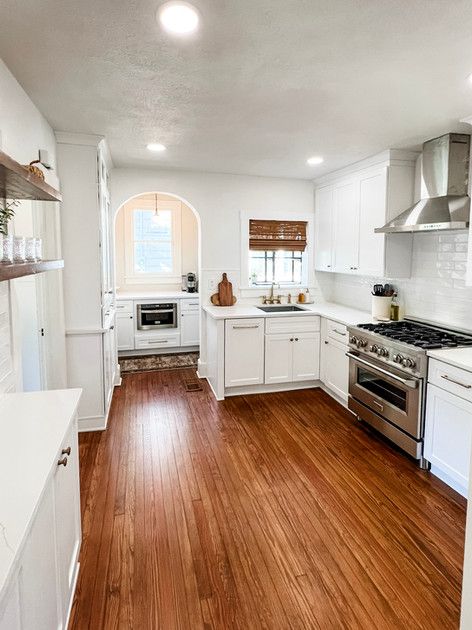
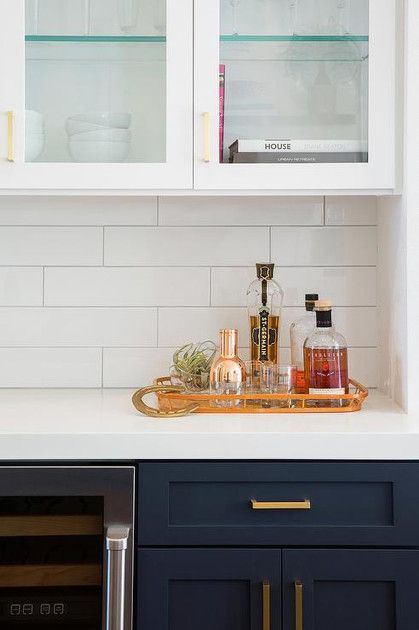
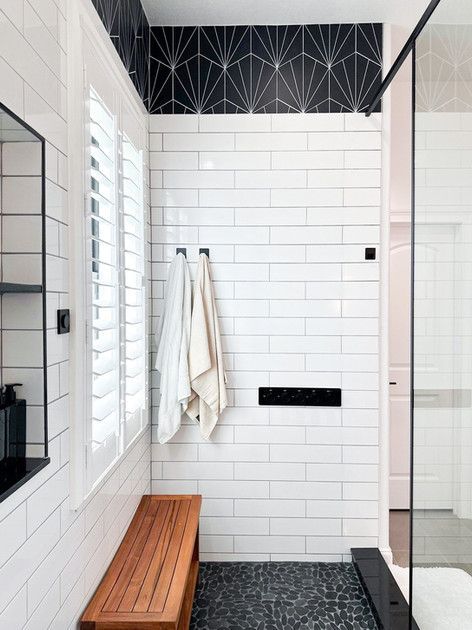
Choosing the Right Cabinets for Your Remodeling Project
Cabinetry plays a major role in both the appearance and functionality of your kitchen, bathroom, laundry room, or built-in storage space. While door style and color are often the first things homeowners notice, cabinet construction, materials, storage features, hardware, and finishing details can make just as much of a difference in how the finished space looks and functions.
From stock and semi-custom cabinetry to custom-built solutions, understanding the differences can help you make selections that fit your space, design goals, storage needs, and budget. This guide walks through the key features and options to consider when choosing cabinetry for your remodeling project.
Helpful Resources for Choosing Your Cabinets
Understanding Cabinet Types
Cabinetry varies in how it is manufactured, constructed, and installed. Understanding these differences can help you compare options based on your space, design goals, storage needs, and budget.
Common cabinet types and construction styles include:
Stock Cabinets
Best For: Straightforward layouts, budget-conscious projects, faster selections
Customization: Limited
Relative Cost: $–$$
Highlights:
- Manufactured in standard sizes
- Predetermined door styles and finishes
- Common cabinet configurations
- Fillers and trim help adapt cabinetry to the space
- Typically fewer modifications than semi-custom or custom lines
What Homeowners Should Know:
Stock cabinetry is manufactured in predetermined sizes and configurations, which can make it a practical option for spaces that work well with standard cabinet dimensions. Although customization is more limited, thoughtful layout planning and the use of fillers, finished panels, moldings, and other trim details can create a polished, integrated finished appearance.
Semi-Custom Cabinets
Best For: Homeowners looking for greater design flexibility without fully custom fabrication
Customization: Moderate to High
Relative Cost: $$–$$$
Highlights:
- Broader range of sizes and configurations
- More door styles, finishes, and colors
- Additional storage and organizational options
- Some dimensional modifications may be available
- Greater flexibility for trim, panels, and decorative details
What Homeowners Should Know:
Semi-custom cabinetry begins with a manufacturer's cabinet line but offers more choices and modifications than stock cabinetry. Depending on the manufacturer, homeowners may be able to adjust certain dimensions, select specialty storage features, and choose from a wider range of finishes and design details. This flexibility can help cabinetry fit the room more intentionally while maintaining the efficiencies of manufactured cabinet systems.
Custom Cabinets
Best For: Unique layouts, specialized storage needs, distinctive designs, and spaces requiring greater dimensional flexibility
Customization: Very High
Relative Cost: $$$–$$$$
Highlights:
- Designed specifically for the project
- Greater flexibility in cabinet dimensions
- Specialized configurations and storage solutions
- Extensive material, finish, and design options
- Well suited for unusual architectural conditions
What Homeowners Should Know:
Custom cabinetry is designed and fabricated specifically for a particular project rather than being limited primarily to predetermined cabinet sizes and configurations. This allows cabinetry to respond closely to the dimensions, architecture, and functional needs of the space. The additional design and fabrication involved typically means longer lead times and a higher investment than stock or semi-custom cabinetry.
Built-in Cabinetry
Best For: Creating an integrated, architectural appearance in kitchens, living spaces, offices, pantries, laundry rooms, and specialty storage areas
Customization: Varies
Relative Cost: $$–$$$$
Highlights:
- Designed to visually integrate with the surrounding space
- Can incorporate manufactured or custom cabinetry
- Uses panels, fillers, moldings, and trim for a finished appearance
- Can extend wall-to-wall or floor-to-ceiling
- Useful throughout the home, not just kitchens
What Homeowners Should Know:
“Built-in” describes how cabinetry is incorporated into the room rather than necessarily how the cabinet itself was manufactured. Stock, semi-custom, or fully custom cabinetry can all be used to create a built-in appearance. Finished panels, fillers, moldings, trim, and other details help cabinetry relate naturally to surrounding walls, ceilings, and architectural features.
Framed Cabinets
Best For: Traditional and transitional cabinetry designs and homeowners who want a wide range of door configurations
Construction: Face-frame construction
Relative Cost: Varies
Highlights:
- Face frame is attached to the front of the cabinet box
- Adds structure around the cabinet opening
- Common in American cabinetry
- Compatible with several overlay styles
- Available across many cabinet quality and price levels
What Homeowners Should Know:
Framed cabinetry has a structural frame attached to the front of the cabinet box. Doors and drawer fronts are positioned in relation to this frame. Depending on the design, they may partially cover it, cover most of it, or sit inside it as inset cabinetry. Because framed construction is available from many manufacturers and cabinet lines, the presence of a face frame alone does not determine cabinet quality.
Frameless Cabinets
Best For: Contemporary designs, clean lines, and maximizing accessible cabinet openings
Construction: Frameless / European-style construction
Relative Cost: Varies
Highlights:
- No traditional face frame
- Doors attach directly to the cabinet box
- Clean, streamlined appearance
- Wider access to cabinet interiors
- Commonly paired with full-overlay doors
What Homeowners Should Know:
Frameless cabinetry eliminates the face frame found on traditional framed cabinets. Instead, the cabinet box provides the structure and the doors attach directly to it. This creates a clean appearance and can provide slightly greater access to the cabinet interior. Frameless construction is sometimes called European-style cabinetry, although it can be used in many different design styles.
Inset Cabinets
Best For: Detailed, furniture-inspired, traditional, transitional, and refined kitchen designs
Door Placement: Inside the face frame
Relative Cost: $$$–$$$$
Highlights:
- Doors and drawer fronts sit within the cabinet frame
- Creates clean, precise reveals around doors
- Furniture-like appearance
- Requires precise manufacturing and installation
- Available in several door styles and finishes
What Homeowners Should Know:
With inset cabinetry, doors and drawer fronts fit inside the cabinet's face frame rather than covering it. The resulting even reveals create a distinctive, tailored appearance. Because tolerances must be precise for doors and drawers to operate properly, inset cabinetry generally requires more exact fabrication and installation than typical overlay construction.
Overlay Cabinets
Best For: A broad range of traditional, transitional, and contemporary designs
Door Placement: Over the cabinet face frame or box
Relative Cost: $–$$$
Highlights:
- Doors and drawer fronts cover the cabinet opening
- Available in full and partial overlay configurations
- Full overlay creates a more continuous cabinet-front appearance
- Partial overlay leaves more of the face frame visible
- Available across a wide range of cabinet lines and price points
What Homeowners Should Know:
Overlay describes cabinetry in which the doors and drawer fronts sit over the cabinet opening rather than inside the face frame. Full overlay doors cover most of the cabinet face, leaving narrow gaps between doors and drawers, while partial overlay leaves more of the cabinet frame visible. Overlay construction is extremely common and can work with many different cabinet door styles.
Not sure which cabinet type is right for your project?
The right cabinetry depends on your space, storage needs, design goals, budget, and desired level of customization. Cabinet type is only one part of the decision—construction, door style, finish, interior features, hardware, and finishing details all contribute to the final result. During the planning process, our team helps homeowners compare options and create cabinetry selections that complement the overall design of their space.
STOCK VS. SEMI-CUSTOM CABINETS: WHAT'S THE DIFFERENCE?
Stock and semi-custom cabinets are both manufactured cabinet systems, but they differ in the amount of flexibility they offer during the design process. Understanding the differences in sizing, finishes, storage options, modifications, and cost can help homeowners determine which approach better fits their remodeling project.
Good to Know: Stock, semi-custom, and custom describe the level of manufacturing and design flexibility—not simply how expensive or “custom” the finished cabinetry looks. Thoughtful planning, trim, panels, hardware, and finishing details can dramatically influence the final appearance.
STOCK CABINETS
Stock cabinets are manufactured in predetermined sizes, configurations, door styles, and finishes. Because the available options are standardized, they can provide a practical and efficient solution for kitchens, bathrooms, and other spaces that work well with standard cabinet dimensions.
A thoughtful design can still give stock cabinetry a polished, integrated appearance. Fillers, finished panels, moldings, and trim can help adapt the cabinetry to the room and create a more finished look.
- Standard cabinet sizes and configurations
- More limited selection of finishes and modifications
- Typically shorter lead times
- Generally lower starting cost
- Can be enhanced with panels, moldings, and trim
SEMI-CUSTOM CABINETS
Semi-custom cabinets combine the efficiencies of manufactured cabinetry with greater flexibility in sizing, finishes, configurations, and interior features. Depending on the cabinet line, certain dimensions may be modified and a broader selection of storage solutions and design details may be available.
This added flexibility can be especially useful when a room has specific dimensions, storage requirements, or design details that are difficult to achieve with standard stock cabinetry alone.
- Greater flexibility in sizing and configuration
- Broader selection of door styles, colors, and finishes
- More interior storage and organizational options
- Manufacturer-dependent modifications available
- Typically greater investment and longer lead time than stock cabinetry
Designing Your Cabinets: Door Styles, Profiles & Design Details
Cabinet doors are one of the most visible elements in a kitchen, bathroom, or built-in space. The profile you choose can influence whether the finished cabinetry feels traditional, transitional, contemporary, or somewhere in between. Understanding the differences between common door styles can make it easier to select cabinetry that complements the architecture and overall design of your home.
Choosing the Right Cabinets
Selecting cabinetry involves more than choosing a door style or color. The right cabinets for your home depend on how the space will be used, your storage needs, desired level of customization, design preferences, and overall project budget.
How to Choose the Right Cabinets
When comparing cabinet options, consider:
✓ Cabinet construction and box materials
✓ Stock, semi-custom, or custom options
✓ Storage needs and interior organization
✓ Door style and finish
✓ Framed, frameless, inset, or overlay construction
✓ Drawer and door hardware
✓ Appliance sizes and clearances
✓ Trim, panels, and finishing details
✓ Budget and lead time
✓ How the cabinetry coordinates with countertops, flooring, and backsplash
The most expensive cabinetry is not automatically the right choice for every project. Good cabinet planning balances construction, functionality, storage, appearance, and budget to create a solution that works well for the space.
Common Cabinet Selection Mistakes to Avoid
• Choosing cabinetry based on color or door style alone
• Overlooking usable interior storage
• Not planning around appliance dimensions and clearances
• Assuming “custom-looking” cabinetry is necessarily custom-built
• Confusing door style with cabinet construction
• Overlooking fillers, finished panels, moldings, and trim
• Choosing hardware without considering door and drawer proportions
• Not considering lead times early in the project
Designer Tip
Plan the function before the finishes. Think about what needs to be stored, where you use it, and how you move through the space before deciding on door styles, colors, and hardware. A well-planned cabinet layout can improve everyday function while still creating the finished look you want.
Choosing the Right Cabinet Door Style
Cabinet door style can dramatically change the appearance of the same cabinetry. Clean, simple profiles tend to create a more streamlined look, while raised panels, applied moldings, and other decorative details can add depth and traditional character.
__________________
The right door style depends on your overall design direction, desired level of detail, finish, hardware, and the other materials being used throughout the room. Door style is also separate from cabinet construction—a Shaker-style door, for example, may be available on stock, semi-custom, or custom cabinetry.
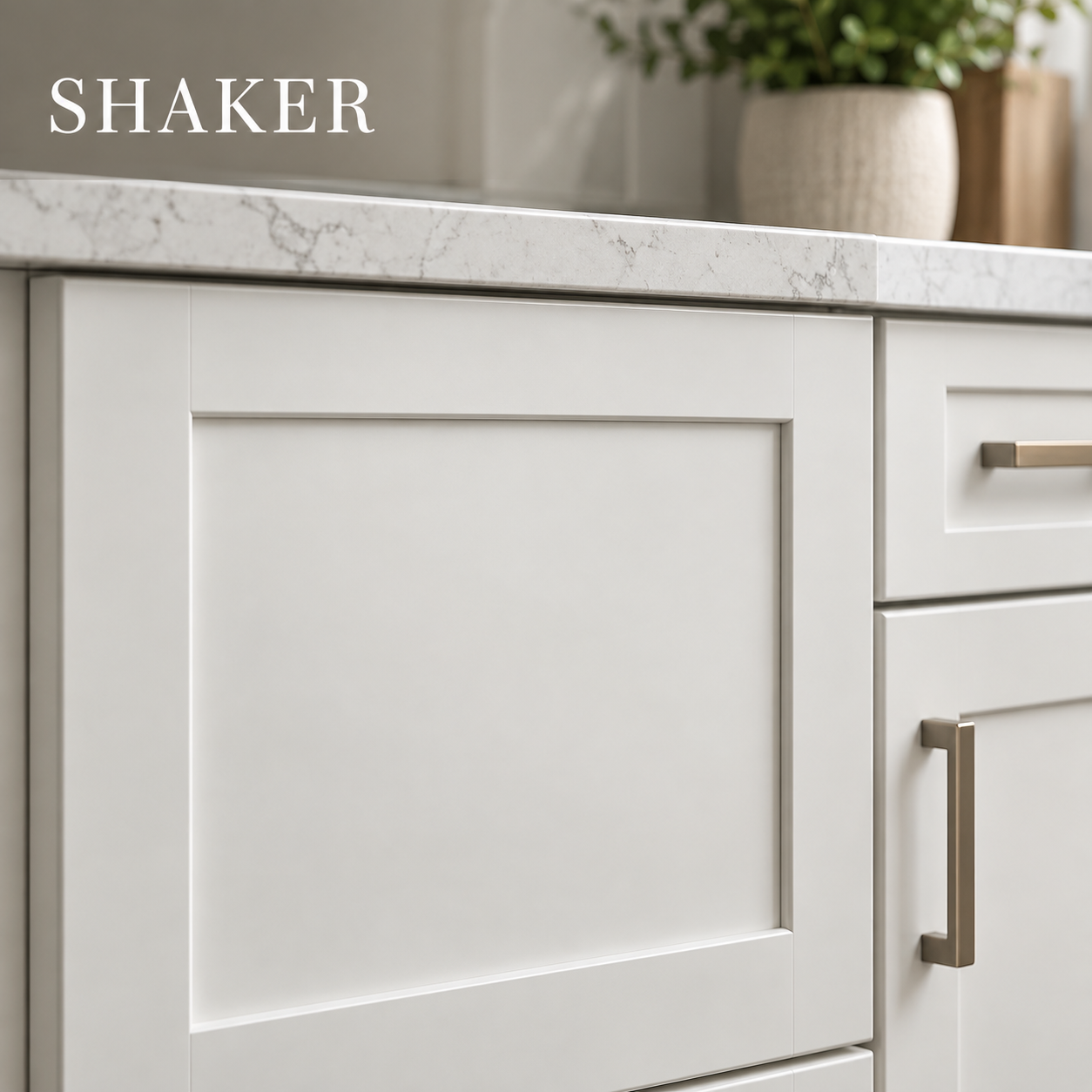
Shaker
Clean & Versatile
A five-piece door with a recessed center panel and simple square frame. Shaker cabinetry works across a wide range of design styles because of its clean, balanced proportions.
Commonly Used For:
- Transitional kitchens
- Modern farmhouse designs
- Traditional or contemporary spaces
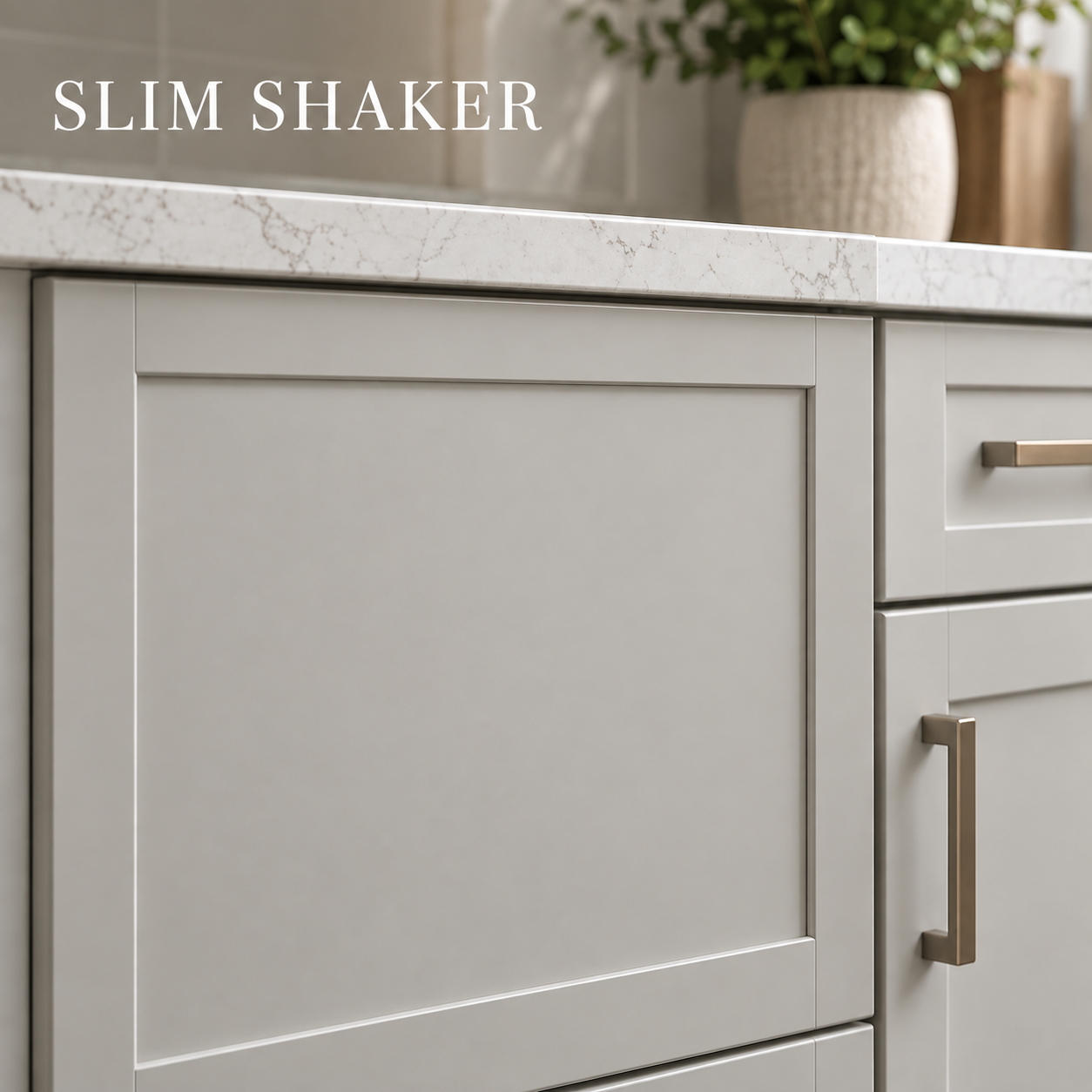
Slim Shaker
Refined & Contemporary
A streamlined variation of the traditional Shaker door featuring narrower rails and stiles around the center panel. The slimmer profile creates a lighter, more contemporary appearance.
Commonly Used For:
- Contemporary kitchens
- Transitional designs
- Clean, minimalist spaces
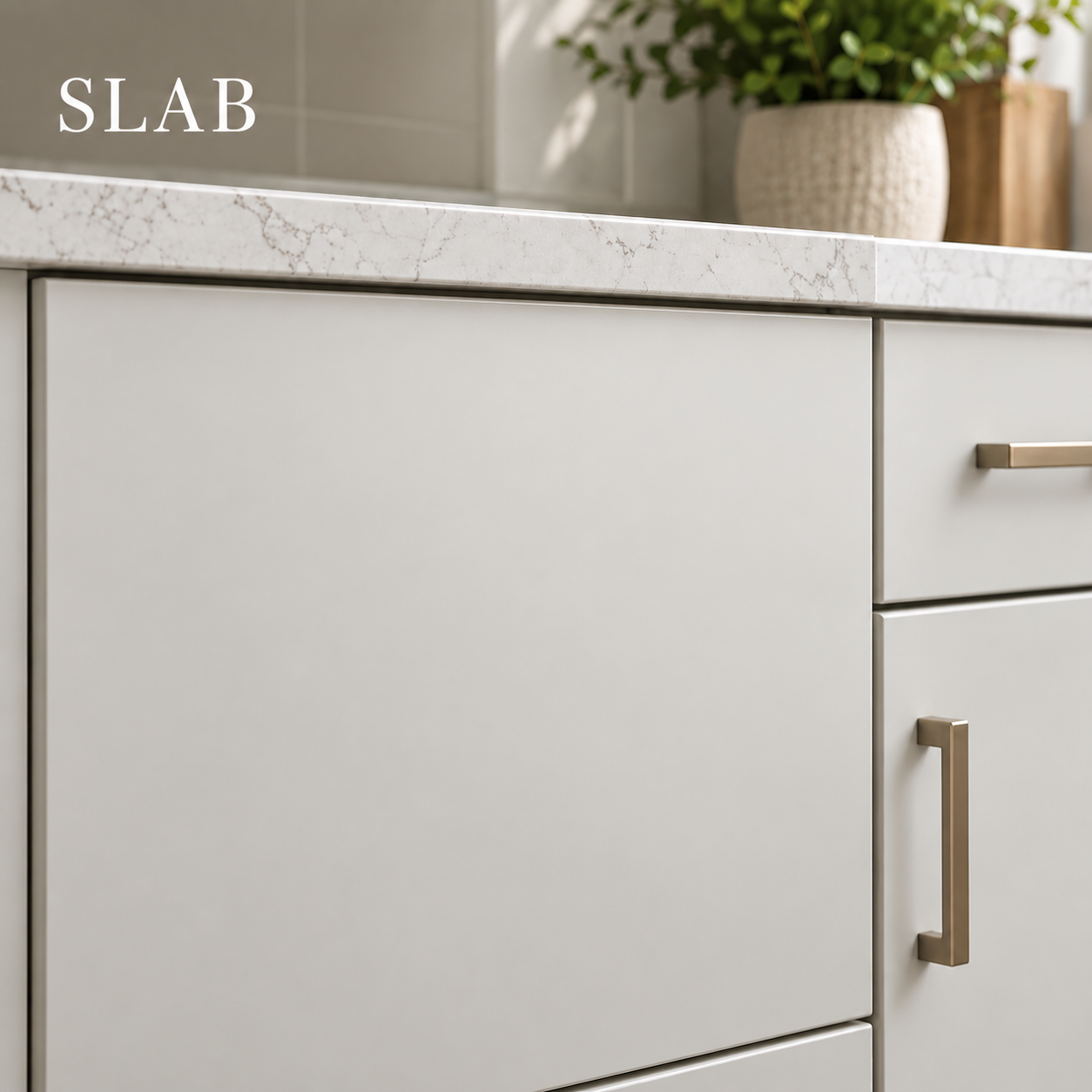
Slab
Modern & Minimal
A flat cabinet front without a raised or recessed center panel. Its uninterrupted surface creates a clean architectural appearance and allows color, wood grain, and hardware to take center stage.
Commonly Used For:
- Modern kitchens
- Contemporary designs
- Minimalist interiors
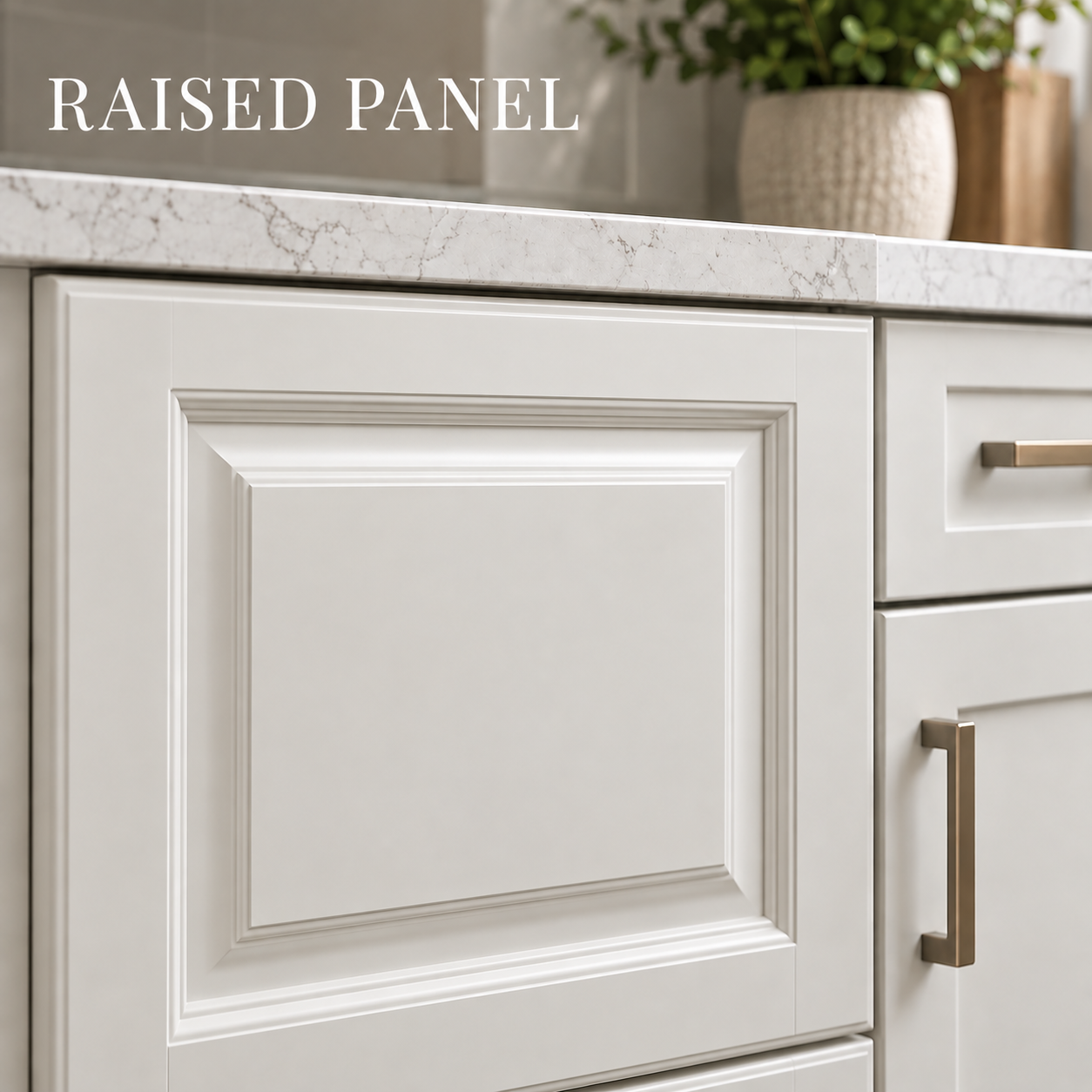
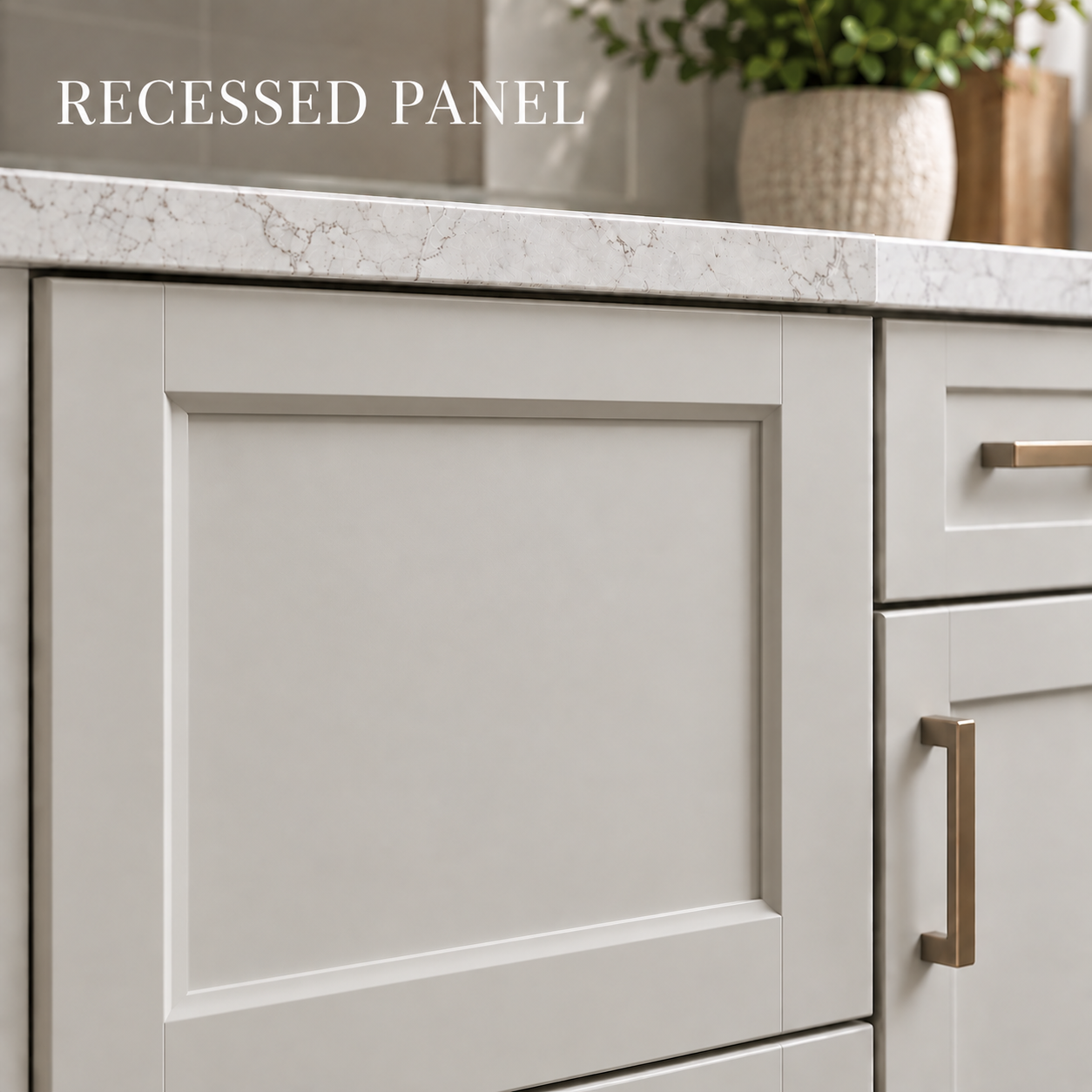
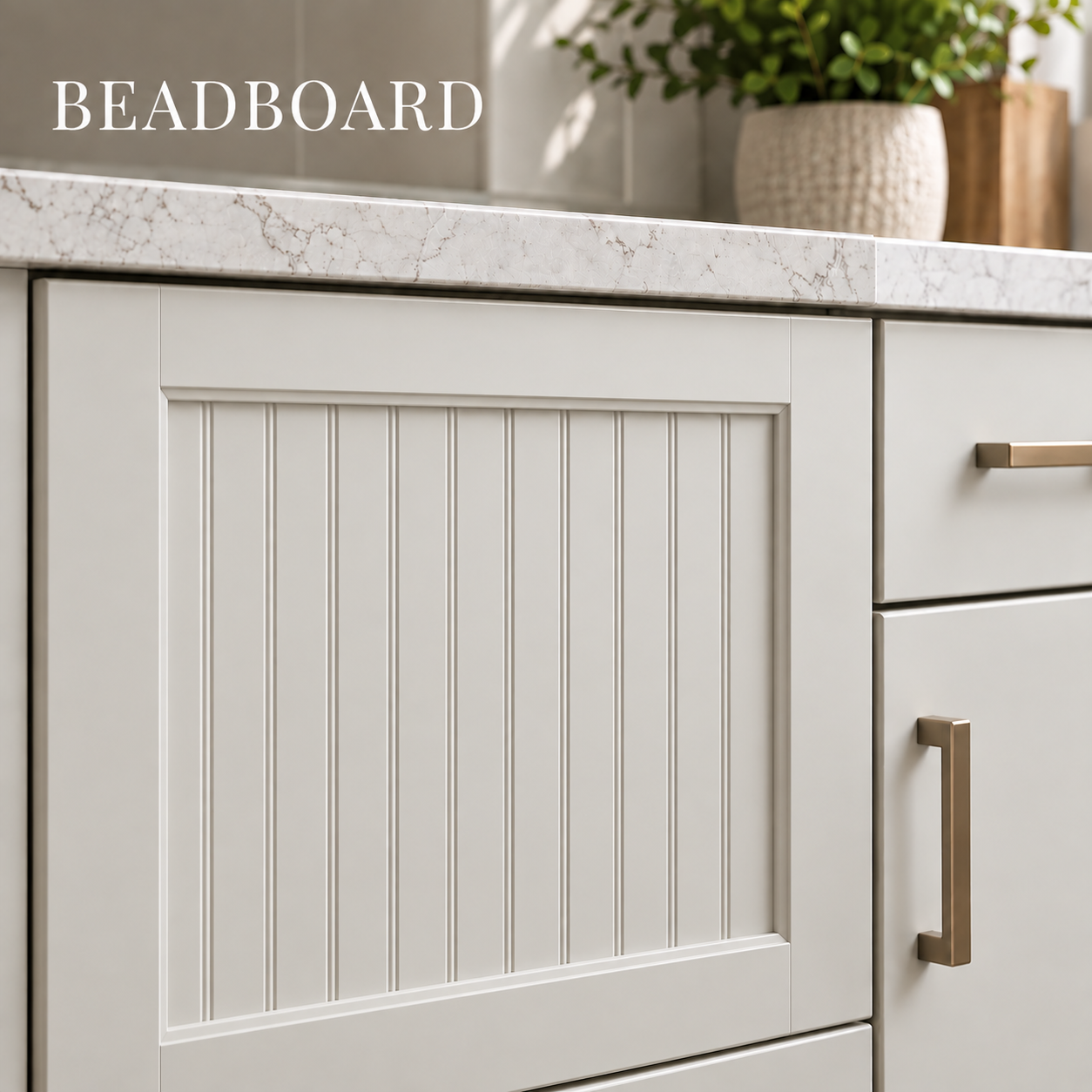
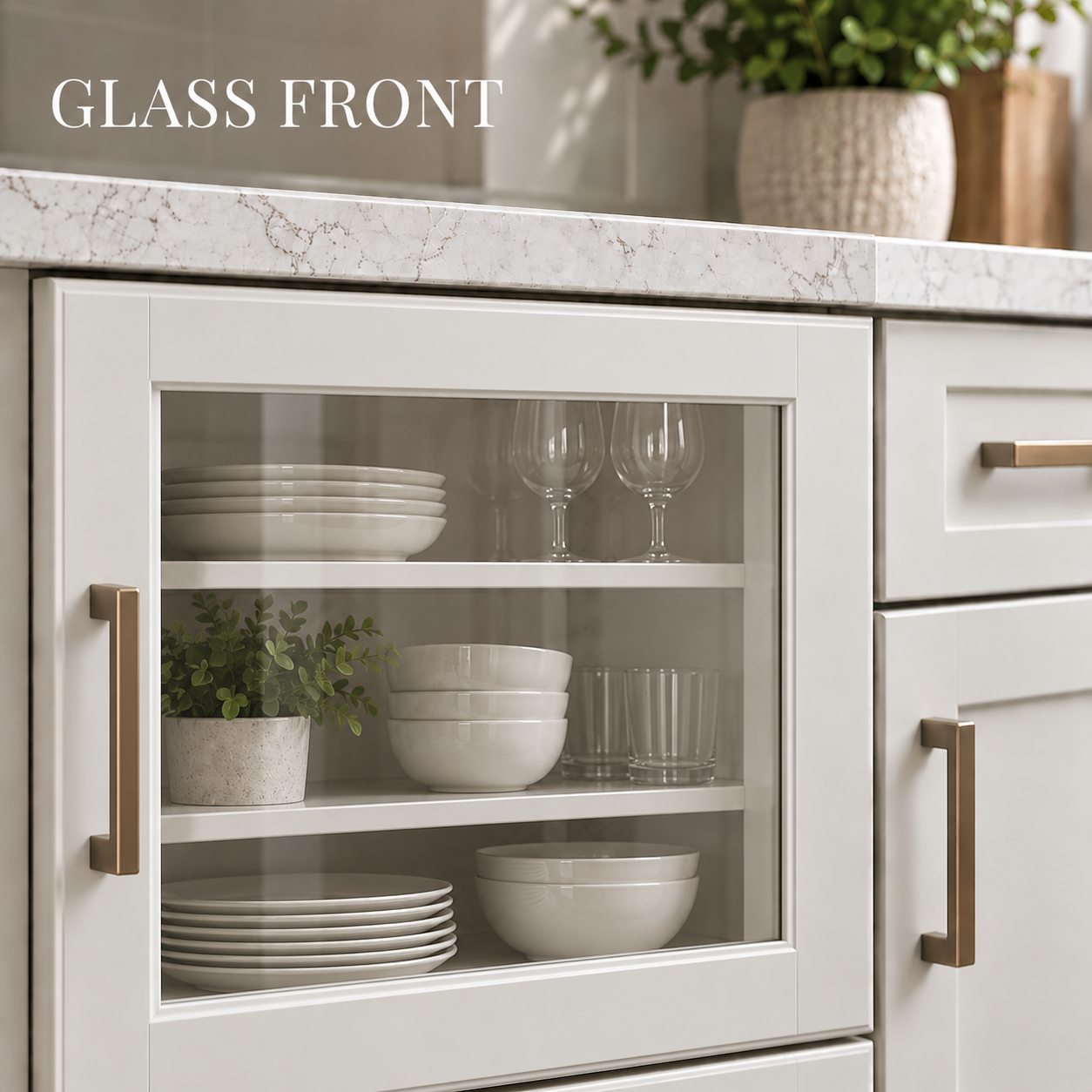
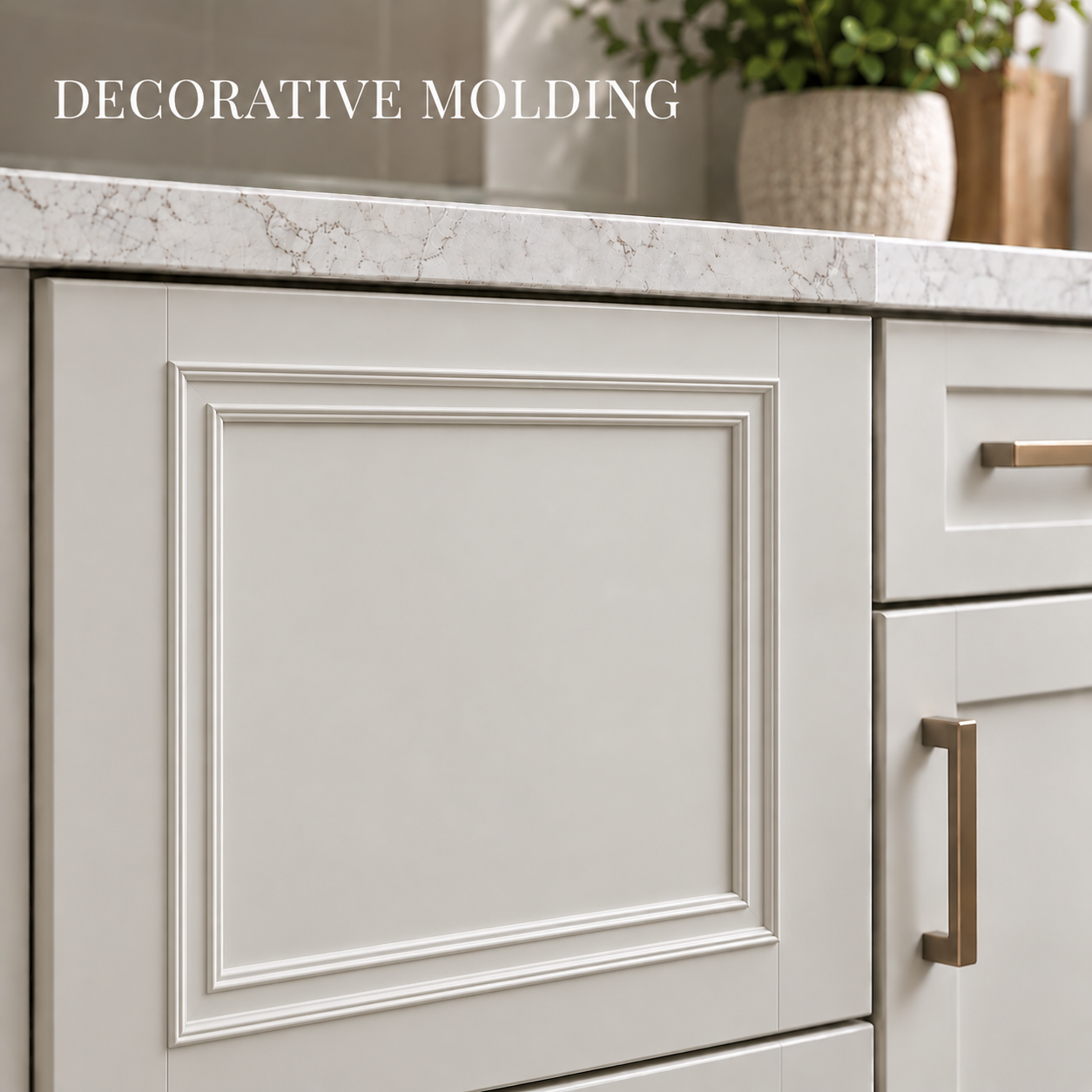
Decorative Molding
Detailed & Distinctive
Uses additional molding, profiling, or applied details to create greater depth and visual interest. Decorative doors can range from restrained transitional profiles to highly detailed traditional designs.
Commonly Used For:
- Traditional interiors
- Furniture-inspired cabinetry
- Statement or accent cabinets
Popular Cabinet Materials & Finishes
___________________________
Cabinet finish affects more than color—it can influence the appearance, texture, durability, maintenance, and overall character of the cabinetry. Depending on the cabinet line and door construction, homeowners may encounter painted or stained wood, engineered materials, laminates, and other manufactured finishes. Understanding what each option is—and where it is commonly used—can make cabinet comparisons much easier.
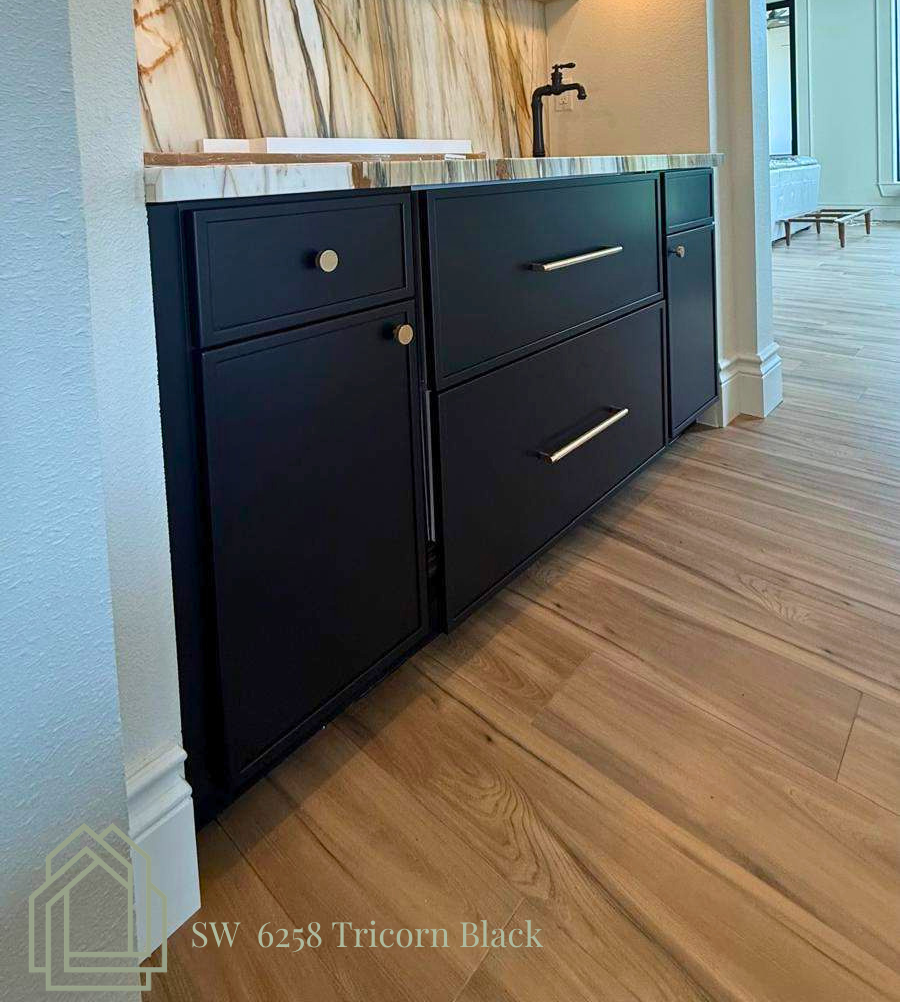
Painted Wood
Classic & Versatile
Paint provides a smooth, consistent color while allowing the construction and detailing of the cabinet door to remain prominent. Painted wood is available in a wide range of colors and works with traditional, transitional, and contemporary cabinetry.
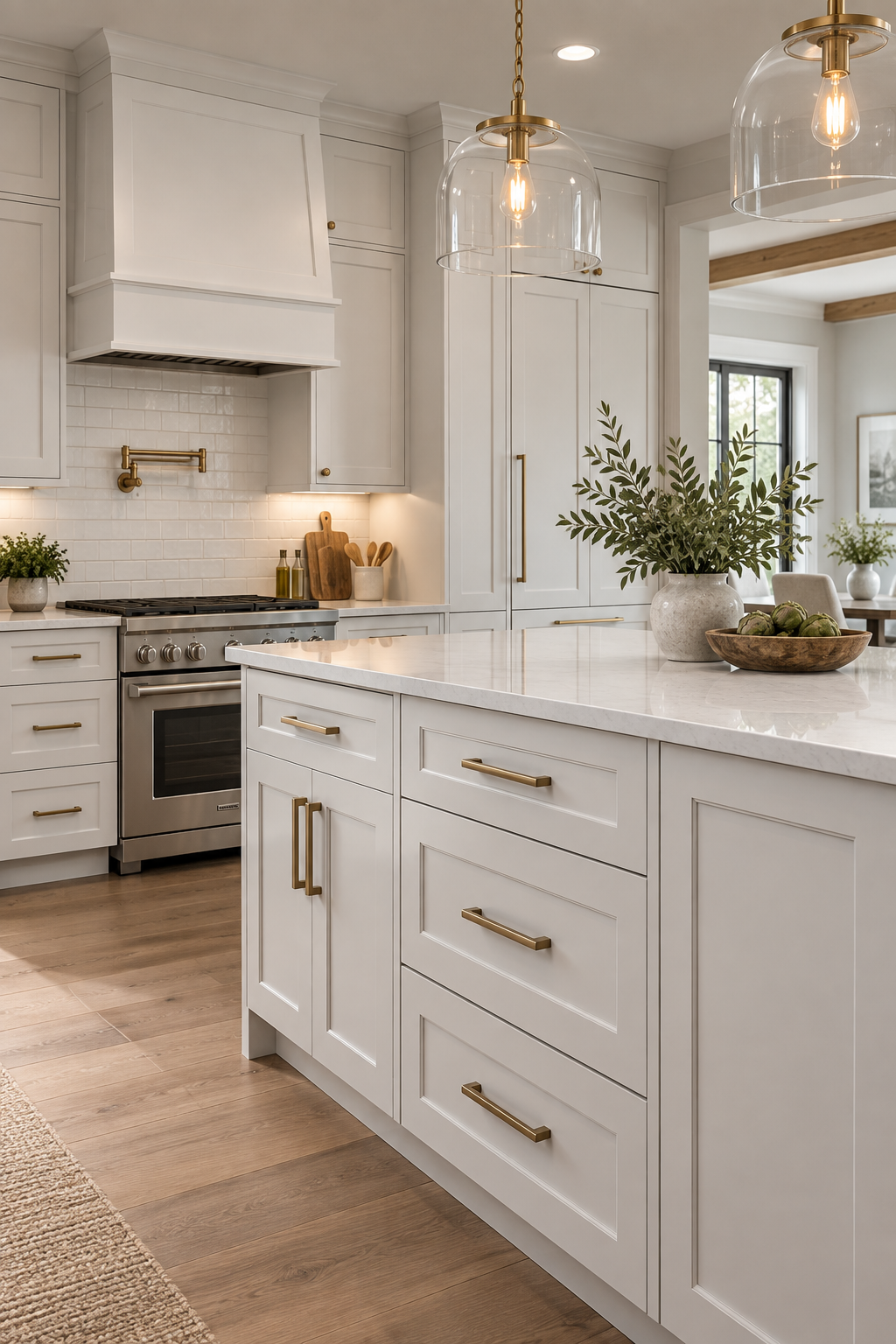
Painted MDF/HDF
Smooth & Consistent
Engineered fiberboard is commonly used for painted cabinet components because its smooth, uniform surface accepts paint well and does not have visible wood grain. Depending on the cabinet construction, MDF or HDF may be used for entire doors or for individual door components.
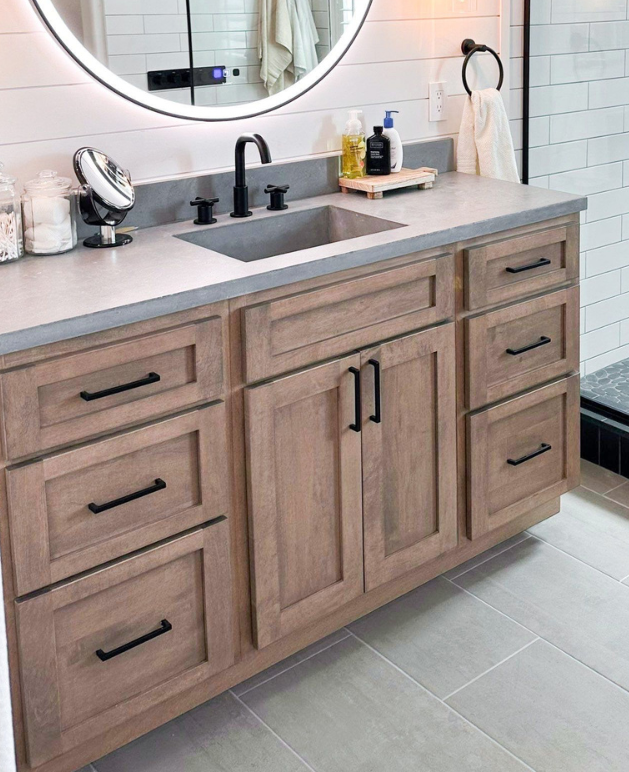
Stained Wood
Natural Grain & Character
Stain enhances rather than conceals the natural grain and variation of wood. The final appearance depends on the wood species, stain color, and individual characteristics of each piece.
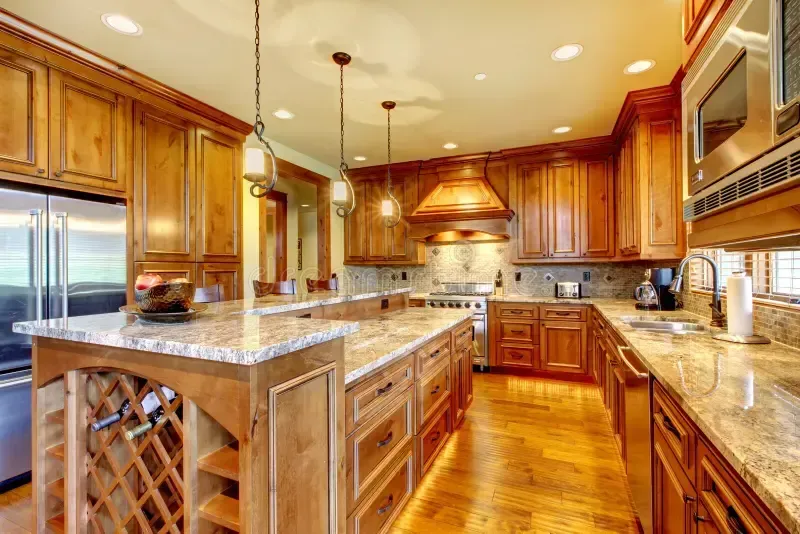
Natural Wood / Clear Finish
Warm & Organic
Clear or lightly tinted finishes protect the cabinetry while allowing the natural color, grain, knots, and variation of the wood to remain a major part of the design.
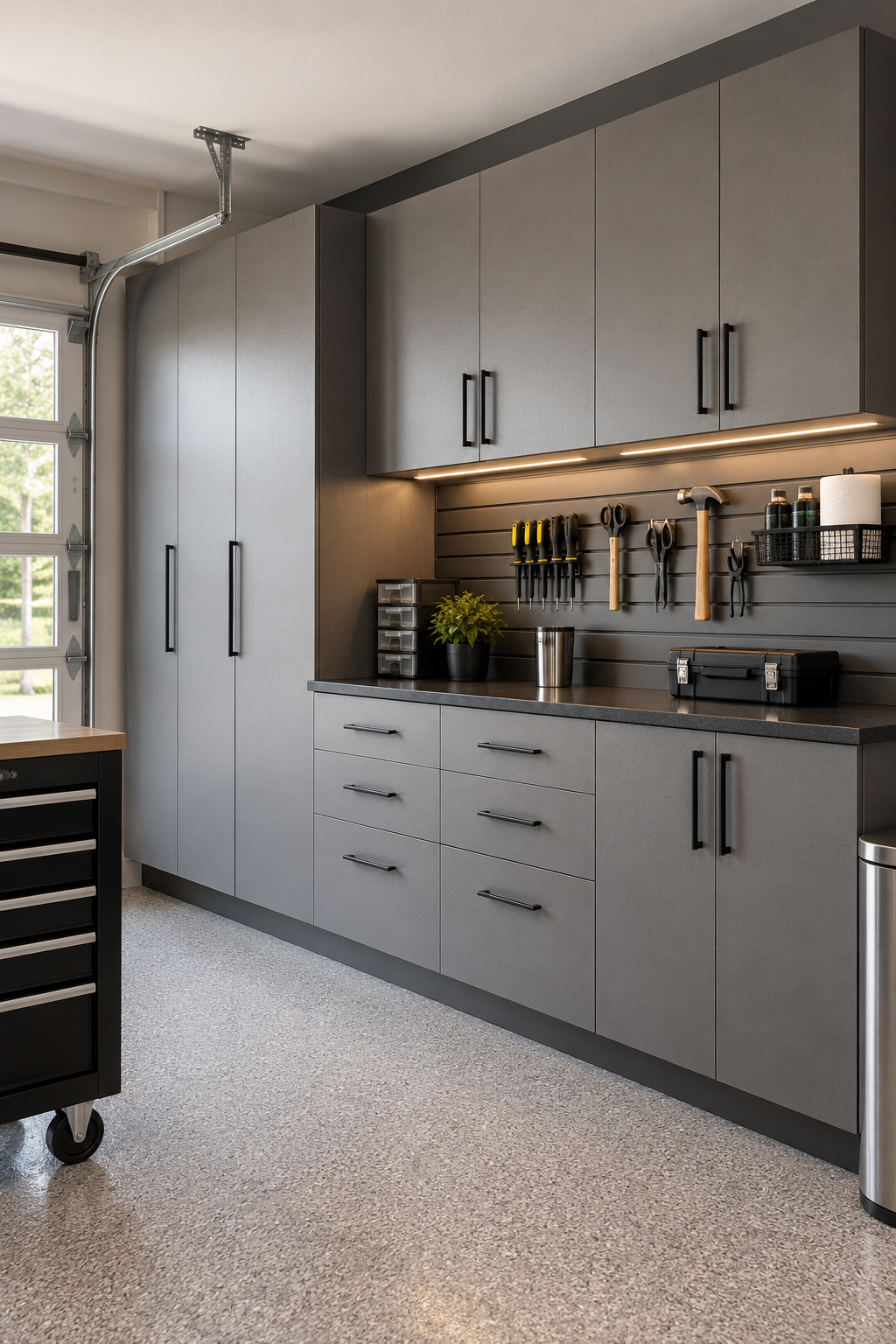
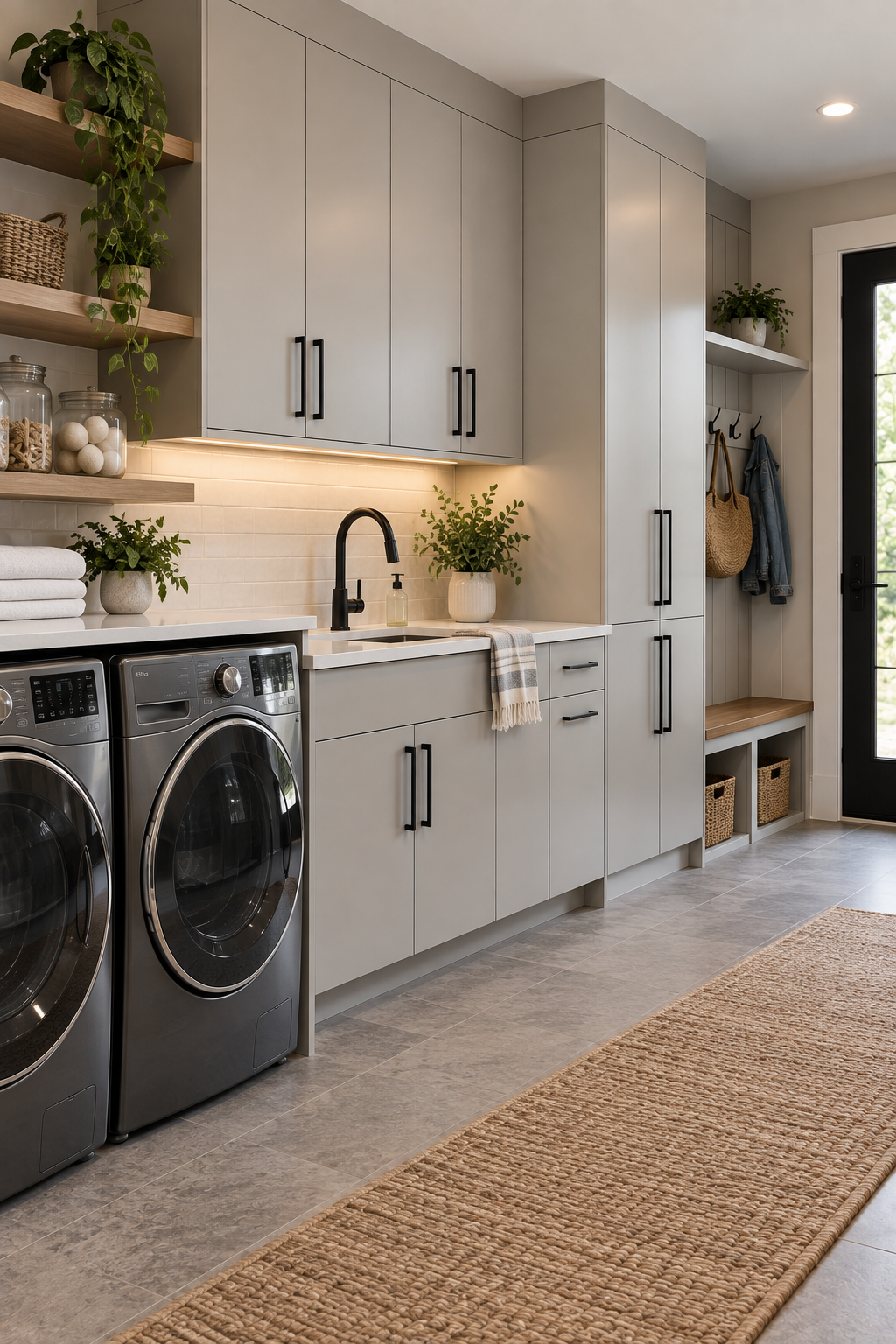
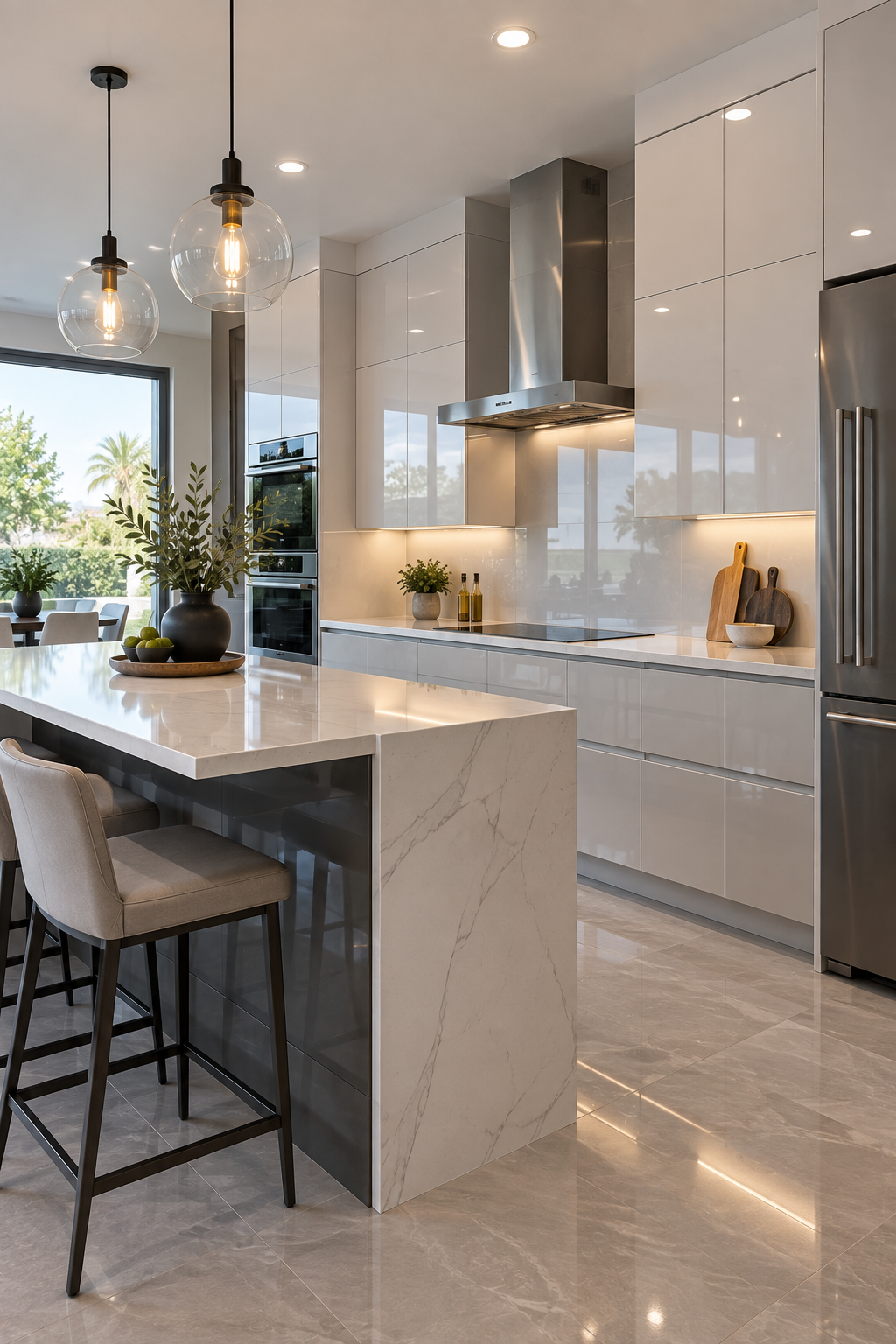
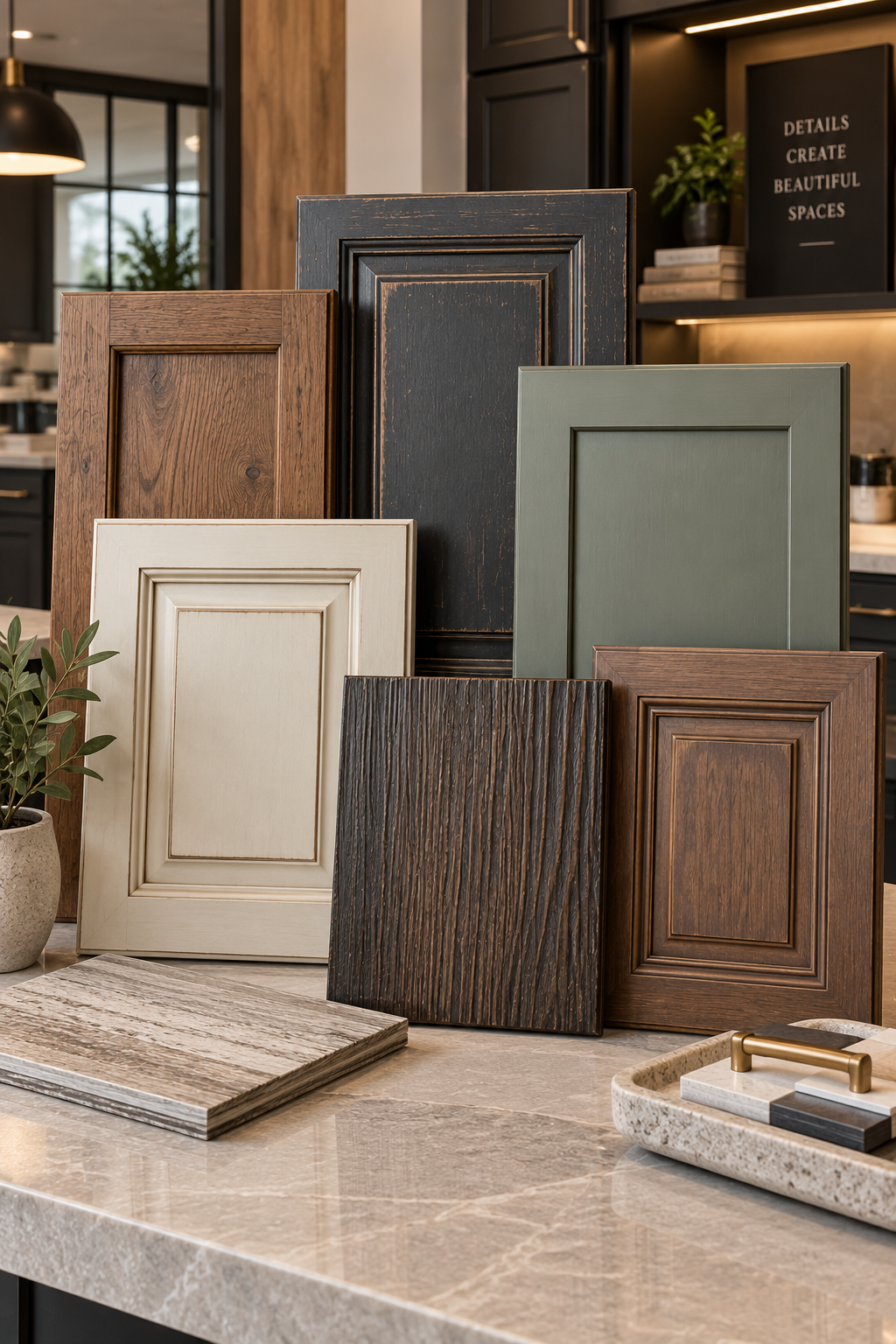
Cabinet Looks Homeowners Are Choosing Now
Cabinet design is moving toward warmer colors, natural textures, and more personalized combinations. These looks can bring depth and character to a space while still maintaining a timeless foundation.
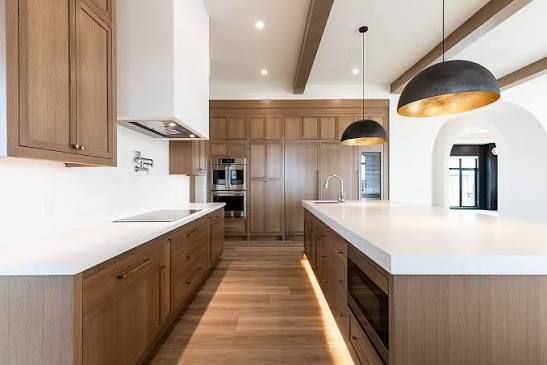
WARM WOOD TONES
Natural, Organic Character
Warm oak and other natural-looking wood finishes bring texture and warmth into a space, particularly when paired with lighter countertops, simple door profiles, and understated hardware.
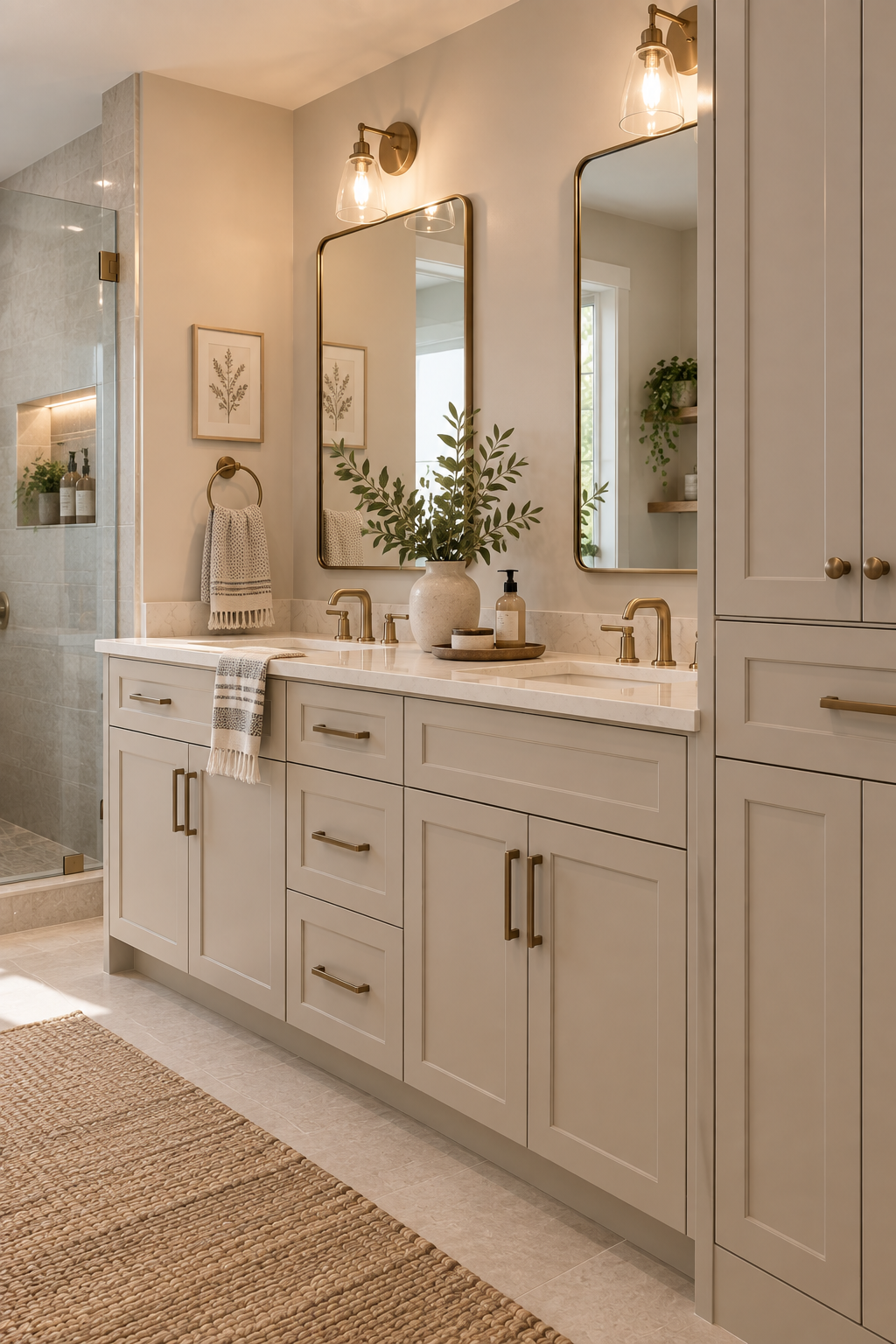
SOFT, WARM PAINTED CABINETRY
A Softer Alternative to Bright White
Creams, warm whites, taupes, greiges, and muted neutrals offer a light, airy appearance while introducing more warmth and depth than a crisp white palette.
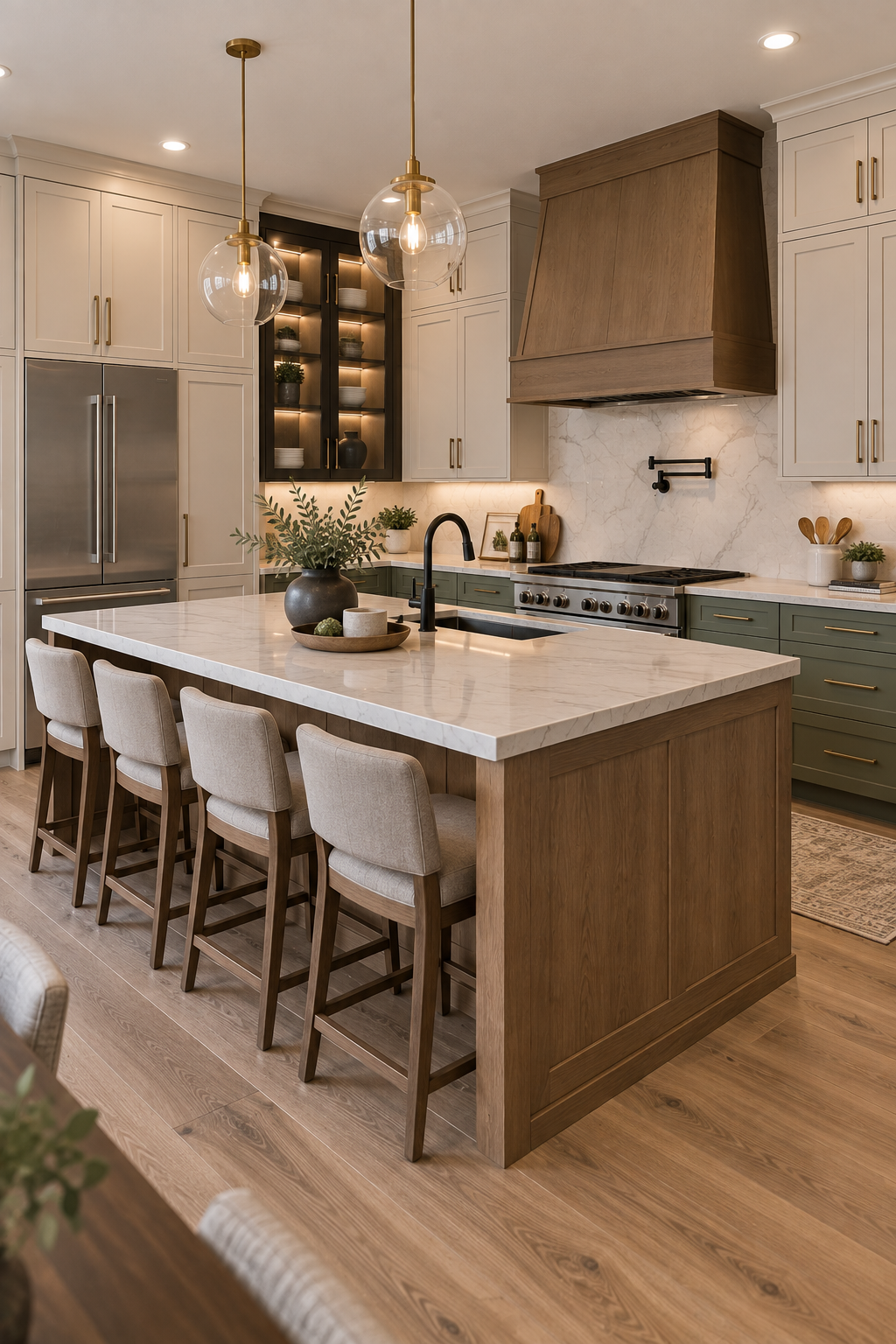
MIXED CABINET FINISHES
Layered & Personalized
Combining finishes such as painted perimeter cabinetry with a wood island or contrasting accent cabinetry can add dimension, create focal points, and help define different areas within a space.
TRUST OUR TALENTED TEAM
Explore Cabinet Options With Our Team

Selecting cabinetry involves more than choosing a door style or color. Cabinet construction, materials, finishes, storage features, hardware, trim details, and layout all play a role in creating cabinetry that looks beautiful and functions well in your space.
Homeowners can visit one of our Central Florida consultation offices to compare cabinet door styles, finishes, hardware, and other design options as part of the remodeling process. Our team helps bring those selections together with the countertops, flooring, backsplash, and other finishes to create a cohesive design tailored to the space.
Cabinet Maintenance & Care Guide
Different cabinet materials and finishes have different care requirements. Understanding how to clean and protect your cabinetry can help preserve the finish, hardware, and overall appearance for years to come. Always follow the cabinet manufacturer’s specific care recommendations when available.
What Cabinet Finish Is Easiest to Maintain?
For many households, smooth manufactured finishes such as laminate, thermofoil, and acrylic can be relatively easy to maintain because their nonporous surfaces generally wipe clean without specialized products. Painted and stained cabinetry is also easy to care for when properly finished, but may show wear, moisture exposure, scratches, or fingerprints differently depending on the color and sheen.
No cabinet finish is maintenance-free. Gentle cleaning, prompt attention to spills, and protecting cabinetry from prolonged moisture and excessive heat can help extend the life of almost any cabinet finish.
Painted Cabinet Care
What Homeowners Like
- Easy everyday cleaning
- Wide variety of colors
- Smooth, finished appearance
Care Recommendations
- Wipe with a soft, damp cloth
- Use mild soap when needed
- Dry surfaces after cleaning
- Avoid abrasive pads and harsh chemicals
- Clean grease and spills promptly
What Many Homeowners Don't Realize
Painted cabinetry can develop small finish cracks at joints as wood naturally expands and contracts. Dark and very light colors may also make dust, fingerprints, or everyday wear more noticeable.
Laminate, Thermofoil & Acrylic Care
What Homeowners Like
- Smooth, easy-to-clean surfaces
- Consistent color and appearance
- Generally low everyday maintenance
Care Recommendations
- Clean with a soft cloth and mild cleaner
- Avoid abrasive pads or powders
- Wipe spills and grease promptly
- Follow manufacturer recommendations for specialty finishes
- Protect thermofoil cabinetry from excessive heat
What Many Homeowners Don't Realize
Although these surfaces are generally easy to maintain, they are not indestructible. Excessive heat, aggressive cleaners, scratching, or damage at seams and edges can compromise the finish.
Stained & Natural Wood Care
What Homeowners Like
- Natural grain and variation
- Minor wear may blend into the character of the wood
- Timeless appearance
Care Recommendations
- Dust with a soft cloth
- Clean with products approved for the cabinet finish
- Wipe spills promptly
- Avoid excessive water
- Protect cabinetry from prolonged moisture and direct heat
What Many Homeowners Don't Realize
Wood naturally responds to changes in temperature and humidity. Slight variations in grain, color, and tone are normal characteristics rather than defects.
Hardware, Hinges & Drawer Care
What Homeowners Like
- Soft-close operation
- Smooth drawer movement
- Adjustable hinges
- Functional interior accessories
Care Recommendations
- Keep drawer tracks free of debris
- Tighten loose pulls and knobs when necessary
- Avoid hanging excessive weight from doors or drawers
- Clean hardware using products appropriate for its finish
- Have misaligned doors or drawer fronts adjusted rather than forcing them
What Many Homeowners Don't Realize
Cabinet performance depends on more than the box and door. Hinges, slides, hardware, and interior mechanisms experience daily wear and may occasionally need adjustment over the life of the cabinetry.
Cabinets for Florida Homes
Florida's humidity, heat, and active lifestyles can influences cabinet material, finish, and construction choices.
When selecting cabinetry for a Florida home, it is important to consider more than appearance. Kitchens, bathrooms, laundry rooms, and other cabinet-heavy spaces may experience changing humidity levels, moisture, heat, and frequent everyday use.
Features worth considering include:
• Stable cabinet construction and quality finishes
• Materials appropriate for the room and its moisture exposure
• Easy-to-clean surfaces for busy households
• Proper ventilation and indoor humidity control
• Durable hinges, drawer slides, and hardware
• Appropriate protection around sinks, dishwashers, and other moisture-prone areas
Most quality cabinet materials can perform well in Florida homes when properly selected, installed, and maintained. Understanding where cabinetry will be installed—and how the space is used—can help homeowners choose materials and finishes suited to both the design and everyday demands of the home.
FAQs
Questions about countertops often go beyond color and price. Homeowners frequently ask about durability, maintenance, design coordination, and long-term value. Below are answers to some of the most common questions we discuss during the planning process.
What is the difference between stock, semi-custom, and custom cabinets?
Stock cabinets are manufactured in predetermined sizes, configurations, door styles, and finishes. Semi-custom cabinetry offers a broader range of sizes, finishes, storage options, and manufacturer-approved modifications. Custom cabinetry provides the greatest flexibility because cabinets can be designed and built specifically for the dimensions and requirements of the space. Thoughtful design, fillers, panels, moldings, and trim can also give manufactured cabinetry a highly integrated, built-in appearance.
What are cabinet boxes typically made from?
Cabinet boxes may be constructed from plywood, furniture-grade particleboard, MDF, or combinations of engineered and solid wood components. The material alone does not determine the overall quality of a cabinet. Construction methods, material thickness, joinery, hardware, finishes, and manufacturer standards all contribute to durability and performance.
Is plywood always better than particleboard for cabinet boxes?
Not necessarily. Plywood is valued for its strength and moisture resistance, but high-quality furniture-grade engineered panels are also widely used in cabinet manufacturing. Rather than judging cabinetry by one material alone, compare the complete cabinet construction, hardware, warranty, and intended application.
What is the difference between framed and frameless cabinets?
Framed cabinets have a face frame attached to the front of the cabinet box, while frameless cabinets do not. Frameless construction can provide slightly greater interior accessibility and is commonly associated with contemporary cabinetry. Both construction methods can be used to create high-quality cabinetry.
What is the difference between inset, full-overlay, and partial-overlay cabinet doors?
Inset doors and drawers sit within the cabinet face frame for a fitted, furniture-like appearance. Full-overlay doors cover most of the cabinet frame, creating smaller gaps and a more continuous appearance. Partial-overlay doors reveal more of the cabinet frame between doors and drawers. These terms describe how the doors relate to the cabinet box or frame—not the actual door style.
Are Shaker cabinets the same as recessed-panel cabinets?
Shaker is a specific style of recessed-panel cabinet door characterized by a simple square frame and flat recessed center panel. Other recessed-panel doors may include beveled edges, decorative profiles, arches, or additional detailing.
Are MDF cabinets lower quality than wood cabinets?
MDF is an engineered material with a smooth, consistent surface that performs particularly well with painted finishes. It does not have natural wood grain and responds differently to moisture and physical damage than solid wood. Depending on the cabinet line, MDF or HDF may be intentionally used for doors or individual components because of its stability and smooth painted appearance.
What cabinet finish is easiest to maintain?
Smooth manufactured finishes such as laminate, thermofoil, and acrylic are generally easy to wipe clean, while properly finished painted and stained cabinetry can also be relatively simple to maintain. Maintenance requirements vary by manufacturer and finish. Gentle cleaning and quickly addressing water, grease, and spills are important for virtually all cabinetry.
Can cabinets be made to look built-in without being fully custom?
Yes. Fillers, finished end panels, appliance panels, crown molding, light rail, toe-kick treatments, extended stiles, and other trim details can help stock or semi-custom cabinetry fit a room more intentionally. Good design and installation often have a significant effect on how integrated the finished cabinetry appears.
What cabinet storage features are worth considering?
Useful options can include deep drawers, pull-out waste bins, tray dividers, roll-out shelves, spice storage, utensil organizers, corner solutions, pantry pull-outs, appliance storage, and other interior accessories. The best features depend on what needs to be stored and how the homeowner uses the space.
Should I choose cabinet hardware before ordering cabinets?
Hardware should be considered during the design process even if the final selection is made later. Pull and knob size, placement, door proportions, appliance clearances, and drawer dimensions can affect both appearance and function.
How should I choose a cabinet color?
Consider the entire room rather than cabinetry in isolation. Countertops, flooring, backsplash, wall color, lighting, hardware, and surrounding finishes can all affect how a cabinet color appears. Reviewing physical samples in the space whenever possible can help reveal undertones and changes caused by natural and artificial lighting.
Can I mix cabinet colors or finishes in the same room?
Yes. A different island finish, contrasting tall cabinetry, natural wood accents, or another coordinated finish can add depth and help define areas within a room. Repeating colors, hardware, wood tones, or other design elements elsewhere can help the combination feel intentional.
What cabinets work best in Florida homes?
There is no single cabinet material that is best for every Florida home. Quality cabinetry can perform well when appropriate materials and finishes are selected for the room, installed correctly, and properly maintained. Indoor humidity control, ventilation, and protection from prolonged water or heat exposure are especially important considerations.
How long does it take to receive new cabinets?
Lead times vary considerably based on the manufacturer, cabinet line, level of customization, finish, availability, and current production schedules. Stock cabinetry may have shorter lead times, while semi-custom and custom cabinetry generally require more production time. Cabinet selections should be finalized early enough in the remodeling process to account for ordering and delivery.