Choosing the Right Flooring & Tile for Your Remodeling Project
Flooring and tile influence much more than the appearance of a room. The materials you choose can affect durability, maintenance, comfort, moisture resistance, and how the space functions from day to day. From flooring materials and tile styles to grout, layouts, transitions, and finishing details, understanding the options can make the selection process much easier.
This guide walks homeowners through the materials, terminology, and design details they may encounter while planning a flooring or tile project.
Quick Click Resources:
Understanding Flooring Types
Flooring materials can look similar while performing very differently. Water exposure, daily traffic, maintenance, comfort, installation requirements, and the existing surface beneath the floor can all influence which options are appropriate for a space.
Luxury Vinyl Plank (LVP)
Best For: Busy households, kitchens, living areas and moisture-prone spaces
Maintenance: Very Low
Relative Cost: $$–$$$
Highlights:
- Available in realistic wood and stone looks
- Comfortable and quieter underfoot than tile
- Easy everyday maintenance
- Durable for active households
- Many products are designed for moisture-prone areas
What Homeowners Should Know:
Luxury vinyl plank is a popular choice because it combines durability, easy maintenance and a wide variety of styles. Many LVP products are marketed as waterproof, but performance and installation requirements vary by manufacturer. The condition and flatness of the surface underneath the flooring are also important to the finished result.
Porcelain Tile
Best For: Bathrooms, kitchens, showers, high-traffic areas and Florida homes
Maintenance: Low
Relative Cost: $$–$$$$
Highlights:
- Dense and highly durable
- Very low water absorption
- Available in wood, stone, concrete and decorative looks
- Suitable for many floors, walls and wet areas
- Handles heavy household traffic well
What Homeowners Should Know:
Porcelain is a type of ceramic tile made to be especially dense and water resistant. It is commonly used in bathrooms, showers and other moisture-prone areas. The tile itself is only one part of the installation—the substrate, setting materials, grout and any required waterproofing also contribute to the finished system.
Ceramic Tile
Best For: Backsplashes, walls, bathrooms and many residential floors
Maintenance: Low
Relative Cost: $–$$$
Highlights:
- Wide variety of colors, shapes and patterns
- Often more affordable than porcelain
- Easy-to-clean surface
- Excellent for decorative applications
- Available in both traditional and contemporary styles
What Homeowners Should Know:
Ceramic tile offers tremendous design flexibility and is commonly used on walls, backsplashes and floors. It is generally less dense and more absorbent than porcelain, so not every ceramic tile is appropriate for every location. Always consider the manufacturer's recommended application when selecting tile.
Engineered Hardwood
Best For: Living areas, bedrooms and homeowners who want the look of real wood.
Maintenance: Moderate
Relative Cost: $$$–$$$$
Highlights:
- Real wood surface
- Warm, natural appearance
- Available in many species, colors and plank widths
- More dimensionally stable than traditional solid hardwood
- Some products can work well over concrete slabs
What Homeowners Should Know:
Engineered hardwood is made with a real hardwood surface over a layered core. Its construction generally provides greater dimensional stability than solid hardwood, which can make certain products better suited to Florida conditions and concrete-slab homes. Moisture limits and installation requirements vary significantly by product.
Solid Hardwood
Best For: Living areas, bedrooms and homeowners who value traditional natural wood.
Maintenance: Moderate
Relative Cost: $$$–$$$$$
Highlights:
- Made from solid natural wood
- Timeless appearance
- Develops natural character over time
- Many products can be refinished
- Available in numerous wood species and finishes
What Homeowners Should Know:
Solid hardwood responds naturally to changes in moisture and humidity by expanding and contracting. That makes site conditions, acclimation and installation method especially important. In Florida homes—particularly those built on concrete slabs—the specific product and installation requirements should be carefully considered before selection.
Laminate
Best For: Living areas, bedrooms and budget-conscious households.
Maintenance: Low
Relative Cost: $–$$
Highlights:
- Available in convincing wood and stone looks
- Durable wear surface
- Easy everyday cleaning
- Generally budget-friendly
- Wide variety of styles and colors
What Homeowners Should Know:
Laminate flooring uses a photographic design layer rather than a real wood surface. Modern products can look remarkably realistic, but moisture resistance varies considerably. Some newer products offer enhanced water resistance, while others require more protection from spills and standing water.
Natural Stone
Best For: Entryways, bathrooms, feature areas and distinctive high-end designs
Maintenance: Moderate to High
Relative Cost: $$$–$$$$$
Highlights:
- Genuine natural material
- Each piece has unique color and variation
- Available in marble, travertine, limestone, slate and other stones
- Can create a distinctive, high-end appearance
- Available in a variety of textures and finishes
What Homeowners Should Know:
Natural stone varies significantly from one material to another. Some stones are more porous, more susceptible to staining or more sensitive to certain cleaners than porcelain or ceramic tile. Depending on the stone and application, sealing and specialized maintenance may be recommended.
Not sure which flooring material is right for your project?
The right flooring depends on your space, lifestyle, design goals, maintenance preferences, and budget. During the planning process, our team helps homeowners compare materials, review samples, and choose flooring and tile that complement the overall design of their home.
LVP vs. Porcelain Tile vs. Engineered Hardwood: What’s the Difference?
Luxury vinyl plank, porcelain tile, and engineered hardwood can all create beautiful flooring throughout a home, but they differ in how they feel, perform, and respond to everyday living. For Florida homeowners, moisture, concrete slab conditions, maintenance, and comfort underfoot can also play an important role. Understanding these differences can help narrow down which flooring may be the best fit for your space.
Luxury Vinyl Plank (LVP)
Luxury vinyl plank offers the appearance of wood with a softer feel underfoot and relatively simple everyday care. It is available in a wide range of colors, plank sizes, and wood-look finishes, making it easy to carry a consistent flooring style through several rooms. Many LVP products are also designed to handle moisture, making them a popular option for active Florida households.
- Softer and warmer underfoot than tile
- Easy everyday maintenance
- Wide variety of wood-look styles
- Many moisture-resistant or waterproof product options
Porcelain Tile
Porcelain tile is dense, durable, and highly resistant to water absorption, making it especially useful in bathrooms, kitchens, entryways, and other moisture-prone areas. It can recreate the appearance of natural stone, wood, concrete, and other materials while offering the durability of tile. Because it is a hard surface, it tends to feel cooler and firmer underfoot than LVP or wood.
- Excellent durability
- Very low water absorption
- Well suited to moisture-prone spaces
- Extensive choices in size, pattern, and appearance
- Performs well in high-traffic areas
ENGINEERED HARDWOOD
Engineered hardwood provides the warmth and natural variation of genuine wood while using a layered construction that offers greater dimensional stability than traditional solid hardwood. Certain engineered wood products can be suitable for concrete-slab homes, making them an option for Florida homeowners who want real wood flooring without automatically ruling it out because of the climate.
- Genuine hardwood surface
- Warm, natural appearance
- More dimensionally stable than solid hardwood
- Available in many wood species, colors, and plank widths
- Certain products can be installed over concrete slabs
Designing With Flooring & Tile: Patterns, Layouts & Visual Details
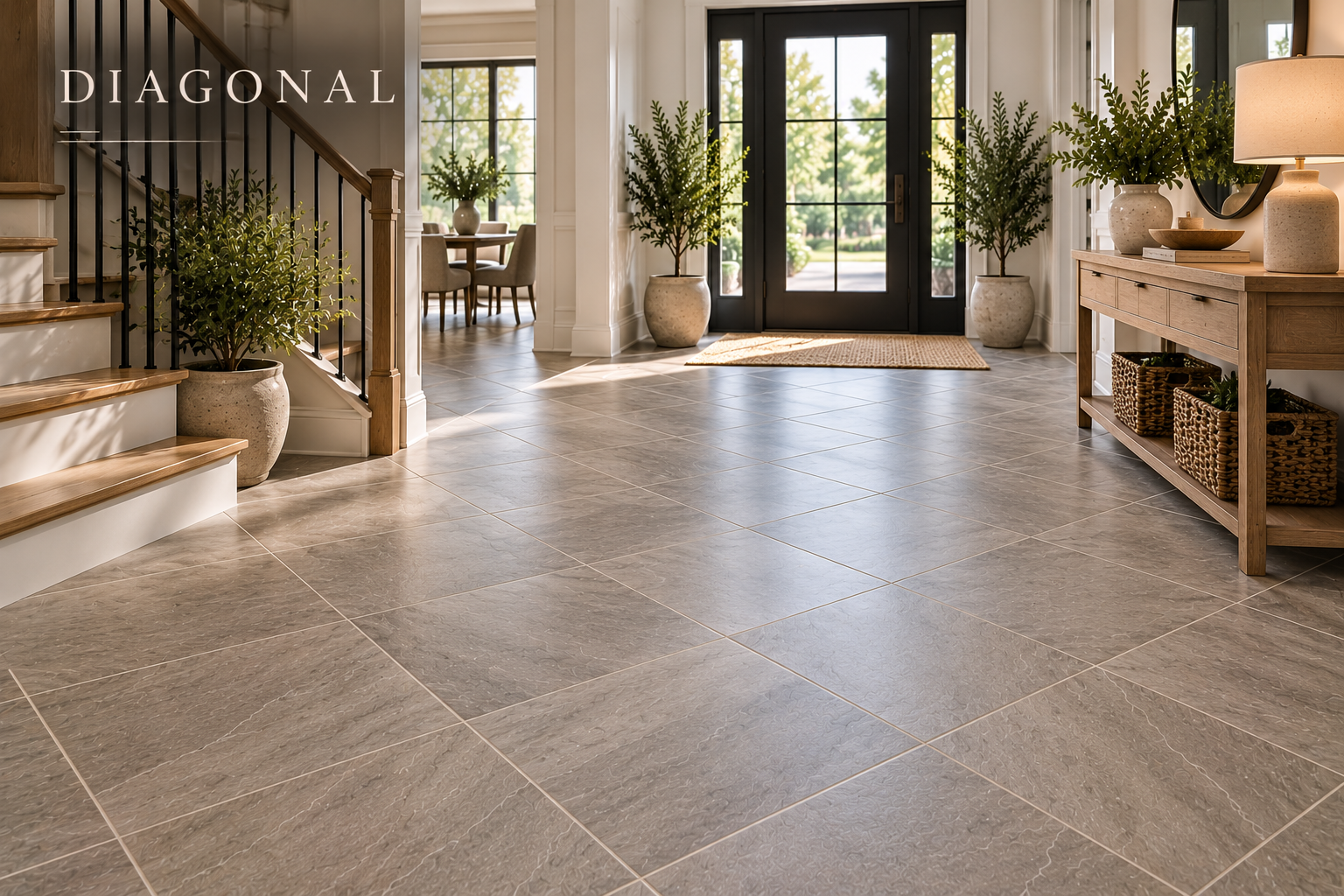
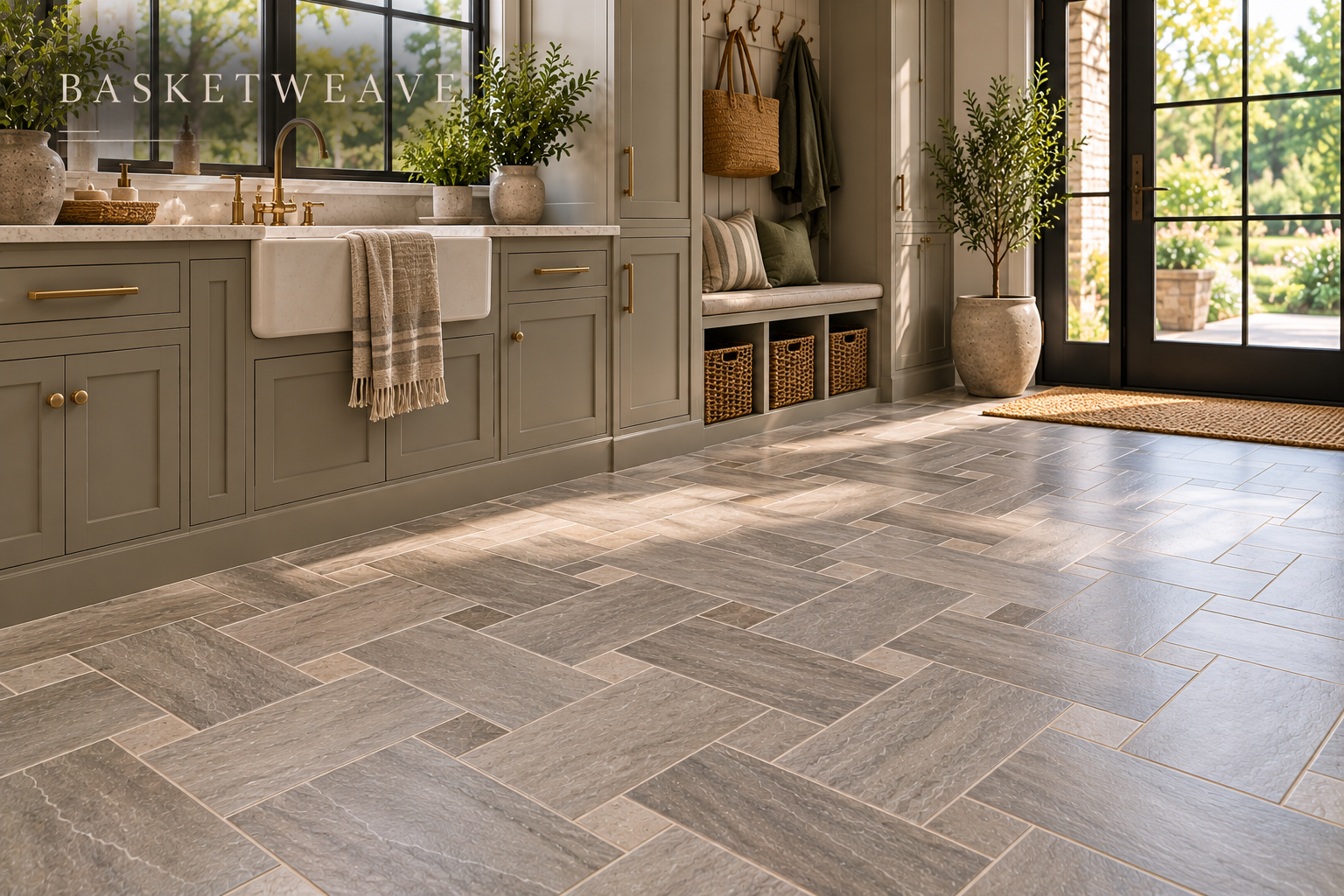
The way flooring or tile is laid can have just as much impact on a room as the material itself. Pattern direction, orientation, scale, and grout lines can make a space feel larger, longer, more traditional, or more visually detailed.
Choosing the Right Layout
__________________
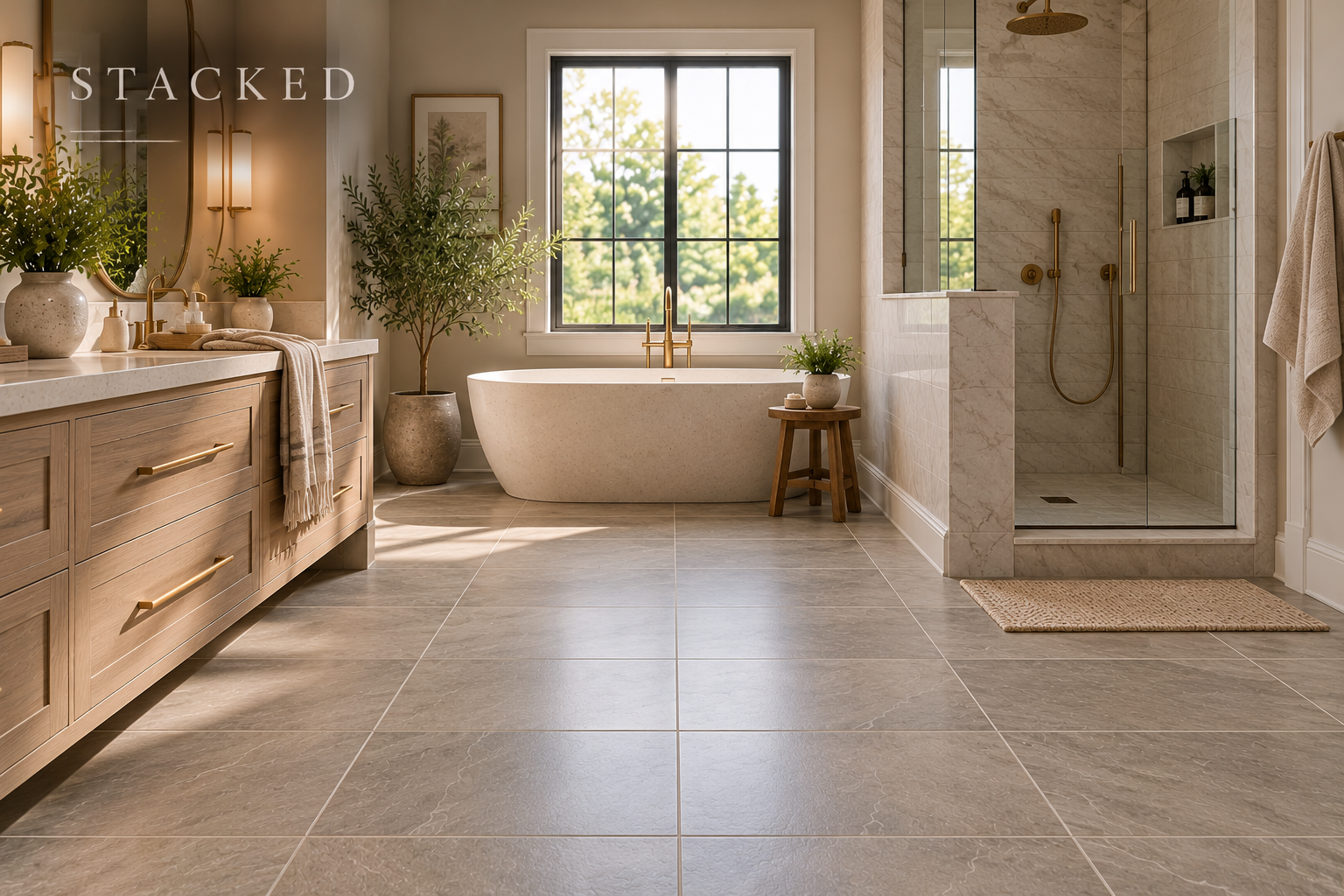
Flooring and tile layouts range from simple and understated to highly decorative. Straight and offset patterns create a classic foundation, while layouts such as herringbone and chevron can turn the flooring or tile into a design feature.
Not every layout works with every flooring or tile product. Tile dimensions, plank construction, room shape, grout joints, manufacturer recommendations, and the amount of cutting required can all influence which patterns are appropriate. More detailed layouts may also require additional material and installation time.
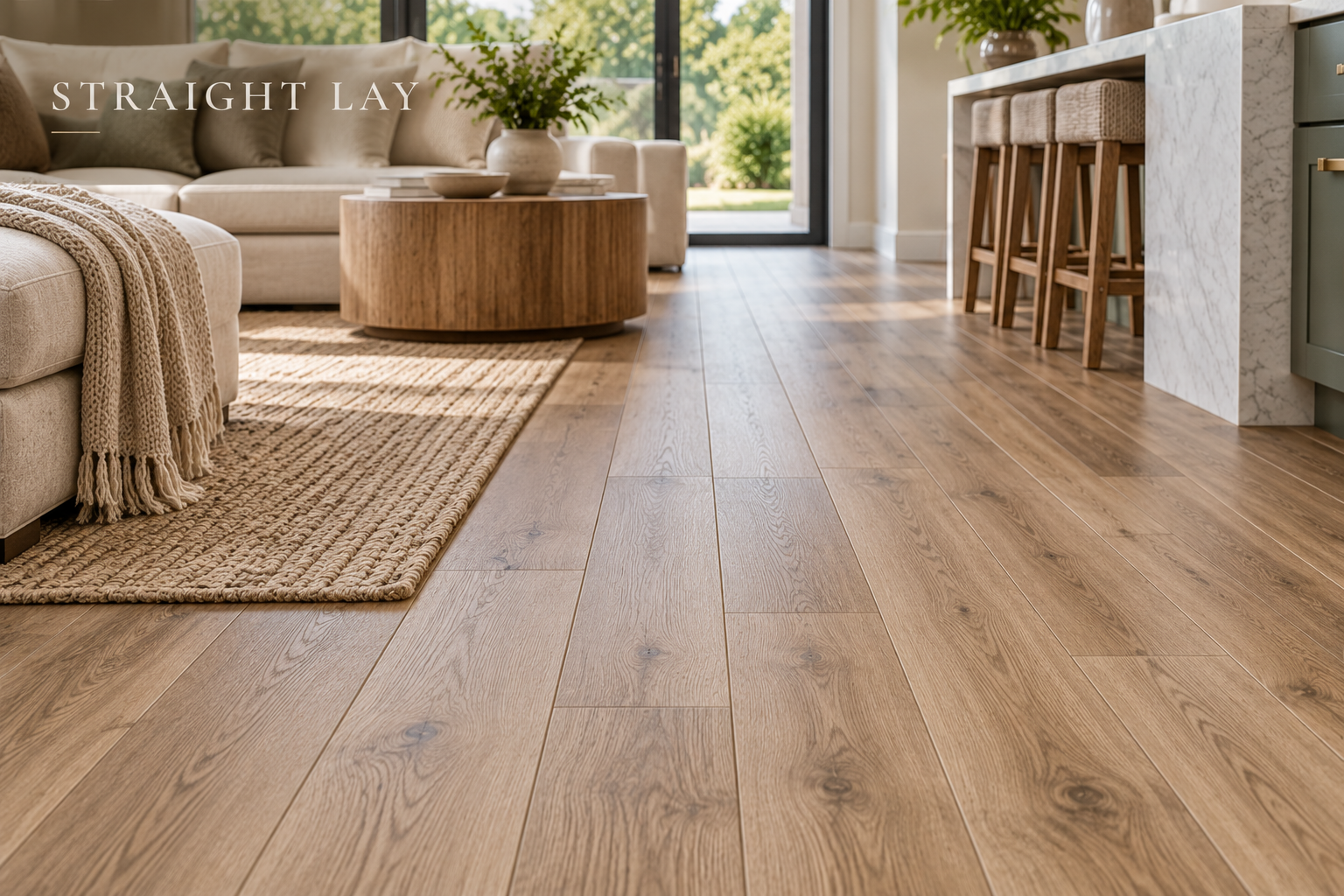
Straight Lay / Running Lay
Clean & Versatile
Planks or rectangular tiles run in the same direction for a simple, continuous look.
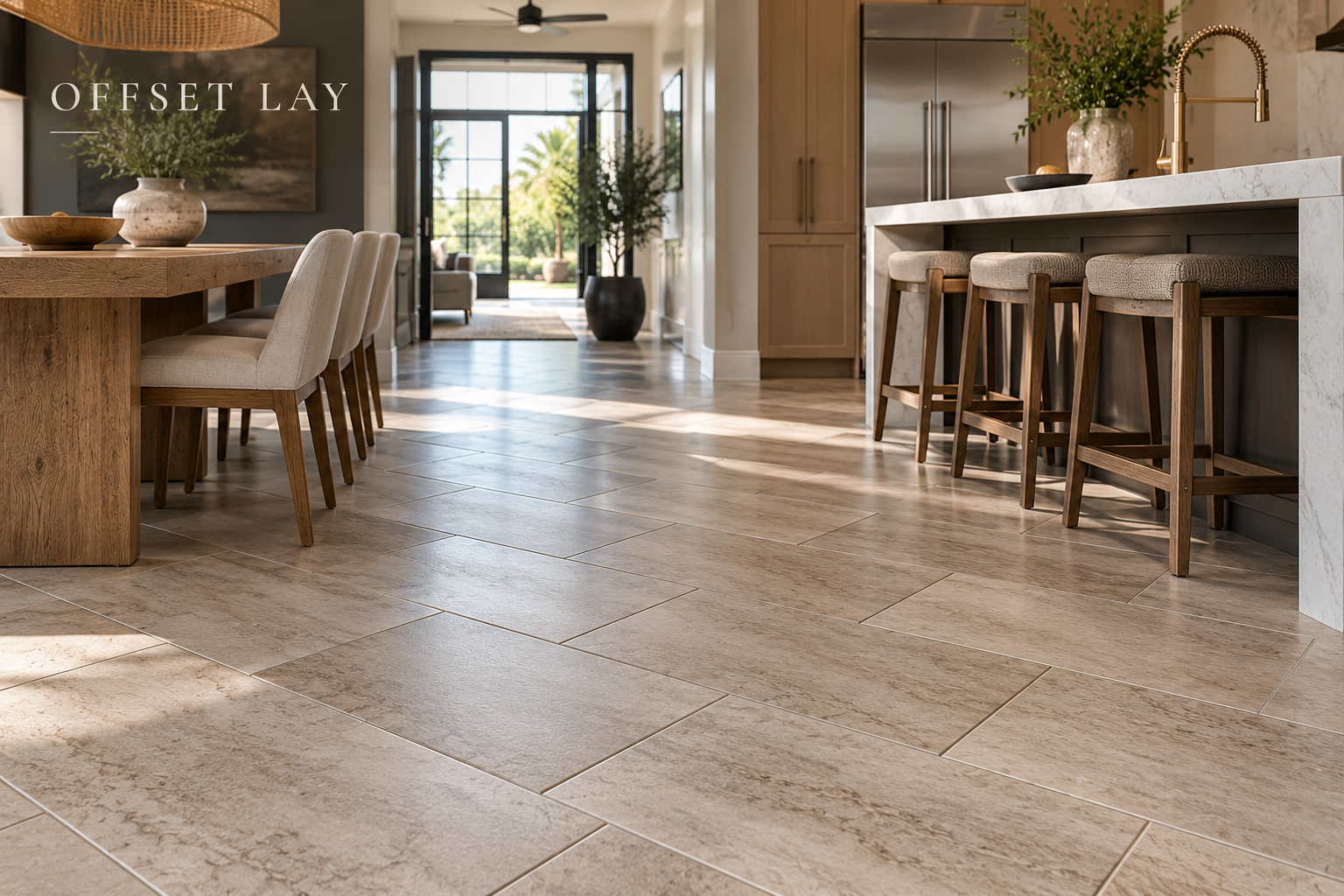
Offset / Running Bond
Classic & Familiar
Each row is offset from the one before it, creating a traditional staggered appearance.
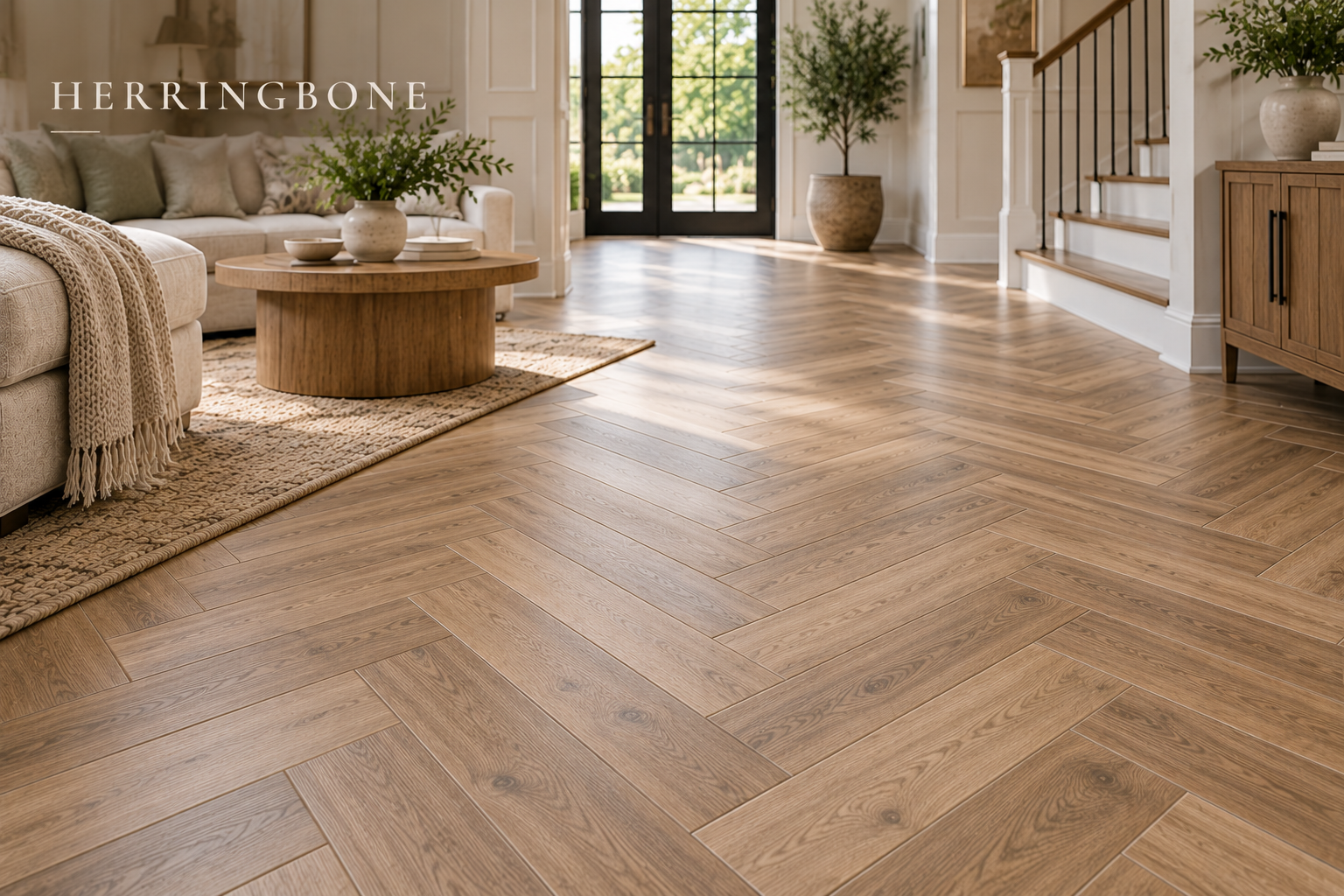
Herringbone
Timeless & Detailed
Rectangular pieces meet at right angles to create the distinctive zigzag pattern.
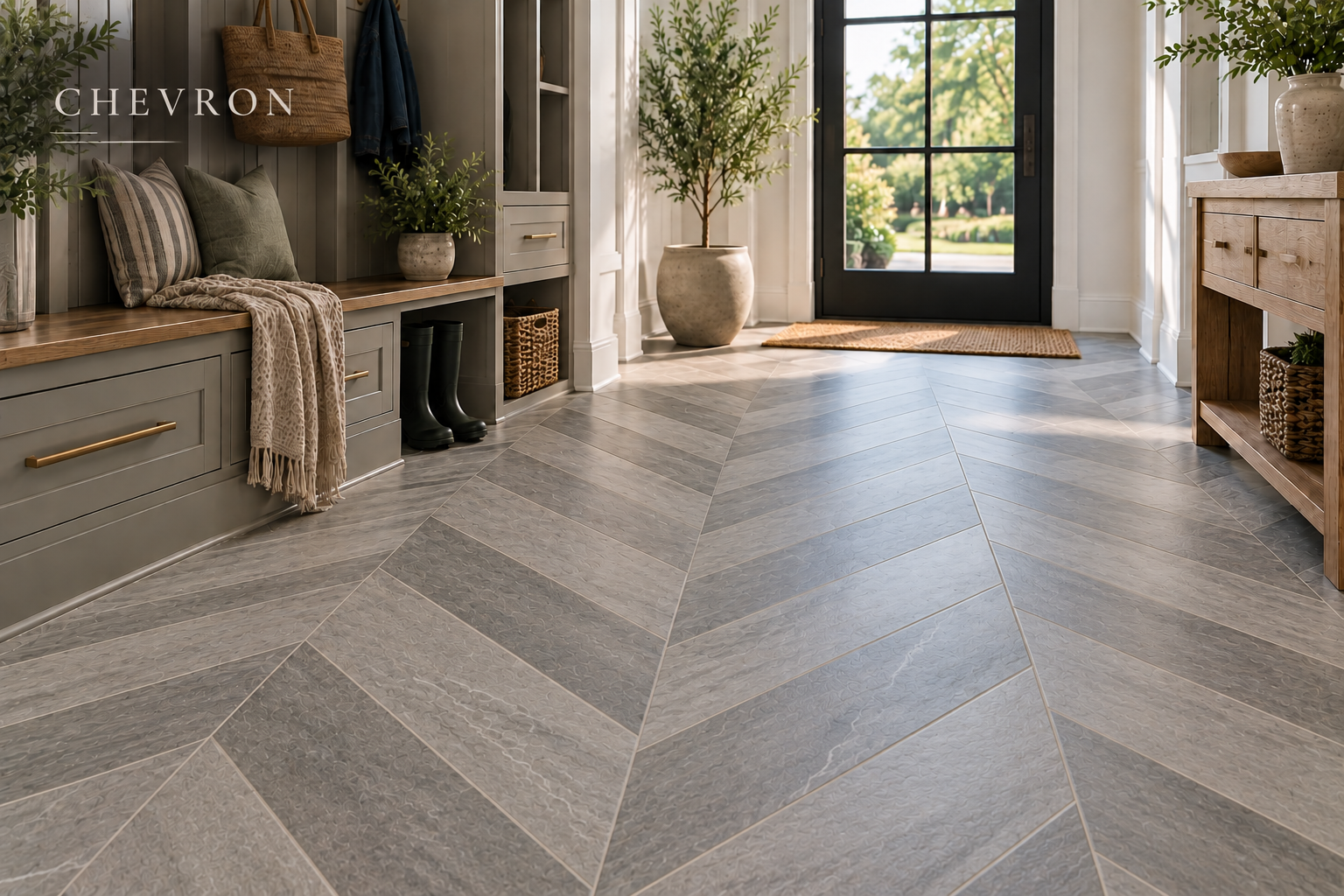
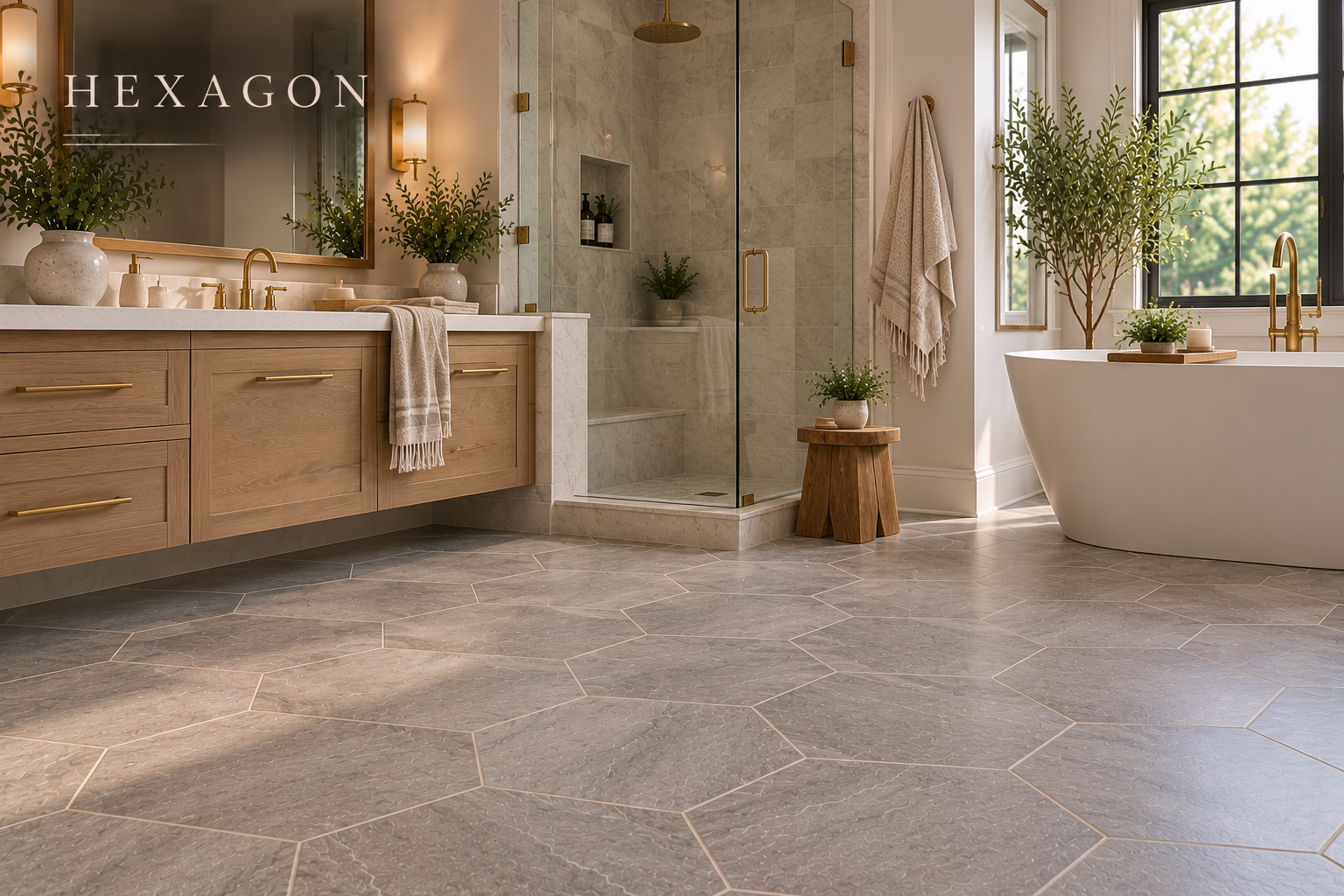
Hexagon / Geometric
Distinctive & Playful
Geometric tile shapes create pattern through the shape of the tile itself.
CHOOSING THE RIGHT FLOORING
Selecting flooring involves more than choosing a color or style. The right material depends on the room, moisture exposure, daily traffic, comfort, maintenance preferences, existing floor conditions, and the overall design of your home.
How to Choose the Right Flooring
When comparing flooring materials, consider:
✓ Where the flooring will be installed
✓ Water and moisture exposure
✓ Daily traffic, children, and pets
✓ Comfort and feel underfoot
✓ Cleaning and maintenance
✓ Existing slab or subfloor conditions
✓ How the flooring will transition into nearby rooms
Flooring often covers a large portion of the home, so consider how the material will look across multiple rooms—not just on a small sample. Color, plank or tile size, direction, and natural light can all affect the finished appearance.
Common Flooring Mistakes to Avoid
- Choosing from a small sample without viewing it in the home
- Selecting based on appearance alone
- Overlooking moisture or existing floor conditions
- Forgetting about transitions between different materials
- Choosing a layout without considering the room’s size and shape
- Assuming every product labeled “waterproof” performs the same way
- Waiting until installation to think about baseboards and finishing details
Designer Tip
Look at the whole home, not just one room. Flooring creates a visual connection between spaces. Using compatible colors, undertones, materials, and transitions can help adjoining rooms feel intentional—even when different flooring materials are used.
Popular Countertop Finishes
The finish of a countertop can influence its appearance, maintenance requirements, and overall character just as much as the material itself.
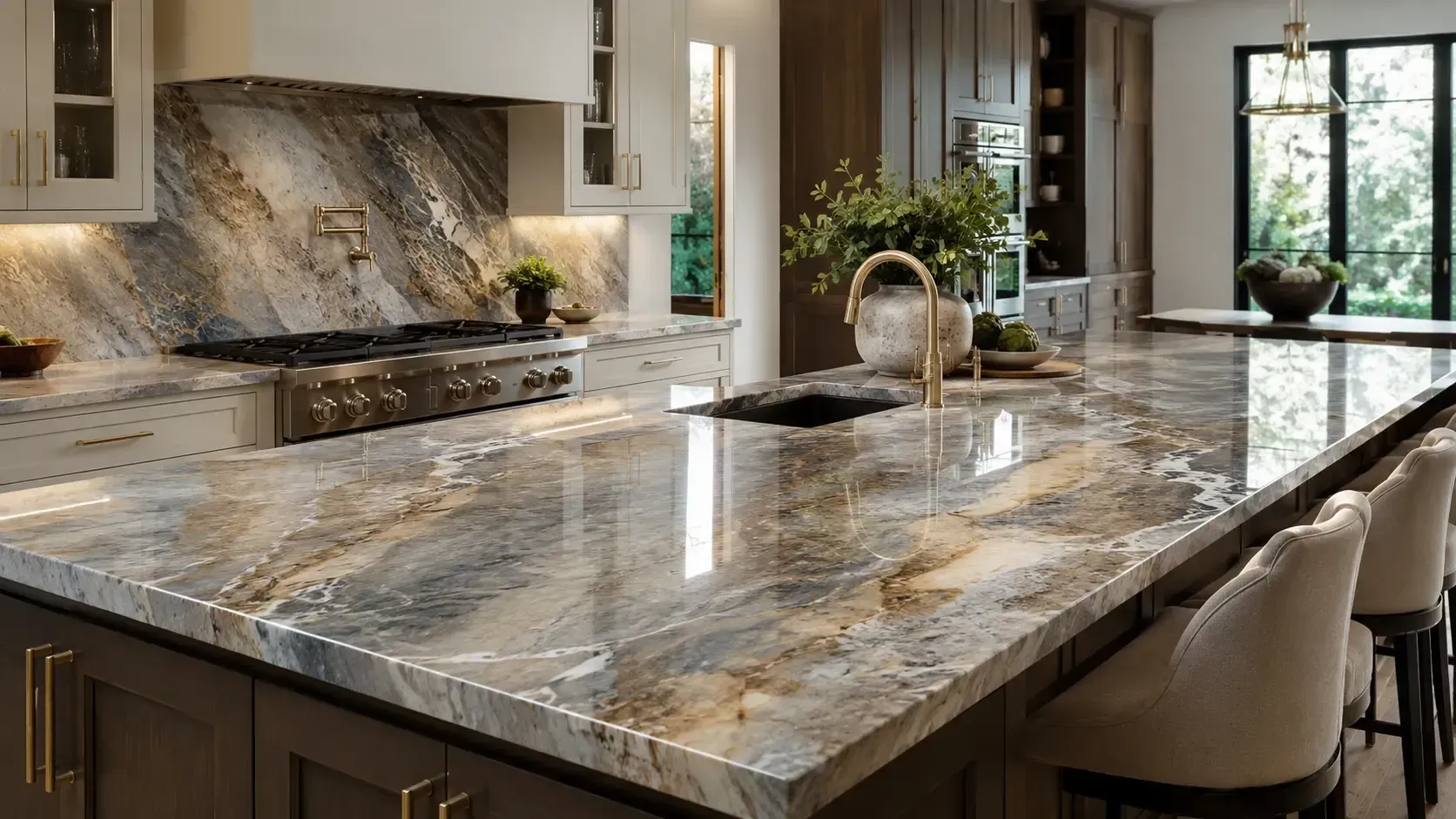
Polished Finish
- Most common option
- Reflective surface
- Enhances color and veining
- Easy to clean
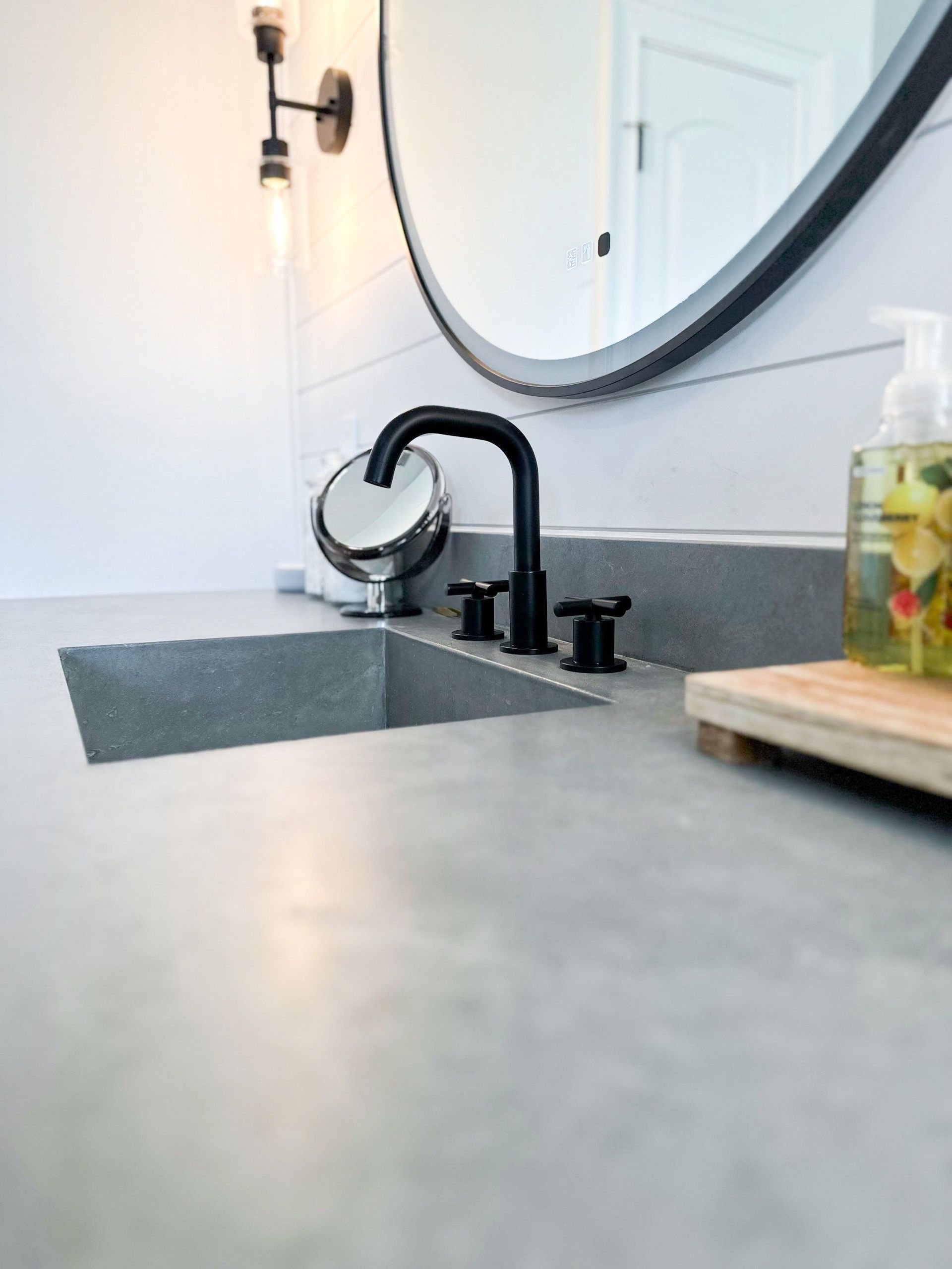
Honed Finish
- Matte appearance
- Softer, contemporary look
- Less reflective
- Popular in modern designs
Leathered Finish
- Textured natural stone surface
- Hides fingerprints well
- Adds depth and character
- Common with granite and quartzite
Popular Countertop Colors & Design Trends
___________________________
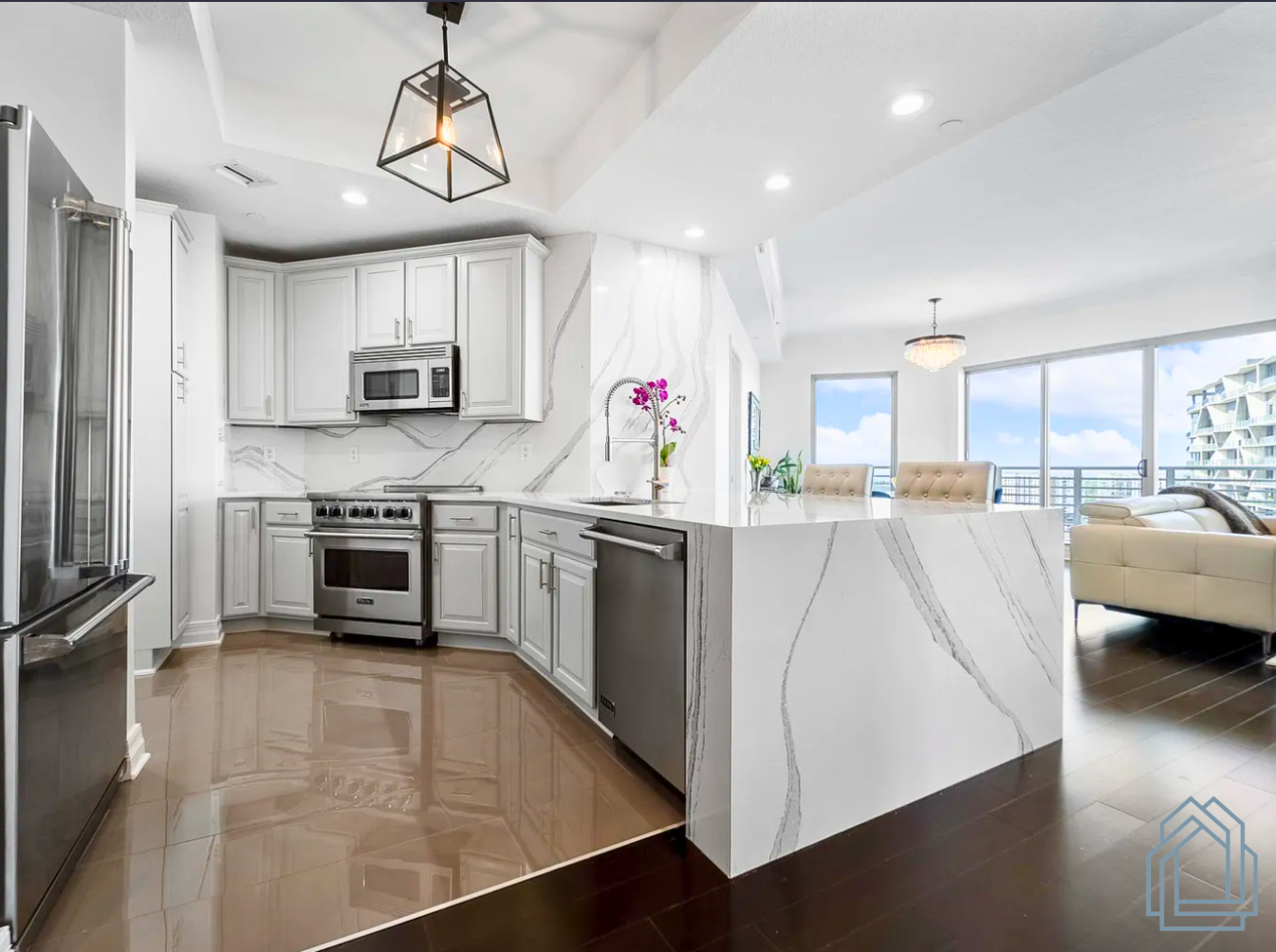
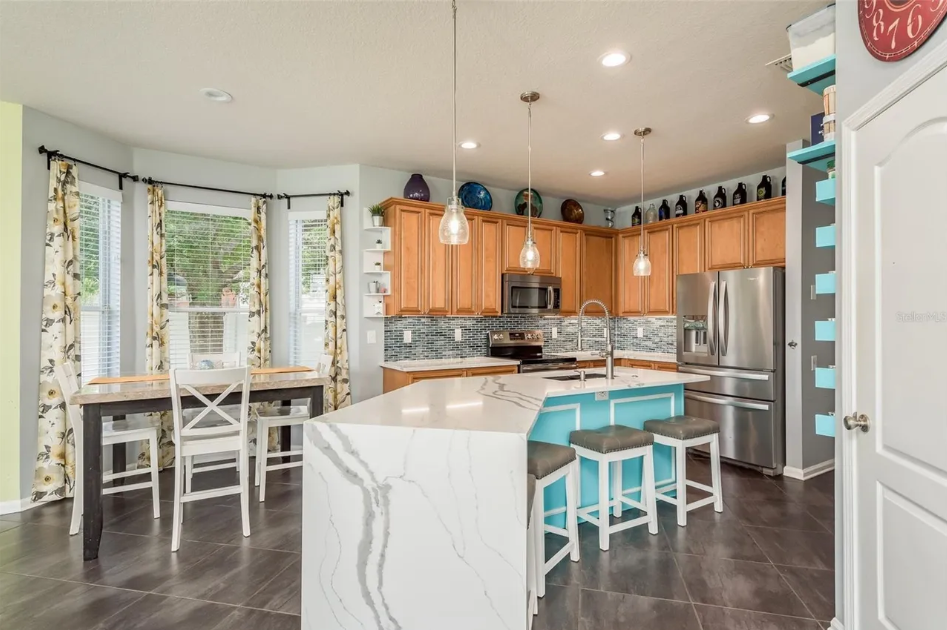
Countertop design continues to evolve as homeowners look for surfaces that balance beauty, durability, and everyday practicality. While timeless materials remain popular, many homeowners are incorporating larger slab patterns, statement islands, and integrated design features that create a more custom appearance.
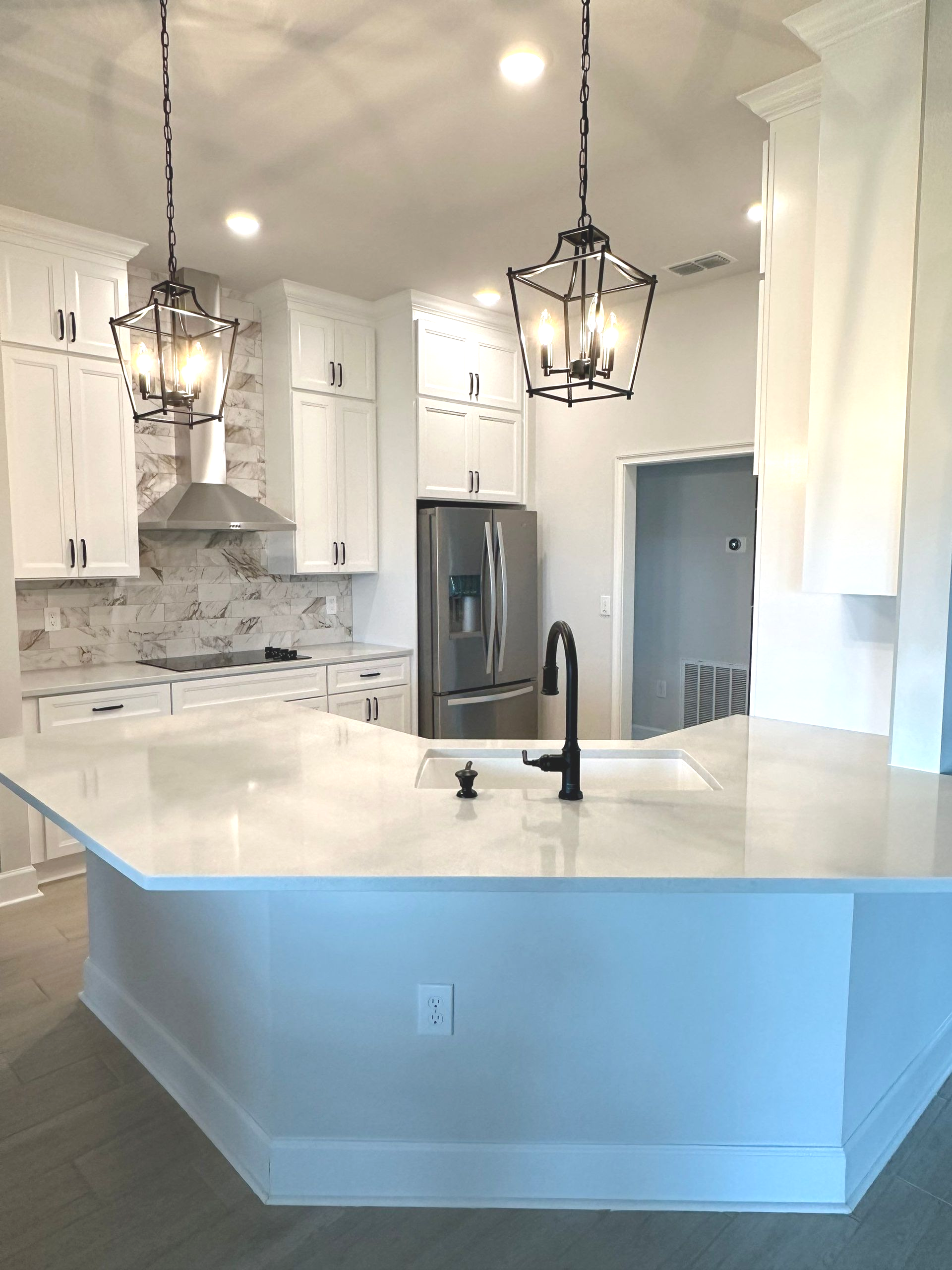
Bright White Quartz
Clean, Timeless & Versatile
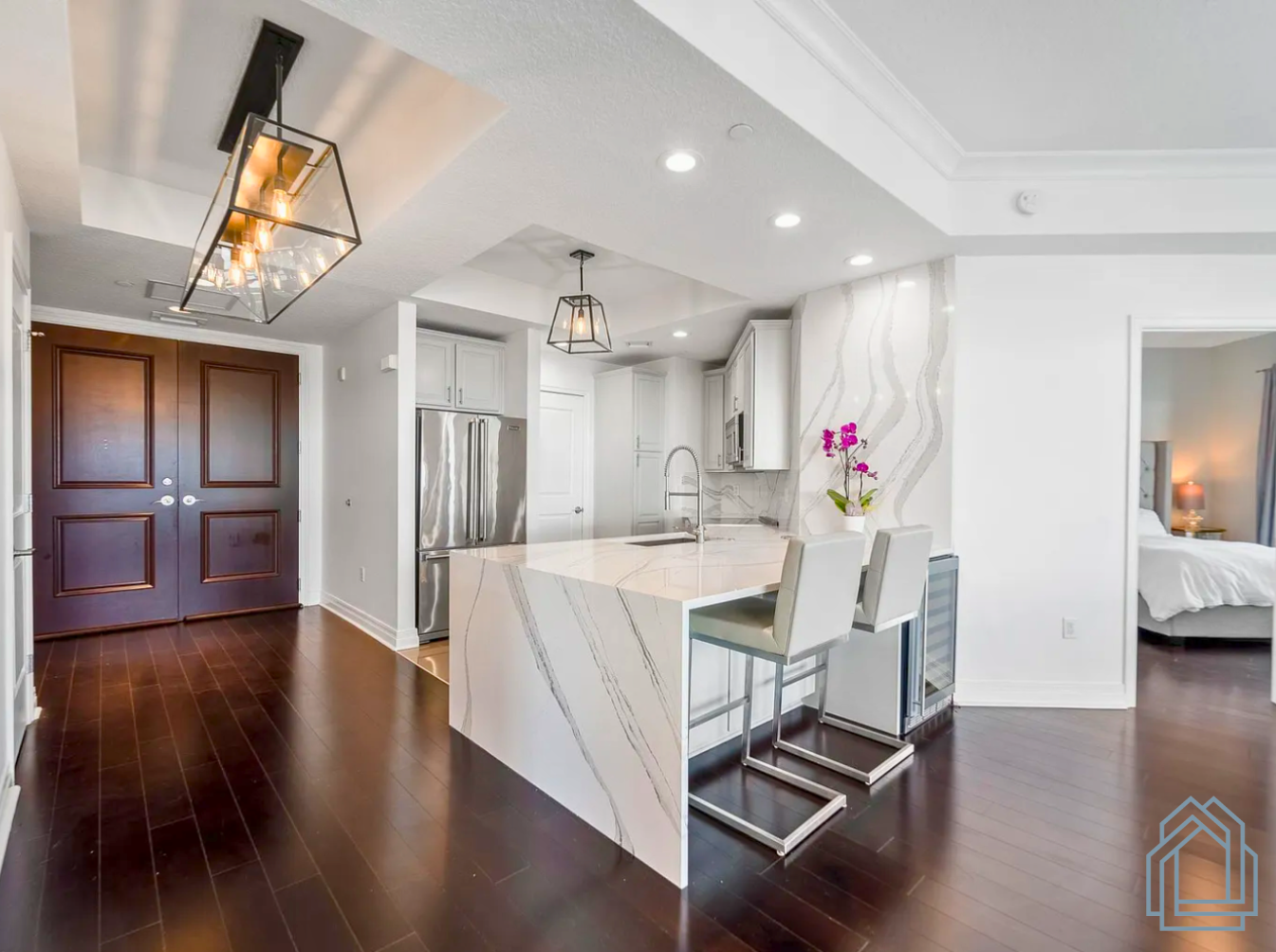
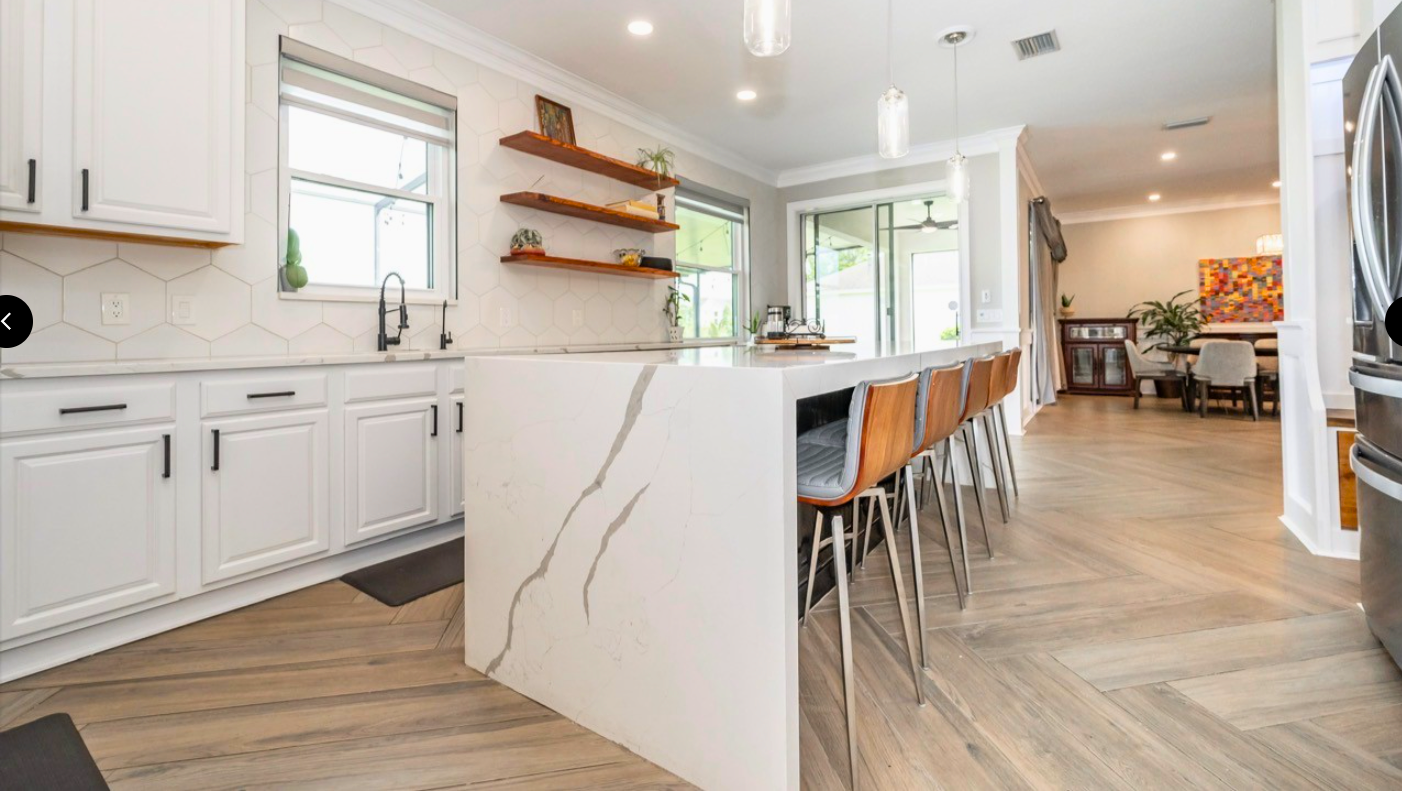
Bright white countertops continue to be one of the most requested selections for modern kitchens due to their clean appearance and ability to complement virtually any cabinet color.
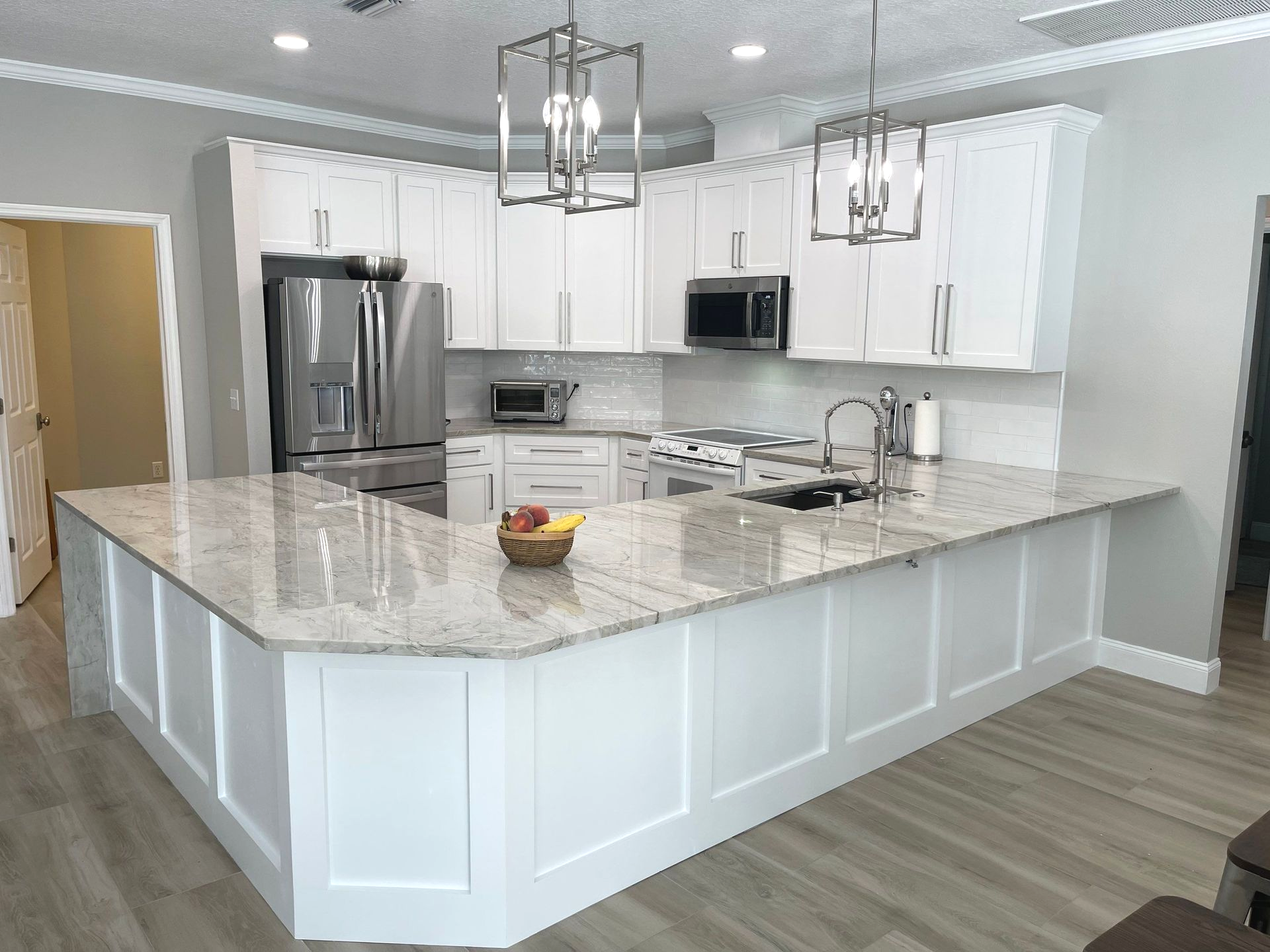
Quartzite Countertops
Natural Luxury & Dramatic Movement
Quartzite offers bold natural veining and one-of-a-kind patterns that create a high-end statement while providing excellent durability for everyday living.
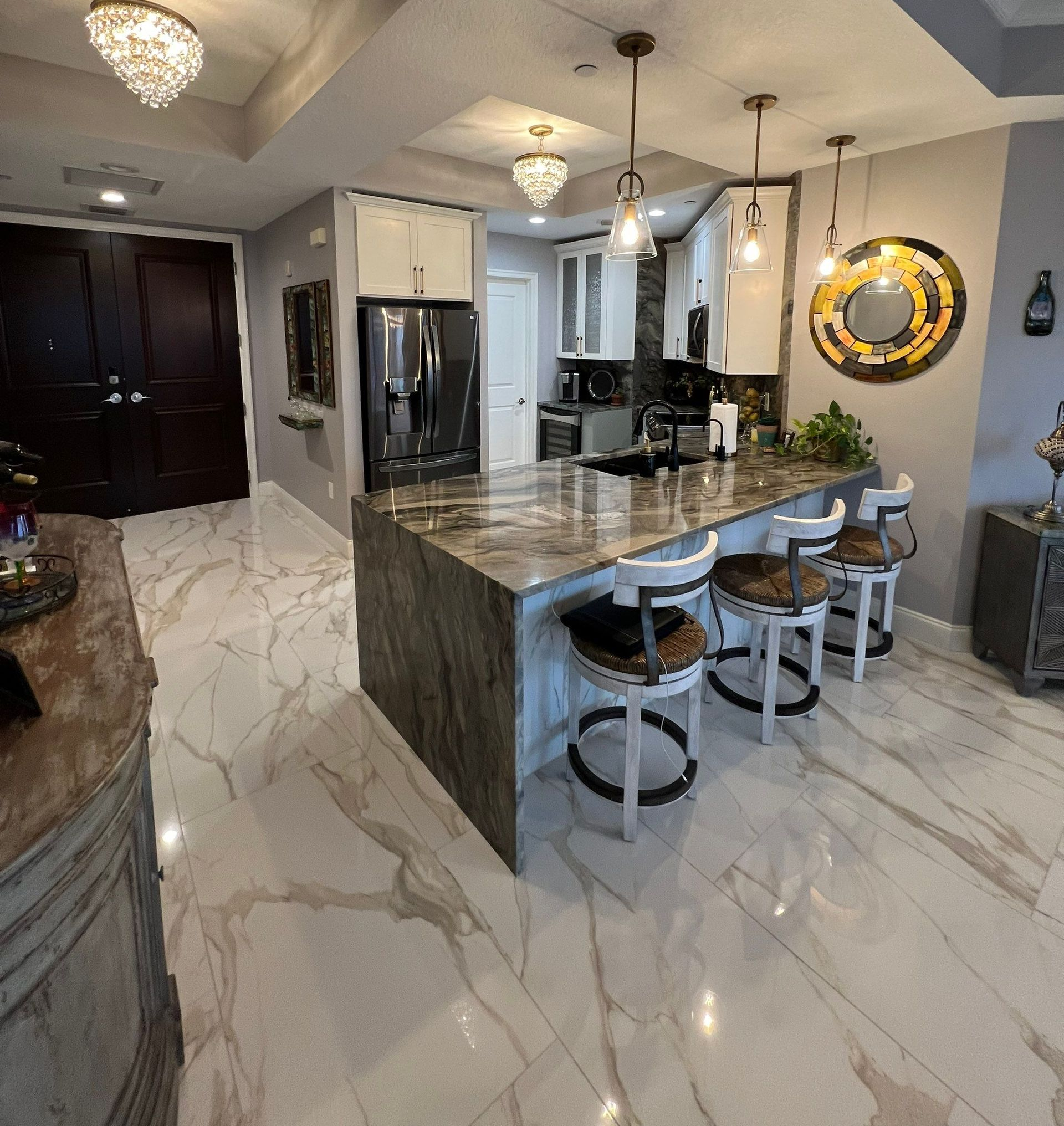
Warm Natural Stone Tones
Bringing Warmth Back Into Design
Many homeowners are moving away from cool grays and choosing warmer countertop tones featuring creams, beiges, taupes, and soft earth-inspired colors.
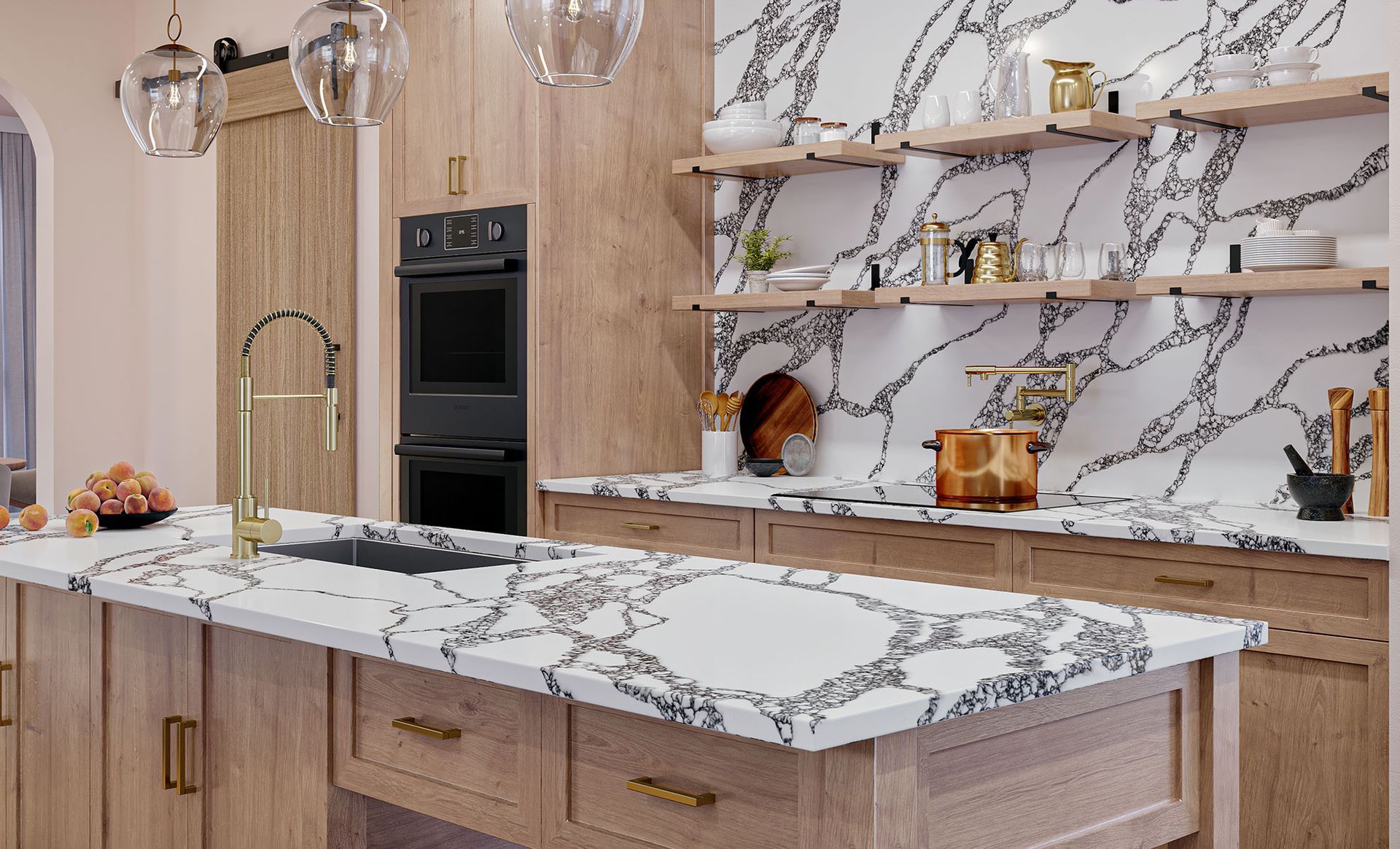
Dramatic Veining
Statement-Making Surfaces
Large flowing veins and bold movement patterns have become increasingly popular for homeowners looking to create a focal point within the kitchen.
TRUST OUR TALENTED TEAM
Explore Countertop Options With Our Team

Selecting countertops involves more than choosing a color. Material performance, maintenance requirements, edge details, and overall design all play a role in finding the right fit for your home.
Homeowners can visit one of our Central Florida consultation offices to compare samples, review design options, and discuss countertop selections as part of their remodeling project. Our team works closely with homeowners to help narrow down options and create a cohesive design that complements the rest of the space.
Countertop Maintenance & Care Guide
Different countertop materials require different levels of maintenance. Understanding these requirements before making a selection can help homeowners choose a surface that fits both their design goals and their lifestyle.
Which Material Requires the Least Maintenance?
For most households, quartz is generally considered the easiest countertop material to maintain because it does not require sealing and offers excellent stain resistance.
However, many homeowners gladly accept the additional maintenance associated with granite, quartzite, or marble in exchange for the unique beauty of natural stone.
The best countertop material isn't necessarily the one with the least maintenance—it's the one that best aligns with your design preferences, daily habits, and long-term expectations.
Quartz Maintenance
Quartz is one of the lowest-maintenance countertop materials available.
What Homeowners Like
• Non-porous surface
• No sealing required
• Highly stain resistant
• Easy daily cleaning
Care Recommendations
• Clean with mild soap and water
• Wipe spills promptly
• Use cutting boards to prevent surface scratches
• Avoid placing hot pots and pans directly on the surface
What Many Homeowners Don't Realize
Quartz is extremely durable, but excessive heat can damage the resins used during manufacturing. Trivets and hot pads are always recommended.
Quartzite Maintenance
Quartzite combines the appearance of natural stone with exceptional durability.
What Homeowners Like
• Natural marble-like appearance
• Excellent scratch resistance
• High heat resistance
• Unique natural patterns
Care Recommendations
• Seal as recommended
• Clean with pH-neutral cleaners
• Avoid harsh chemicals
• Wipe spills promptly
What Many Homeowners Don't Realize
Quartzite and quartz are completely different materials. Quartzite is a natural stone, while quartz is an engineered surface.
Granite Maintenance
Granite remains a popular choice because of its natural beauty and durability.
What Homeowners Like
• Natural stone appearance
• Excellent heat resistance
• Unique movement and patterns
• Long lifespan
Care Recommendations
• Clean with stone-safe cleaners
• Reseal periodically as recommended
• Wipe up oils and acidic spills promptly
• Use cutting boards to preserve the finish
What Many Homeowners Don't Realize
Not all granite requires the same maintenance schedule. Some granite varieties are naturally denser and less porous than others.
Marble Maintenance
Marble remains one of the most beautiful natural stone options available.
What Homeowners Like
• Timeless luxury appearance
• Distinctive veining
• Elegant character
Care Recommendations
• Seal regularly
• Clean with stone-safe products
• Avoid acidic cleaners
• Wipe spills immediately
What Many Homeowners Don't Realize
Marble develops a natural patina over time. Some homeowners love this lived-in character, while others prefer materials that maintain a more consistent appearance.
Countertops for Florida Homes
Florida's humidity, sunlight, and active lifestyles can influence material selection.
Many homeowners choose quartz, quartzite, granite, and porcelain because they offer:
• Excellent durability
• Resistance to moisture exposure
• Easy maintenance
• Long-term performance in busy households
While nearly all countertop materials can perform well when properly maintained, understanding the strengths of each option can help homeowners make informed decisions.
This is unique content your competitors usually don't have. Florida-specific content tends to perform well.
FAQs
Questions about countertops often go beyond color and price. Homeowners frequently ask about durability, maintenance, design coordination, and long-term value. Below are answers to some of the most common questions we discuss during the planning process.
Is quartz always more expensive than granite?
Not necessarily. Many homeowners are surprised to learn that countertop pricing depends more on the specific color, pattern, slab availability, edge profile, and installation requirements than the material category itself. In some cases, a premium quartz selection may cost more than a granite option, while certain exotic granites can exceed the cost of many quartz surfaces.
Why do some countertop samples look different than the final installation?
Small samples only show a fraction of the material's pattern. Natural stones such as granite, quartzite, and marble can vary significantly from slab to slab. For larger projects, viewing the actual slab often provides a better understanding of the movement, veining, and color variation that will appear in the finished space.
Should I choose countertops before or after selecting cabinets?
In most cases, cabinetry selections come first. Countertop color, movement, and edge details are typically chosen to complement the cabinet style, paint color, flooring, and backsplash. Starting with the cabinetry often creates a more cohesive overall design.
What countertop colors have the best long-term appeal?
While trends change over time, neutral whites, warm whites, soft grays, and natural stone-inspired patterns consistently remain popular. Many homeowners choose timeless colors that complement multiple design styles rather than selecting highly trendy patterns that may feel dated in a few years.
Are highly polished countertops harder to maintain?
Not usually. Maintenance requirements depend more on the material itself than the finish. However, polished surfaces can sometimes show fingerprints, water spots, and smudges more readily than matte or leathered finishes, particularly on darker colors.
What should homeowners consider besides color when choosing countertops?
Color is important, but factors such as durability, maintenance requirements, seam placement, edge profiles, sink configurations, and how the material performs in everyday use are often just as important. The best countertop selection balances appearance with how the space will actually be used.
What countertop materials work best for busy family kitchens?
Many families choose quartz because it offers excellent durability, stain resistance, and low maintenance. However, granite, quartzite, and porcelain can also perform exceptionally well when selected and maintained appropriately. The best choice often depends on cooking habits, design preferences, and overall project goals.
How do I know if a countertop is "builder grade" or "premium"?
The biggest differences are usually found in slab quality, pattern consistency, edge details, installation craftsmanship, and overall design coordination. A thoughtfully selected mid-range countertop often creates a more upscale appearance than an expensive material chosen without considering the rest of the kitchen or bathroom design.